
Puglia wedding venues: what each one gives your photographs
Puglia is the heel of Italy, and Apulia is the same place in English. A long region on the Adriatic: flat near the coast, olive groves inland, pale stone towns on the ridges, and sun for most of the year.
Puglia wedding venues: where is Puglia, and what will be behind you?
Puglia is the heel of Italy, and Apulia is the same place in English. A long region on the Adriatic: flat near the coast, olive groves inland, pale stone towns on the ridges, and sun for most of the year. Almost every couple flies into Bari. The airport sits just north of the city, and from there it is about forty minutes by car to Trani, where our studio is. That drive is worth knowing, because it tells you how close everything here really is. You can marry in a Romanesque cathedral built out on the water and be eating under olive trees before the light goes.
We have photographed weddings in this region for thirty years, more than 5,000 of them. The archive on this site is 257 photographs, sorted by the kind of place they were taken in. Four kinds of place come up again and again with couples arriving from abroad: the cathedral at Trani, a masseria in the country, a beach on the Adriatic, a castle or a hilltop town.
This page is about what each of them does to a photograph. Not which is prettier. What the light does, and when.

Why does the venue change the pictures so much?
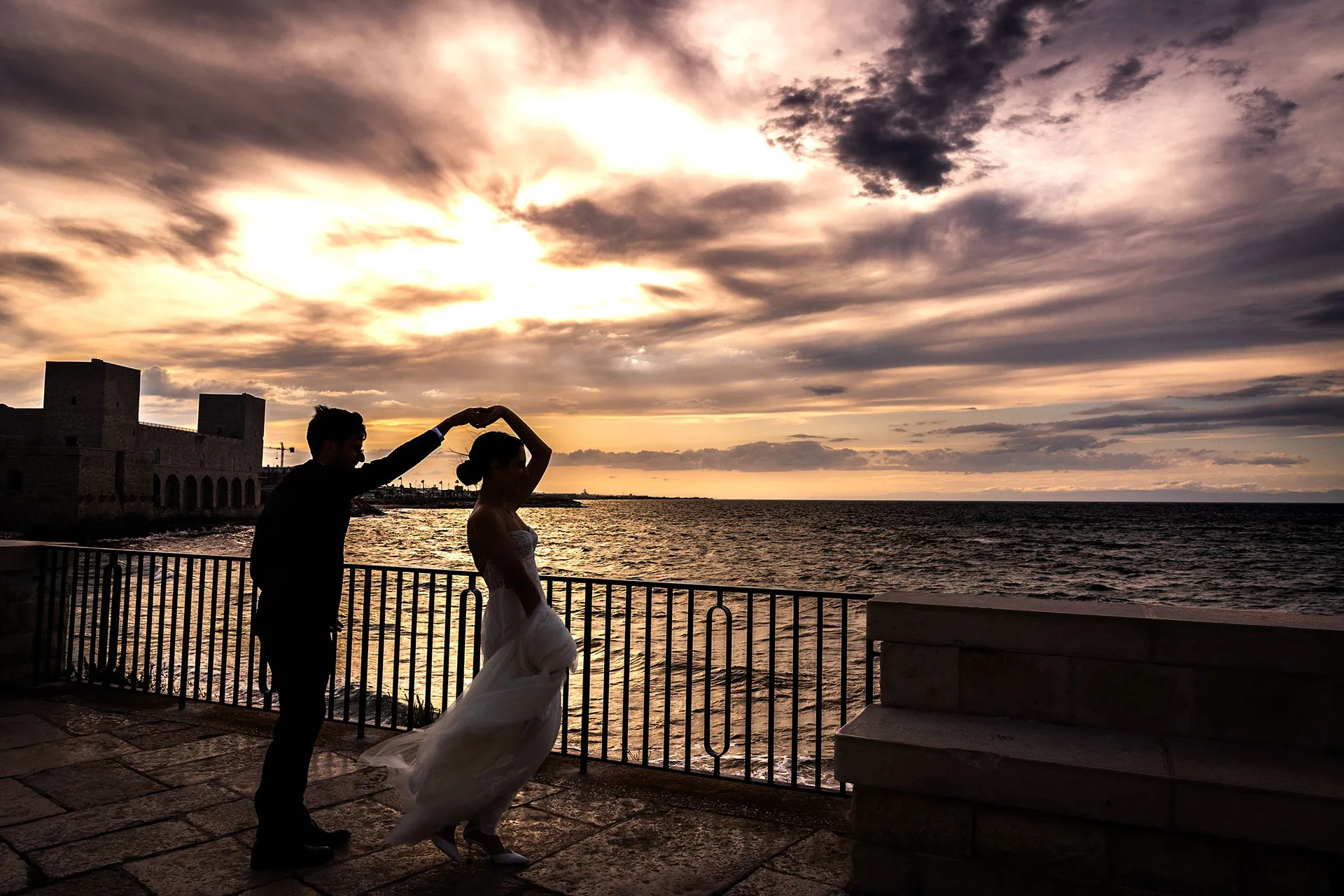
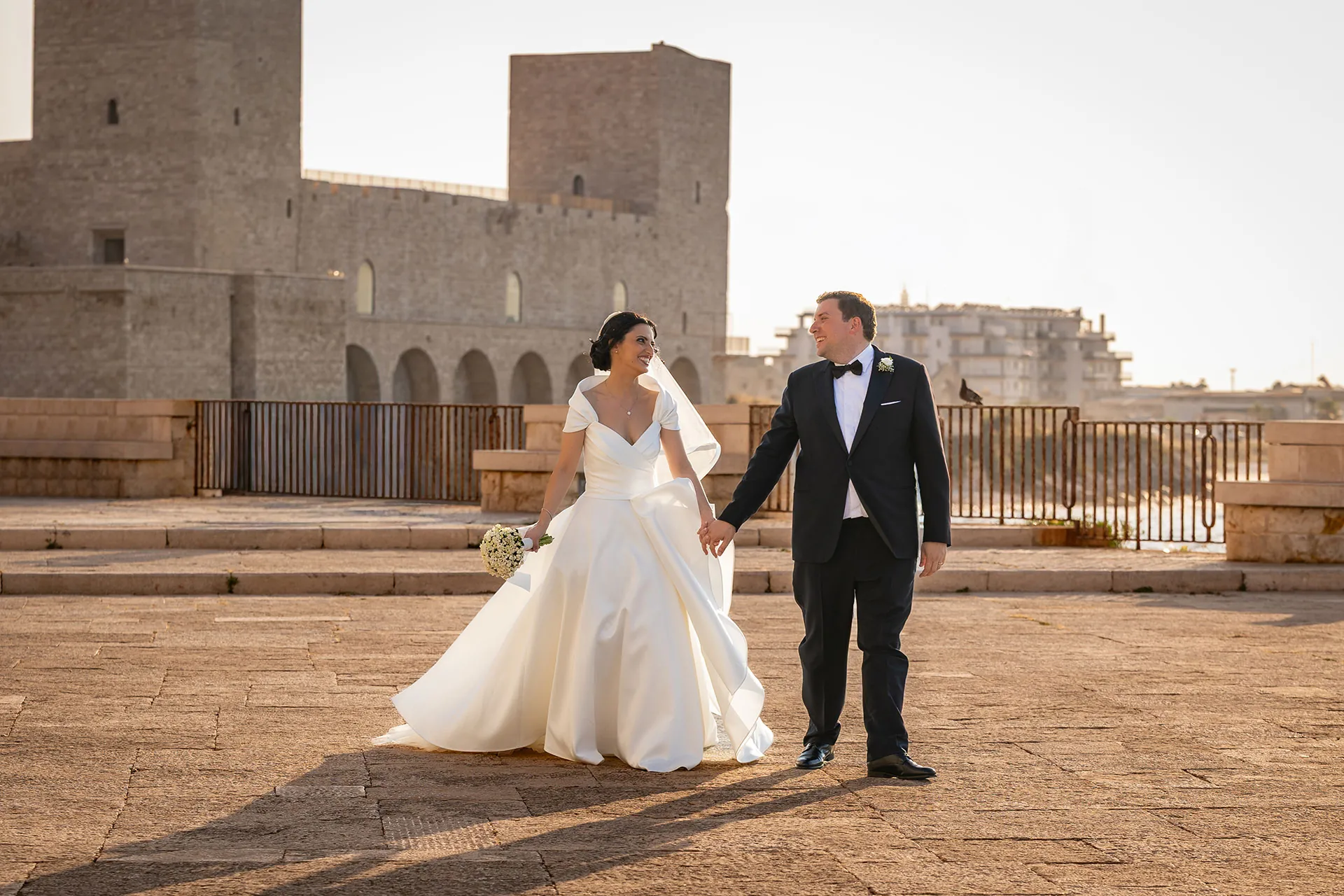
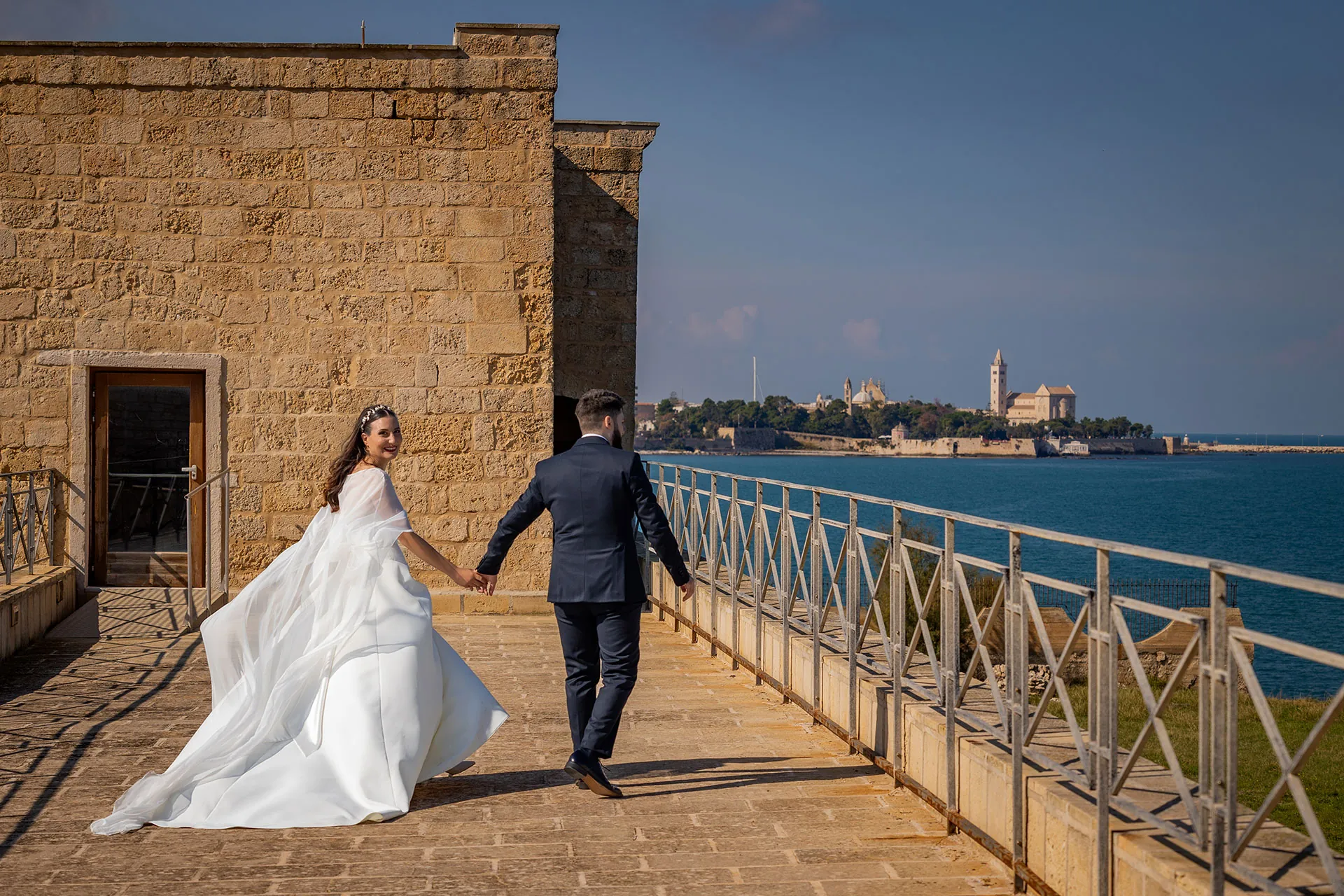
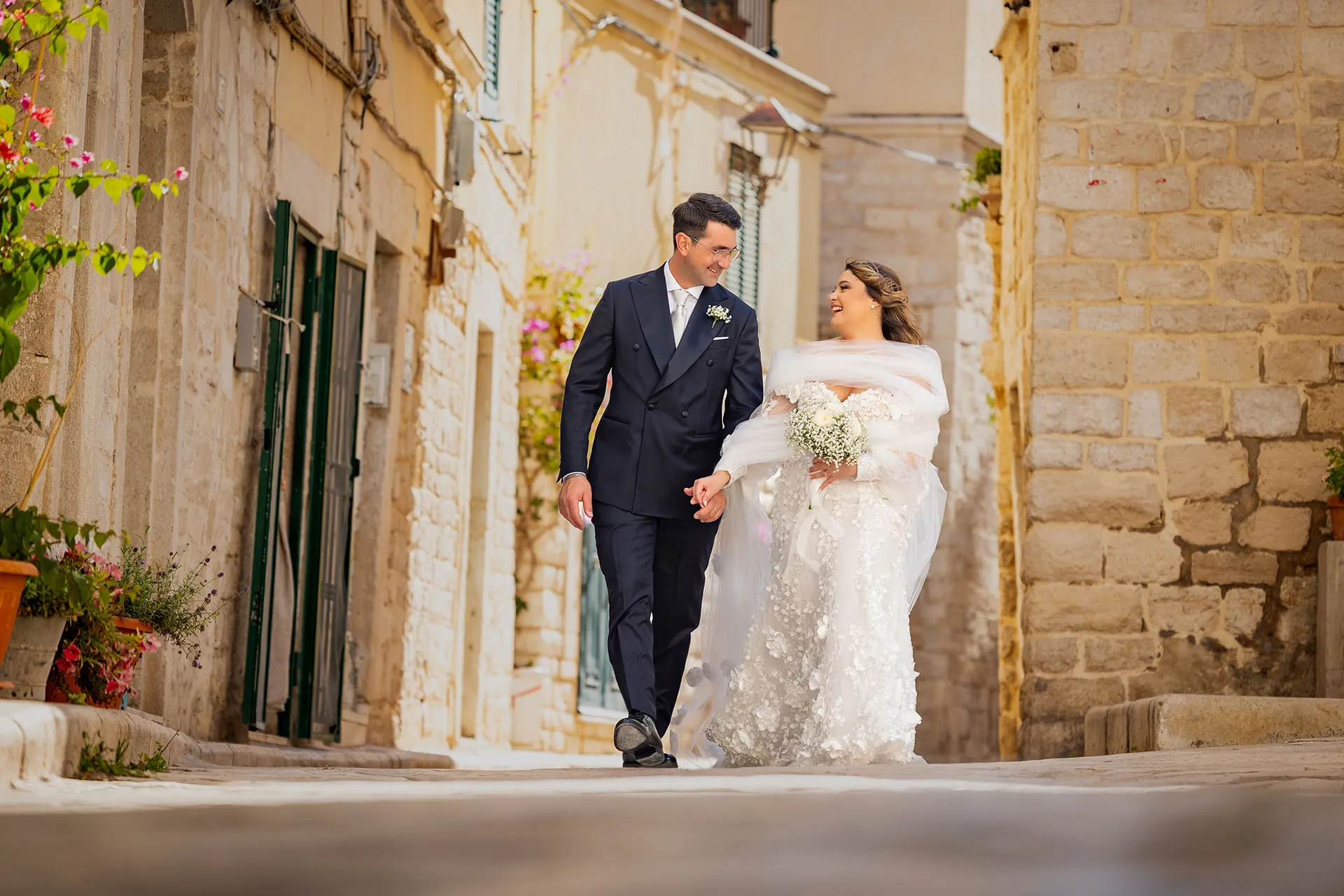
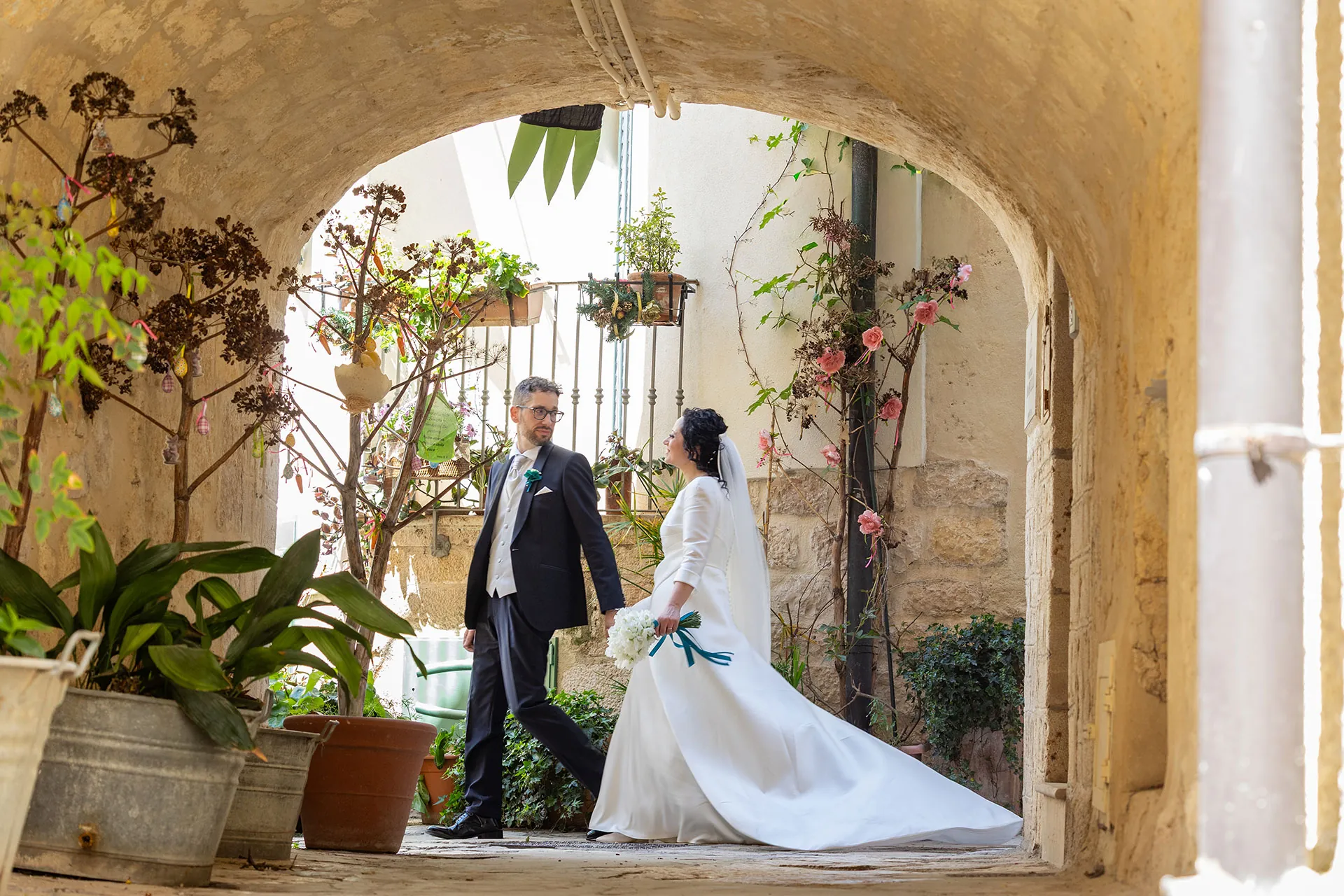
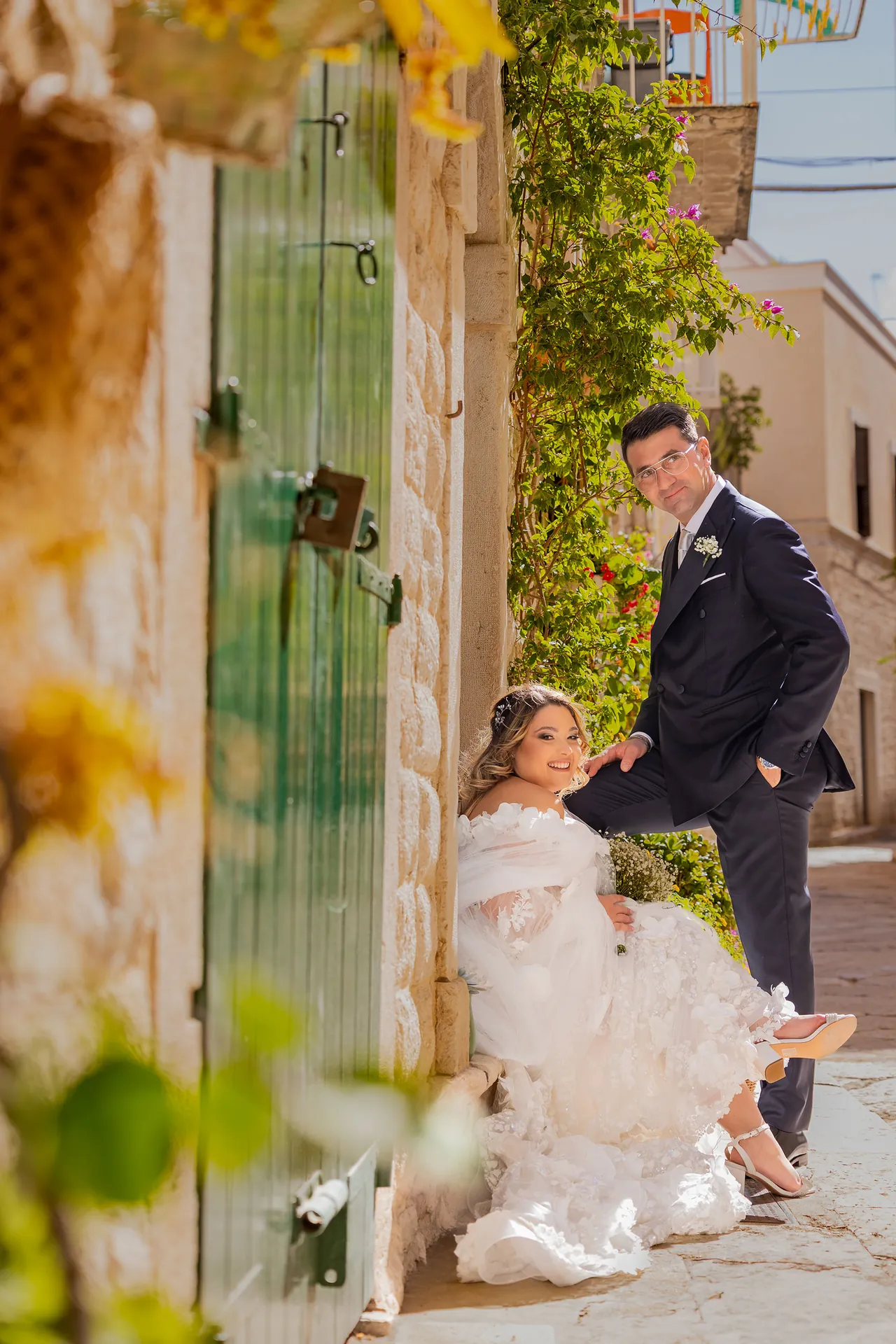
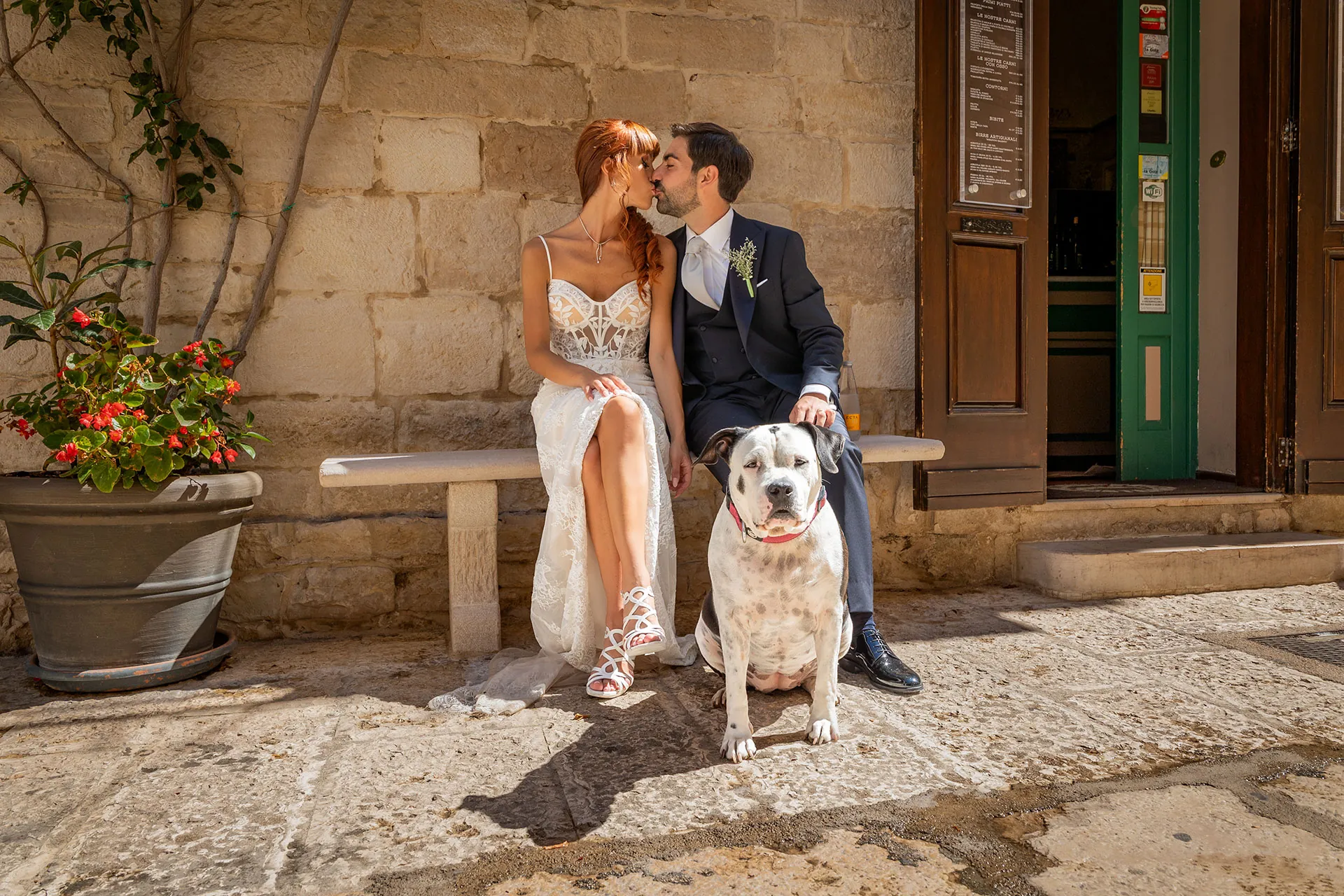
Every place here has a light of its own. The white stone of Trani throws the afternoon sun back at you and softens the shadows on a face. The limestone of a masseria does something quieter: warmer, dustier, held inside walls. Sand at the end of the day warms every skin tone in the frame. A castle courtyard cools them, because the light arrives off grey stone and from a long way up. Same region, same afternoon, four different photographs.
None of that is visible on a website when you are booking from another country. You choose a venue from twelve pictures taken at eleven in the morning in April, and then you marry there at half past five in September. That is the practical part of hiring a wedding photographer in Puglia: knowing the place before you do, and saying in plain terms what it will look like at your hour, in your month.
So what follows is not a list of venues. It is what we know about four kinds of place, learned by working in them.
Four kinds of place, four ways of working
Three of them have a page of their own, with the photographs from our archive and the practical advice for that sort of venue. The fourth is here in short.
A cathedral on the water
Trani's Romanesque cathedral is built on the sea, in white local stone, with a forecourt that runs out and stops at the water. A Trani Cathedral wedding is the one venue on this list we can describe step by step: it is the church of our own town, and there are ten photographs from it in the archive.
A masseria in the olive groves
A masseria is a fortified farmhouse: thick pale walls, one courtyard, olive trees to the horizon, dinner outdoors under strings of lights. Villas and masserie make up the largest group in our archive, 57 photographs, and a masseria wedding photographer works the whole day in one place, with nothing lost between addresses.
A beach on the Adriatic
Sand, wind, and one hour before sunset that does more for a photograph than any lighting kit. We have 51 frames from the shoreline, and the page on a beach wedding in Puglia is as much about the practical problems as about the light.
A castle or a hilltop town
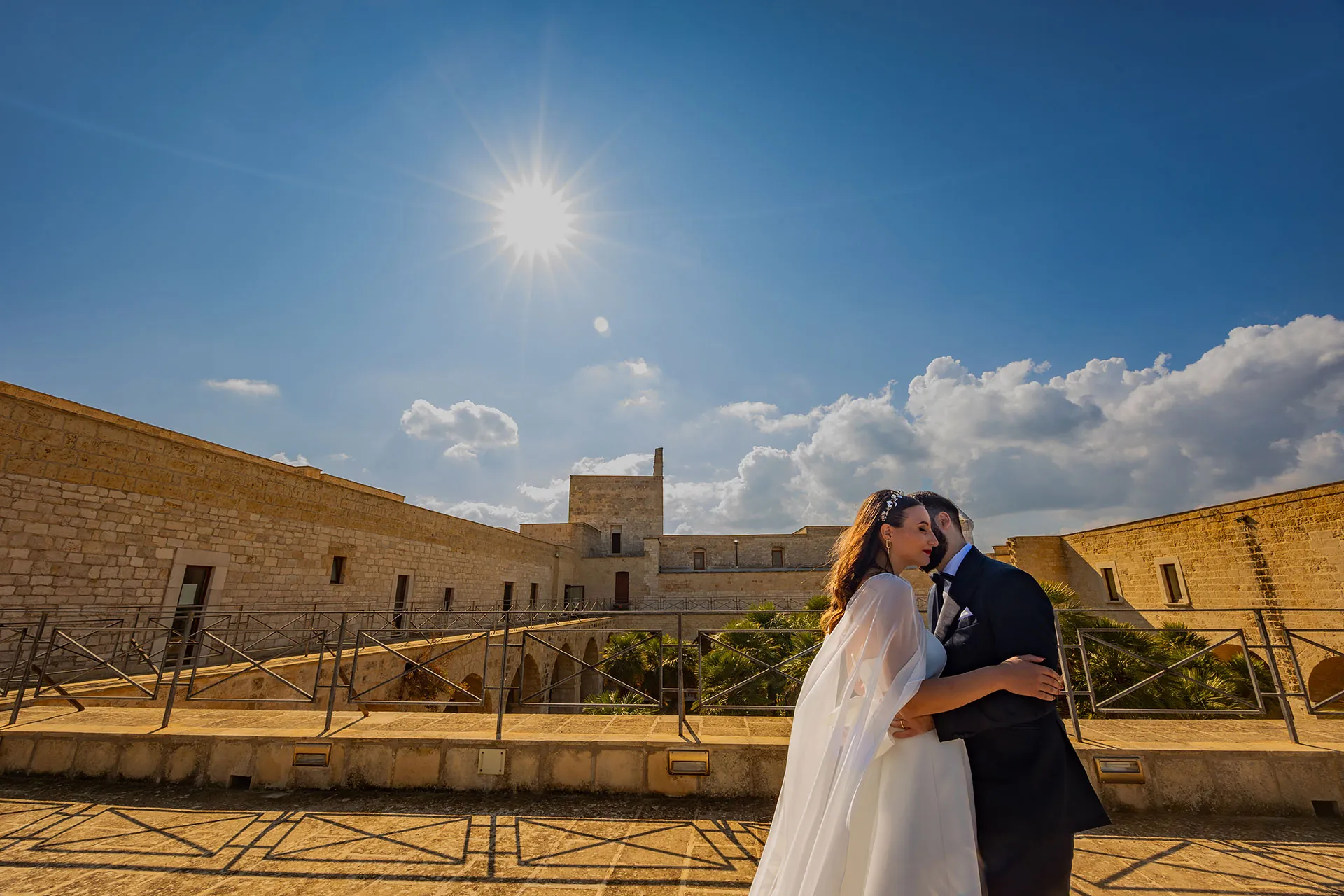
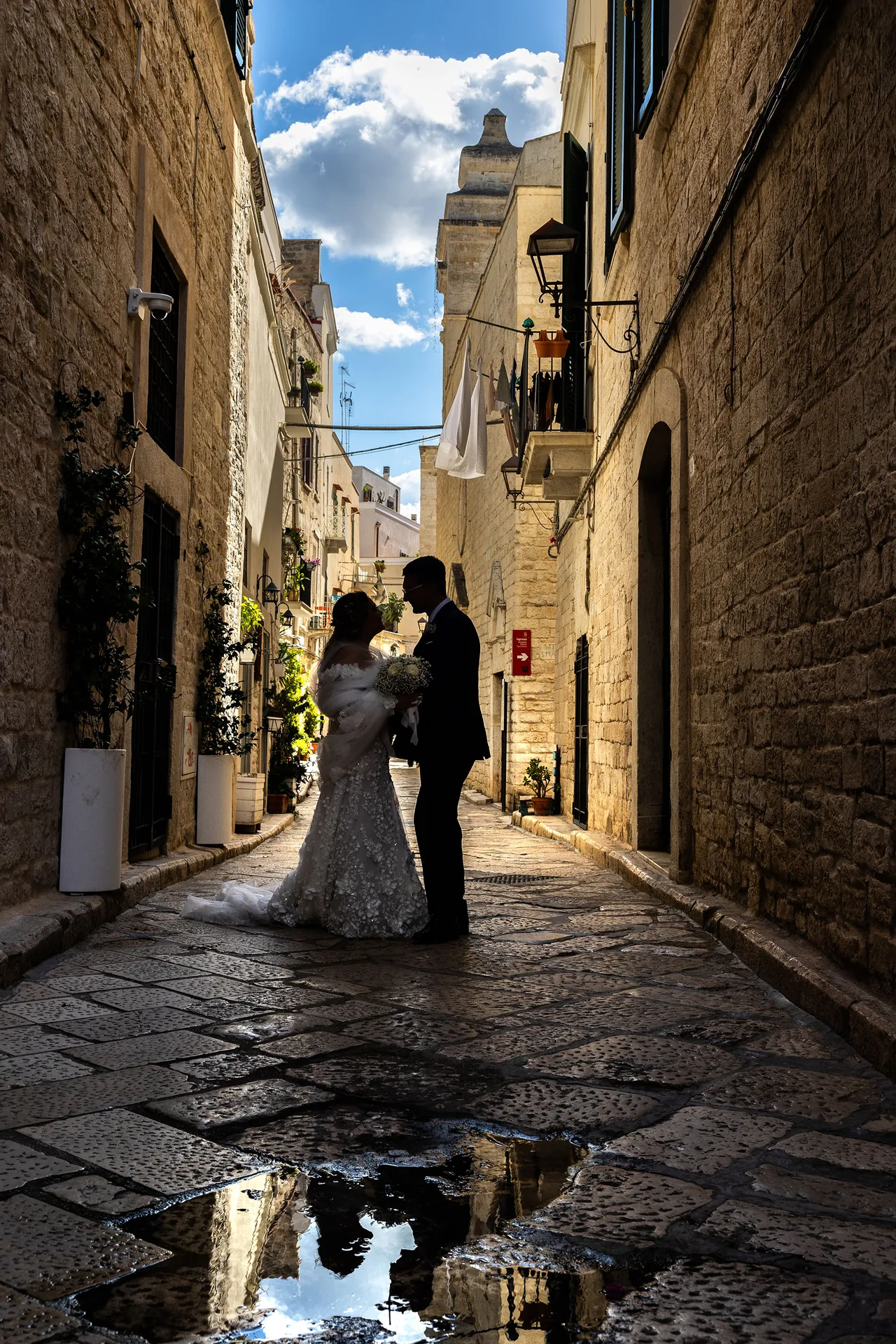
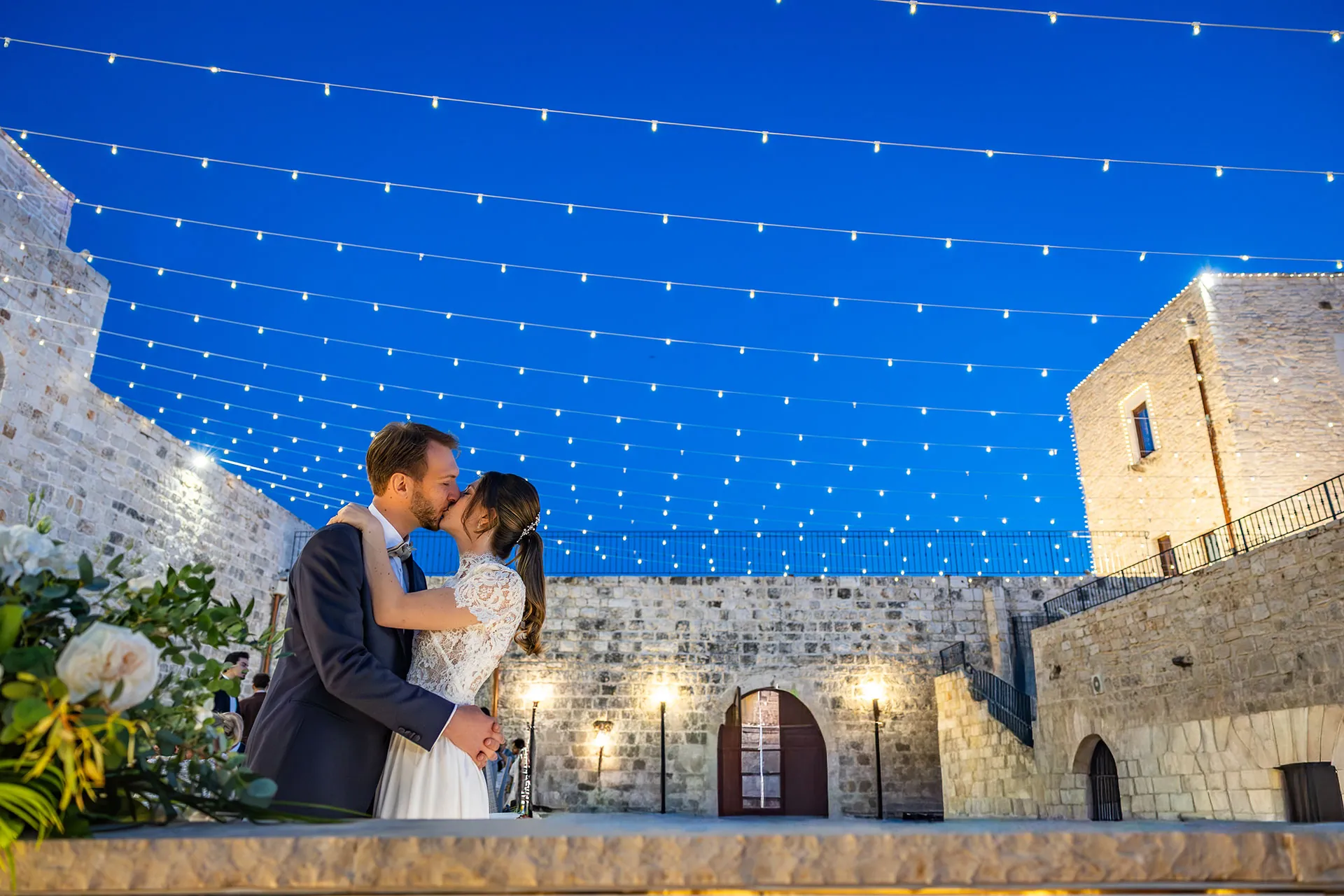
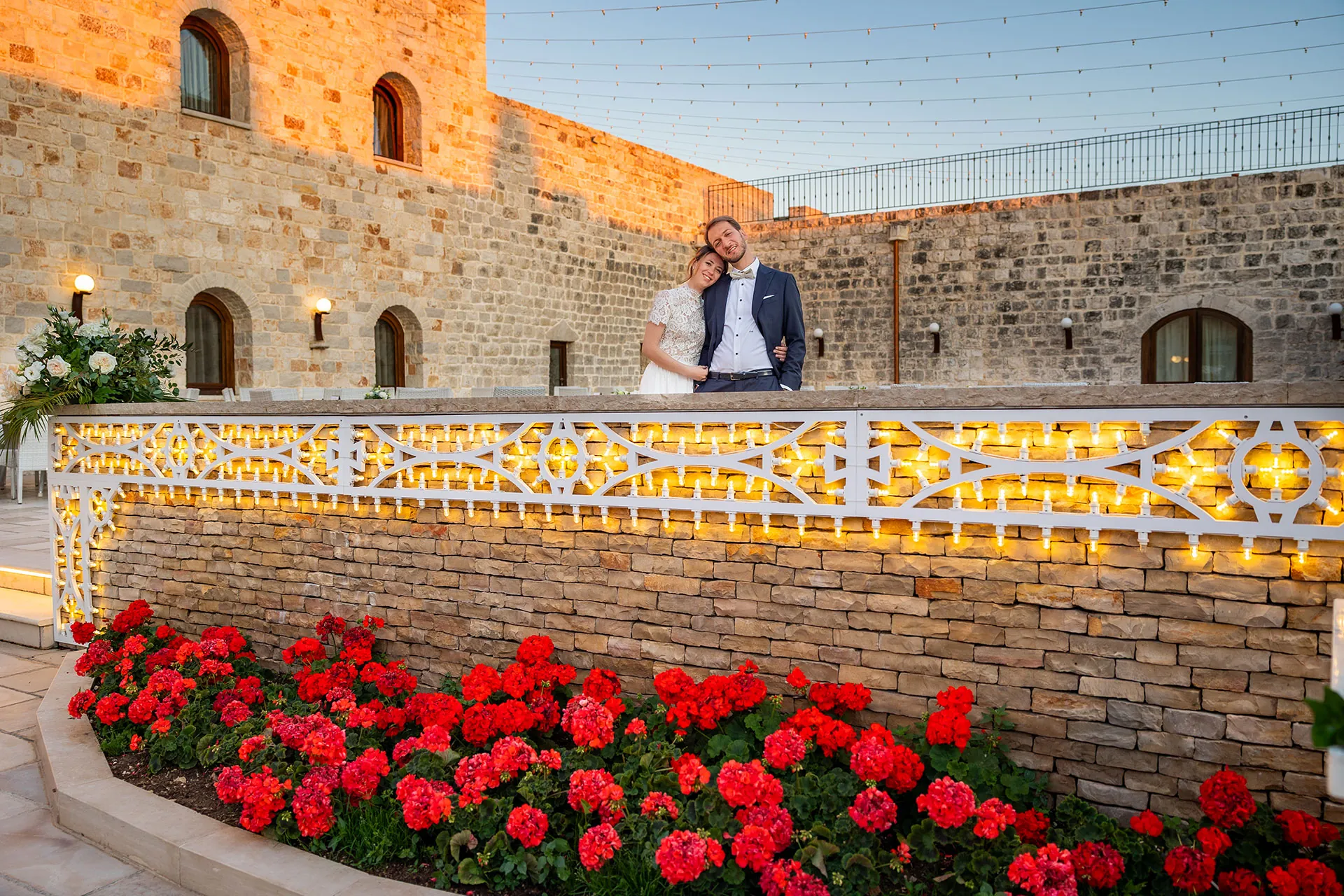
Courtyards, stone staircases, hard light cut into shapes by high walls. Seventeen photographs in the archive come from castles and old hill towns, where the work is about reading contrast rather than softening it. There is no separate English page for them yet: tell us the castle and we will tell you how its light behaves, hour by hour.
What if your venue is none of these?
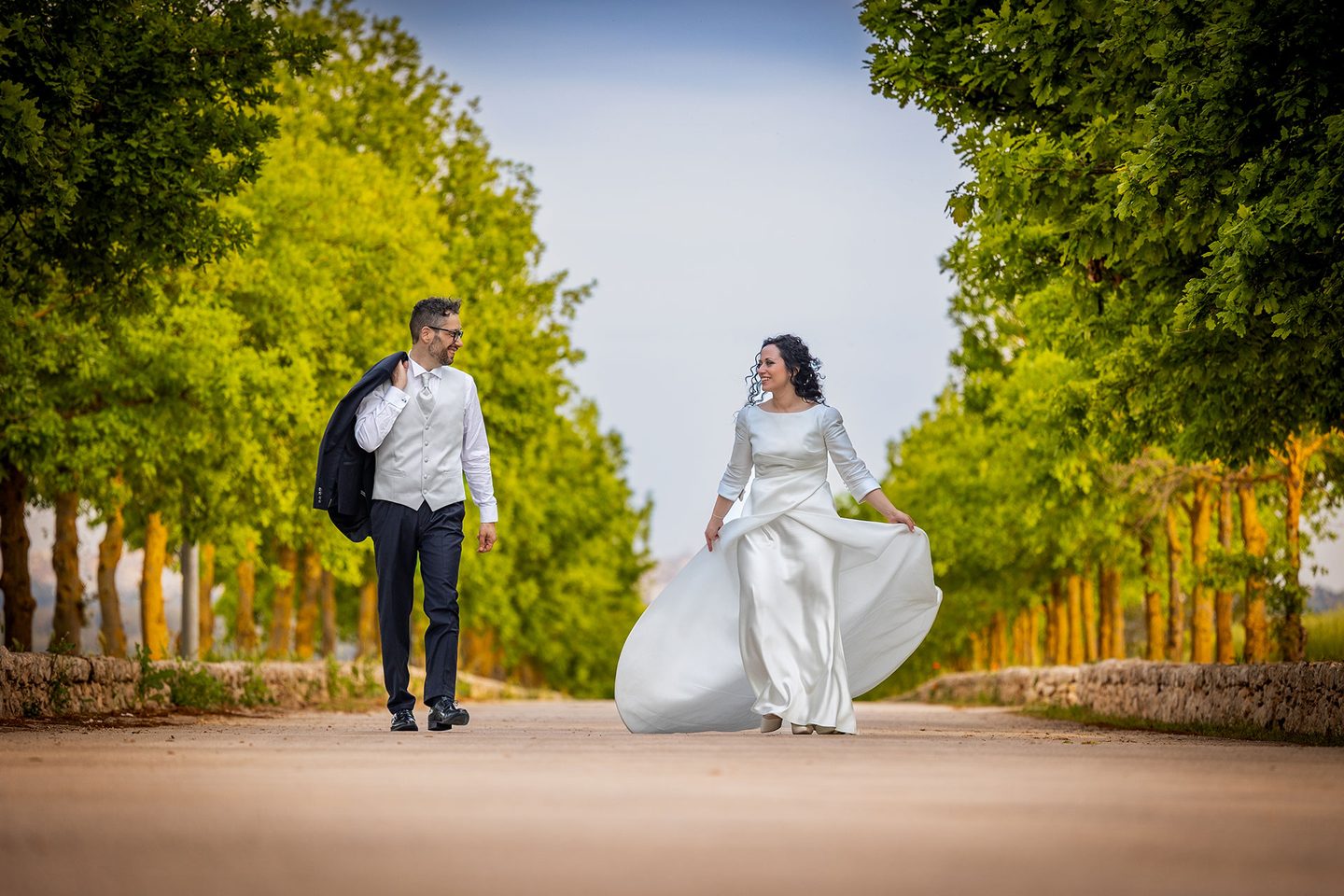
Most of the archive sits outside those four headings. Seventy-three photographs come from parks and tree-lined avenues, where couples find shade, depth and something green even in August. Thirty-five come from the preparations, in the rooms where the day starts. Five were taken from a drone, for the wide frame that only exists from above, where flying is allowed.
So if your reception is in a garden, a park, or a villa at the end of a long drive, that ground is already familiar to us. Tell us where you are getting married. We will tell you whether we have worked there and how we would use its light.
How do you plan a day in a place you have never seen?
From two fixed points and the sun. We start with the hour of your ceremony and the hour your reception begins, then we look up the sunset for your exact date and work backwards. The couple portraits go where the light is best, not where the timeline happens to have a gap. Travel between venues gets honest minutes rather than optimistic ones. You get the running order before the day, so nothing about it is a surprise.
The kind of place sets the rules. At the cathedral the usable time is the exit and the forecourt: a few minutes, to be spent well. On a beach the golden hour commands everything and the rest of the day arranges itself around that window. In a masseria the day never leaves the property, and the schedule follows the sun as it turns across the courtyard and the trees. At a castle it becomes a question of metres: where the shadow ends, when the sun reaches the courtyard, which hour is worth climbing for.
We design the day with you, not for you. You know your families and what you want the evening to feel like. We know what the light will be doing at half past six.
Photographs from Puglian venues
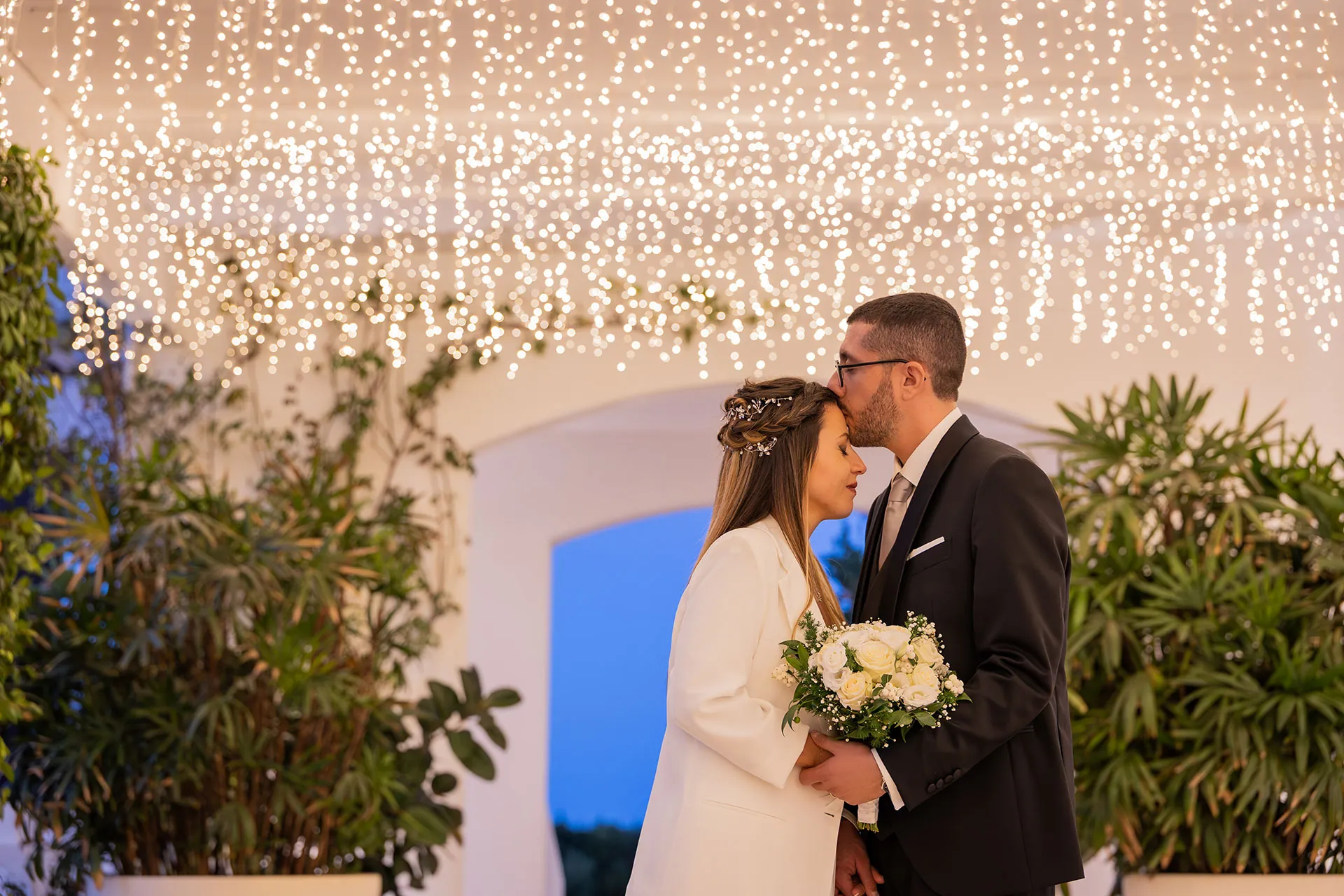
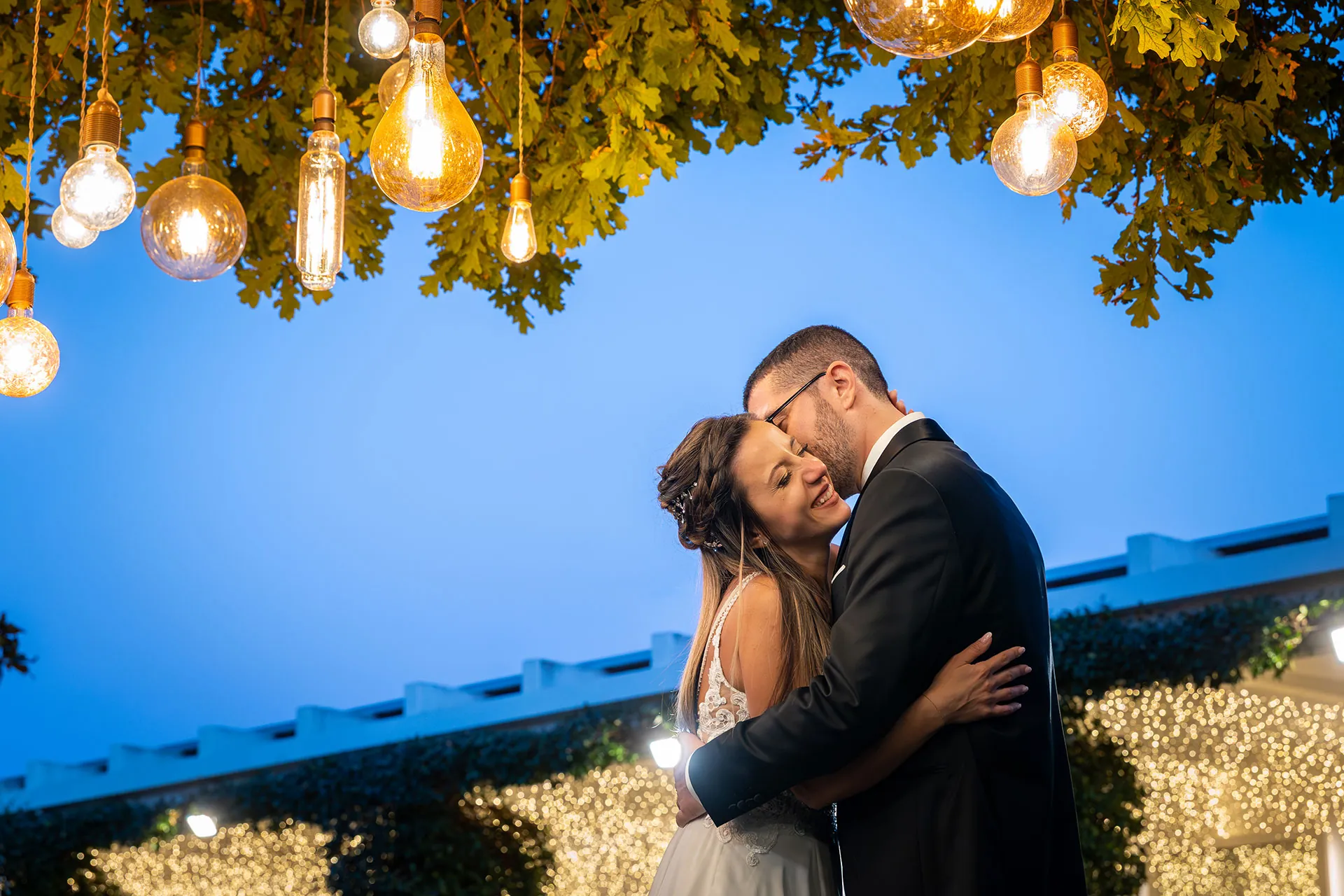
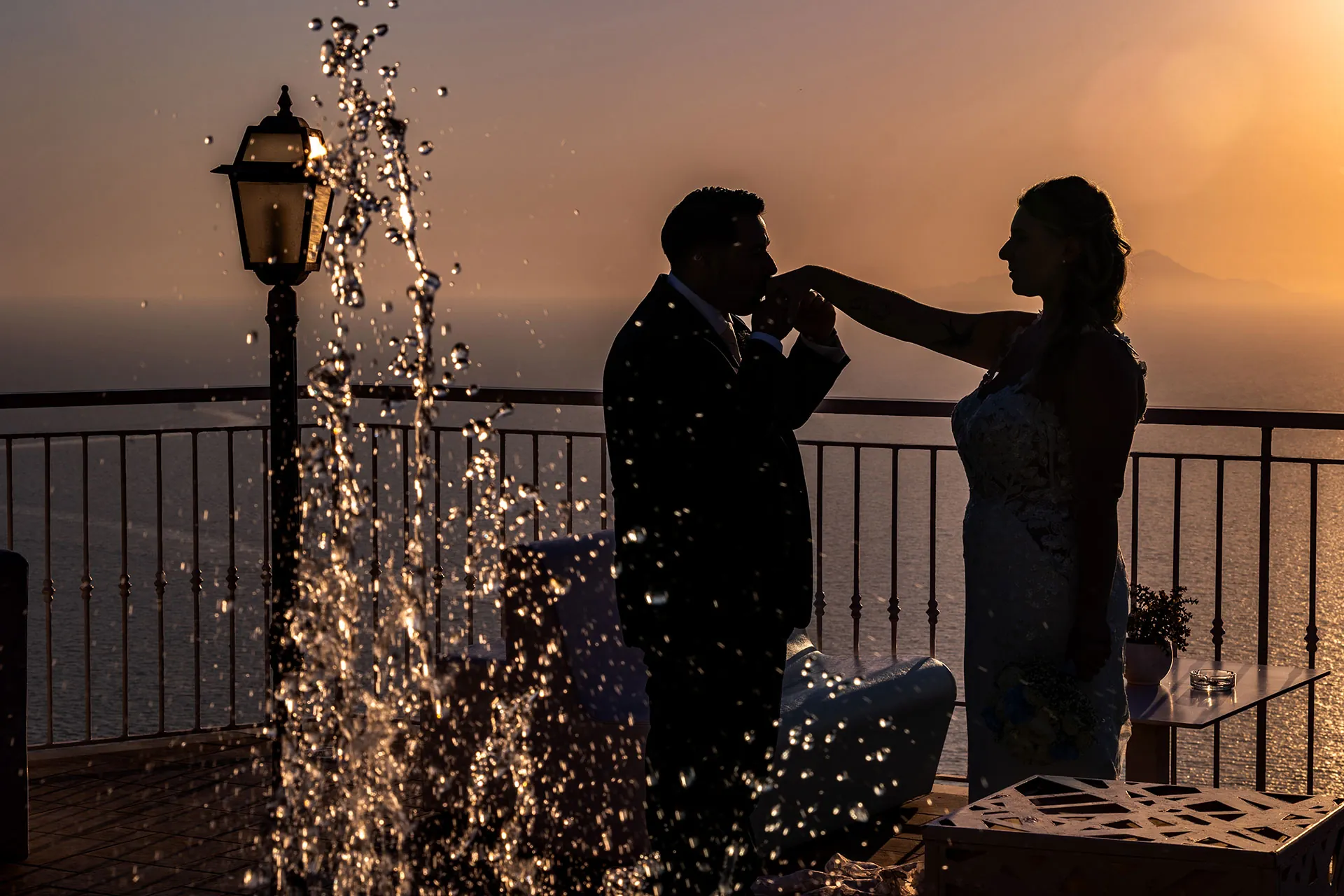
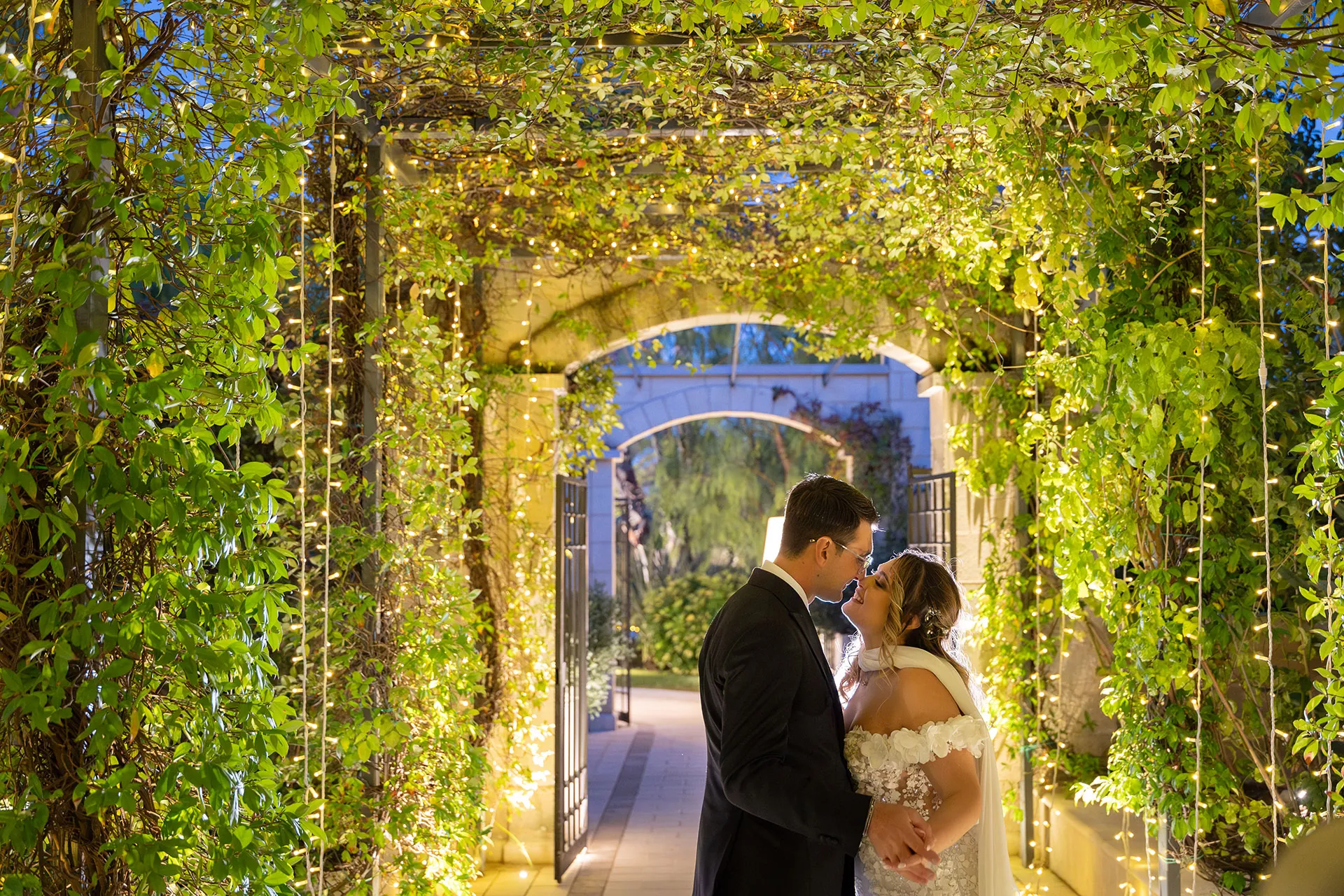
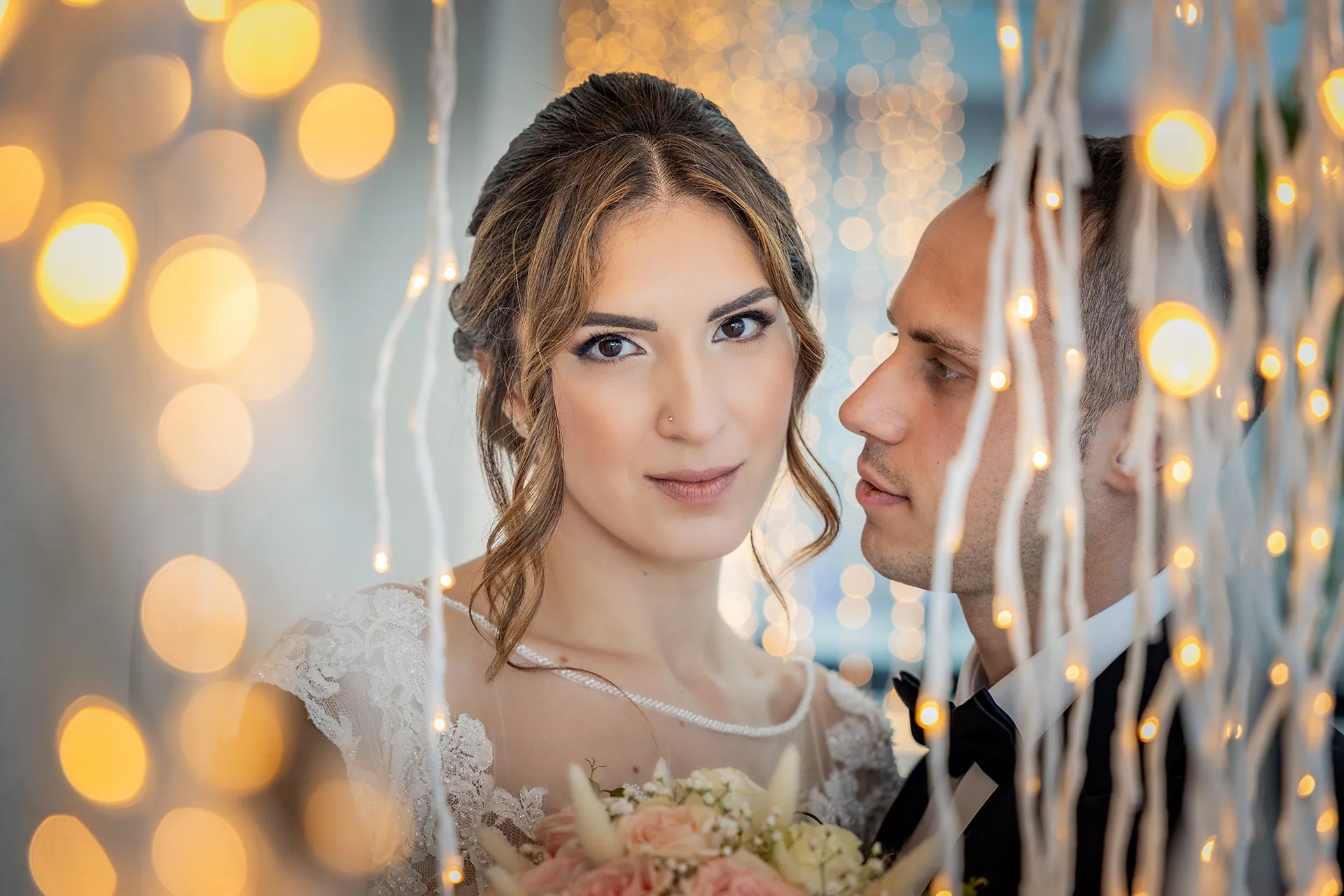
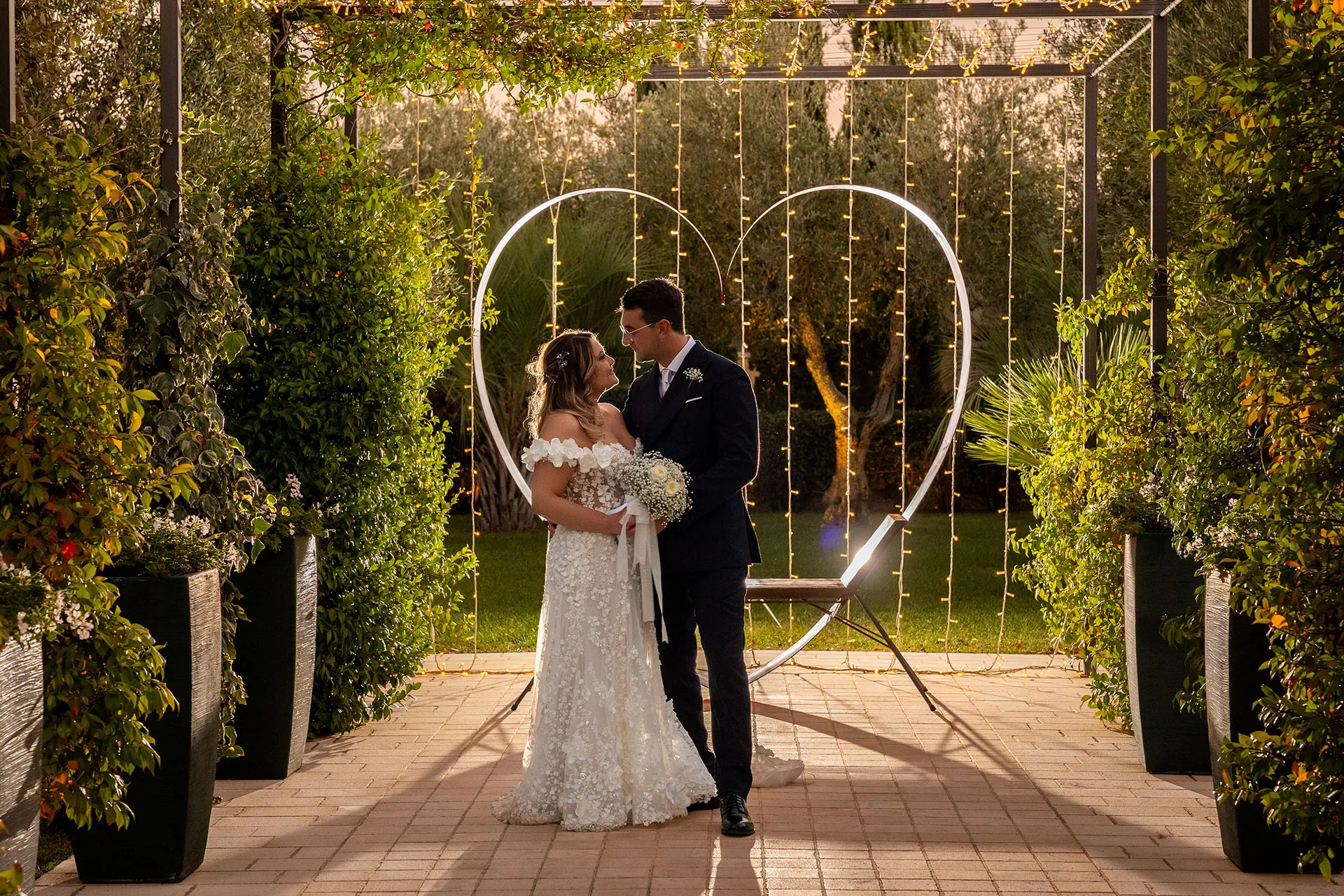
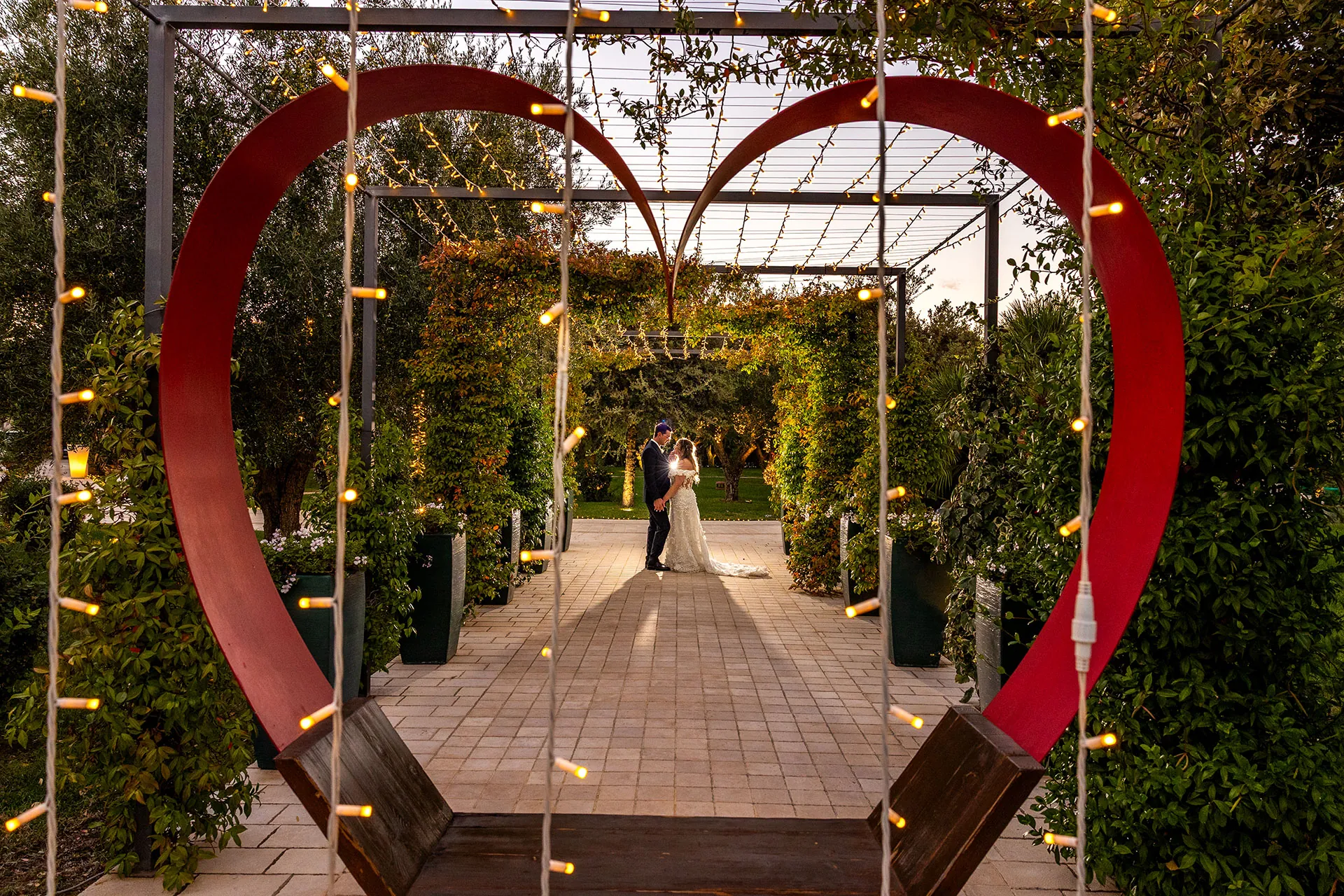
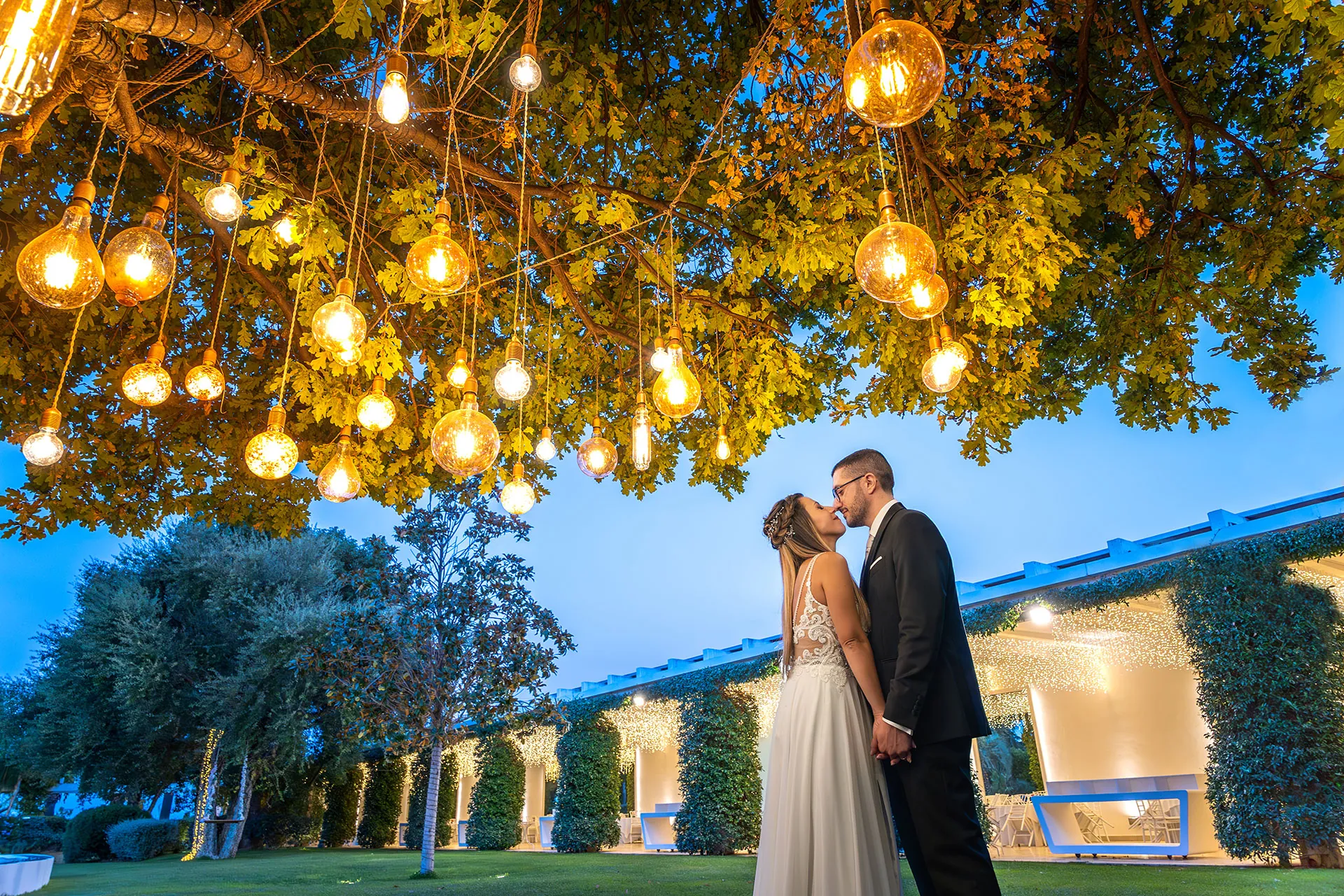
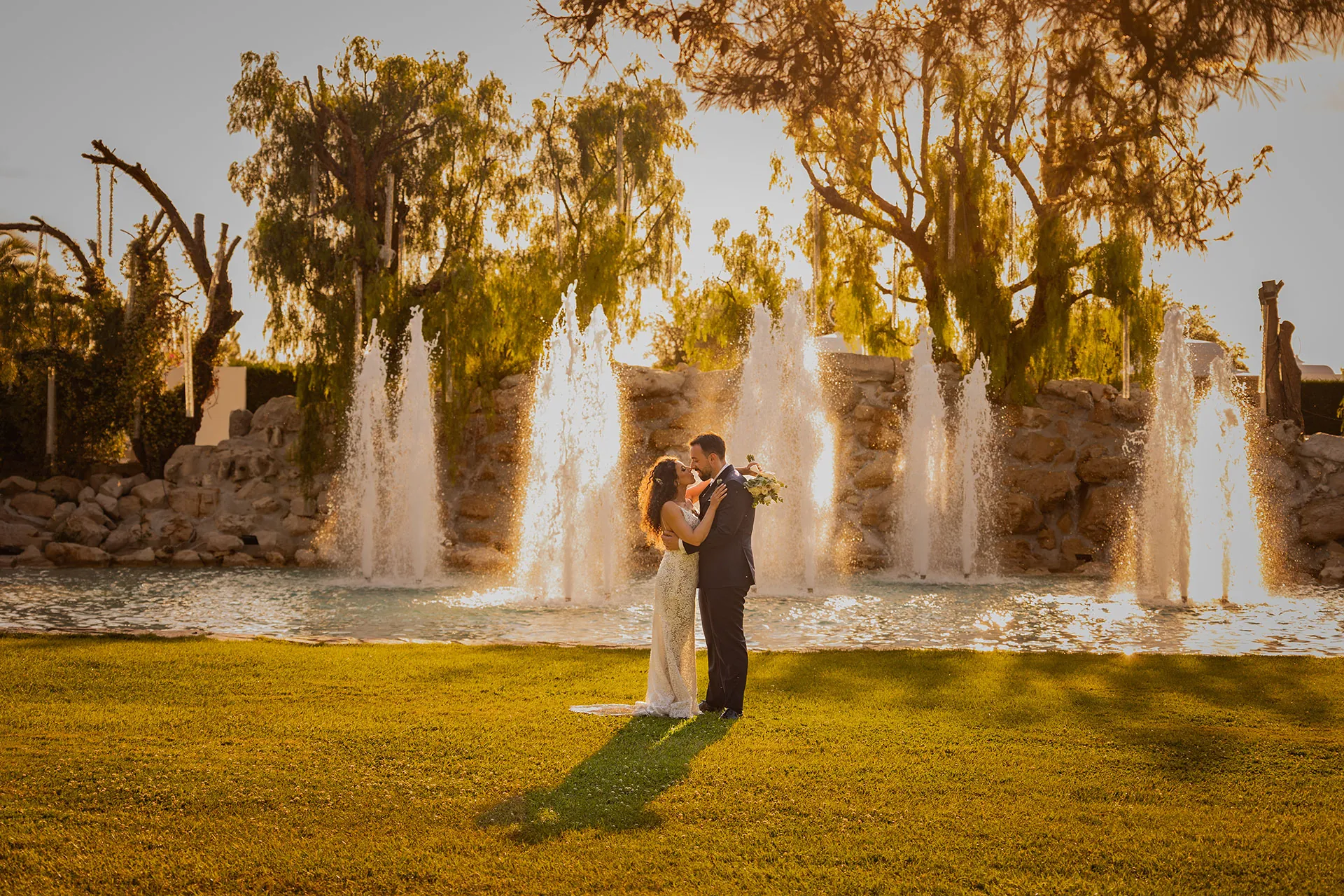
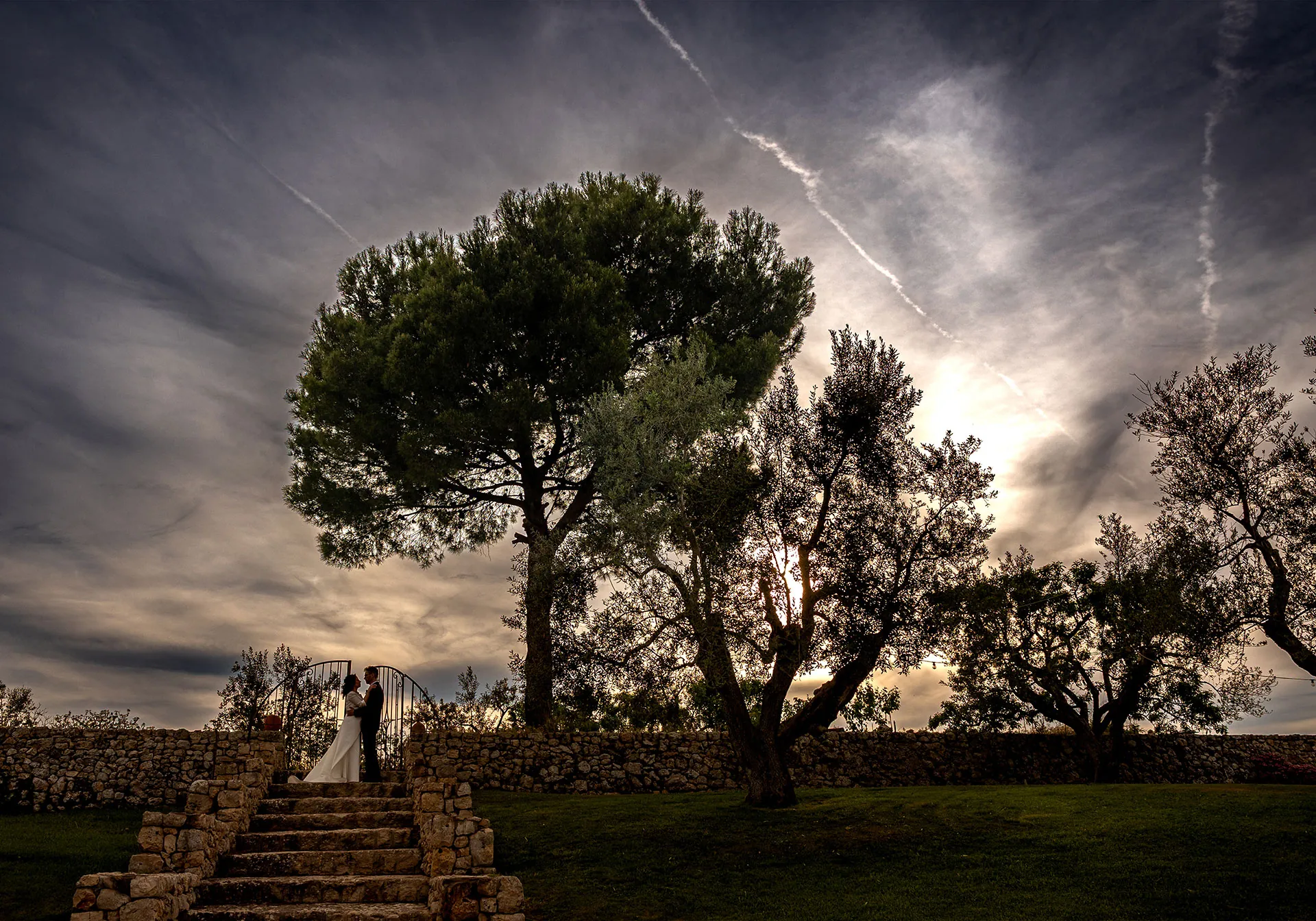
A selection from the archive, taken in villas and masserie across the region.


Questions from couples planning from abroad
How far is everything from Bari airport?
Trani is about forty minutes by car, north along the coast. The old towns and the countryside behind the coast are mostly within an hour of the airport, and a good part of Puglia is under two hours away. Brindisi is the other airport, roughly two hours south of Trani. Trani also has a station on the main Adriatic railway line, so guests without a car are not stranded.
What does a wedding cost?
A complete wedding runs from 1,500 to 3,000 euros. Where you fall inside that range depends on the hours of coverage, on whether a second operator works with us, and on whether you want film and drone as well as photographs. It is the range we publish, and there is no other one: the detail is on our wedding photography prices page.
We have never seen our venue. Can you tell us what it will look like?
Usually, yes. Send us the venue, your date and the time of the ceremony. If we have worked there, we will tell you where the light falls at that hour and where we would take you for the portraits. If we have not, we study the place before the day, which is a good deal easier for us than for you: most of these venues are within an hour of the studio.
Is your venue not on this list?
Send us the place, the date and the time of the ceremony. We will tell you what the light does there and how we would work it.