A Trani Cathedral wedding: white stone, sea light, harbour wind
The cathedral of San Nicola Pellegrino does not stand in a square with buildings around it.
A Trani Cathedral wedding: why does this church photograph unlike any other?
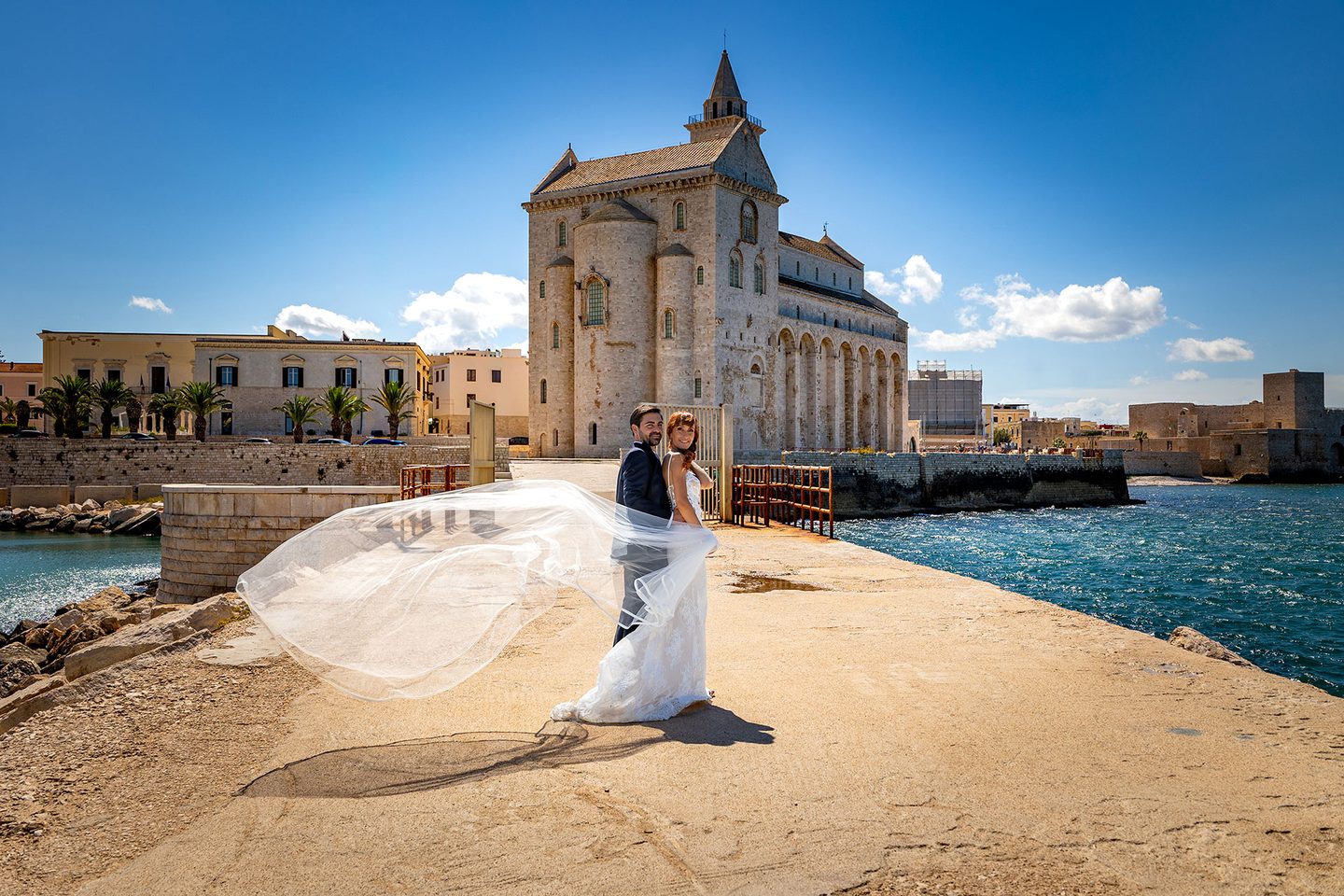
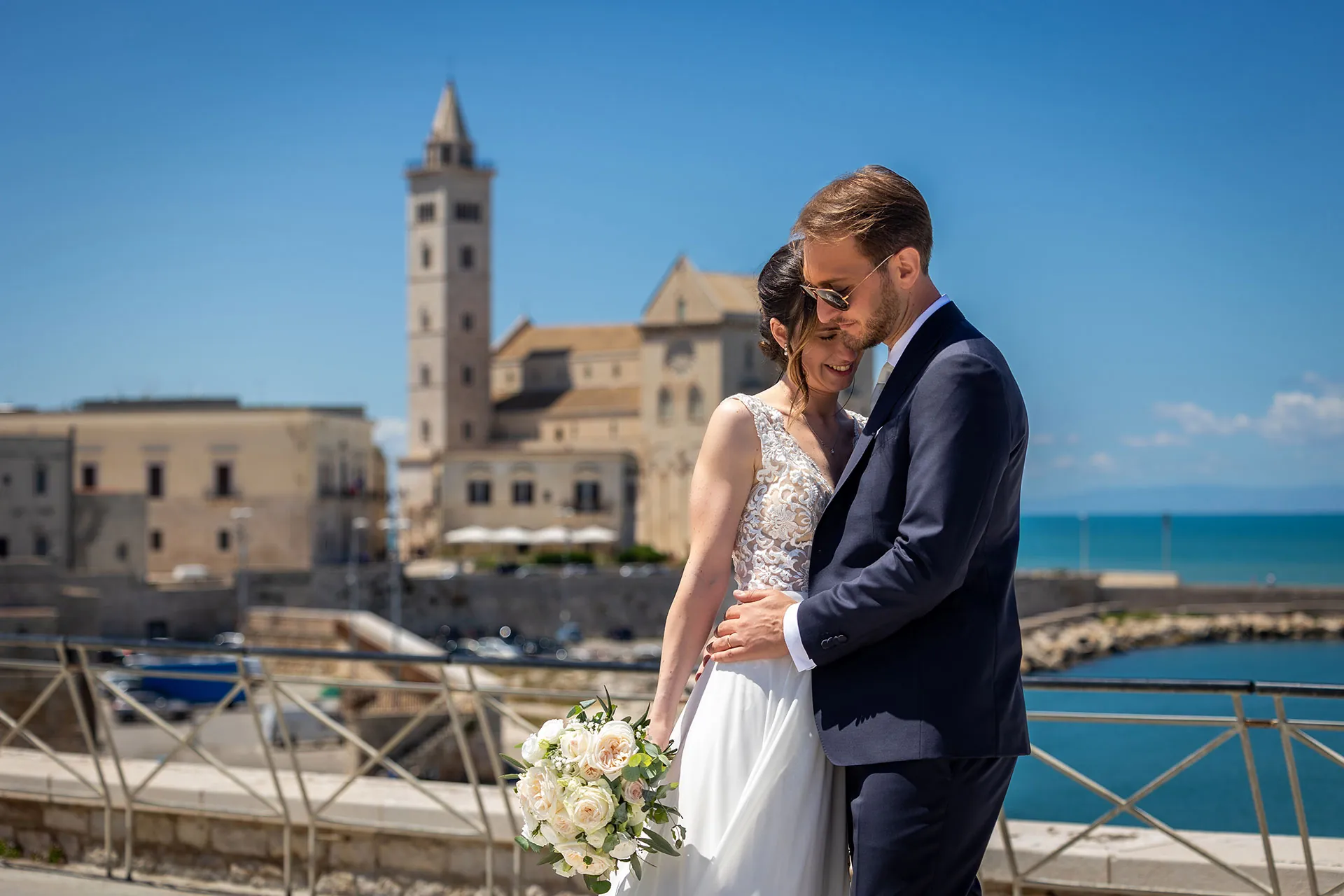
The cathedral of San Nicola Pellegrino does not stand in a square with buildings around it. It stands on the sea. Romanesque, begun at the end of the eleventh century, raised on a low shelf of rock beside the harbour of Trani, with a bell tower you can walk underneath and a forecourt that runs out and stops at the water. Behind it there is nothing but the Adriatic.
It is built from Trani stone, the local limestone: pale, close to white, with a warm cast that the sun draws out as the day goes on. For you that means a church which takes light on three sides and needs no decoration to look like something. For us it means the stone works as a reflector, and that the light here is honest. It flatters nothing and it hides nothing.
This is not a venue we looked up. It is the church of our own town, and our wedding photography studio in Trani is a short walk from the forecourt, at Via Umberto 230. There are ten photographs from the cathedral in our archive, and everything on this page comes from making them.

What happens to the light at five in the afternoon?
The stone starts to warm. Through the middle of the day the sun is high and hard, and white surfaces go flat and glaring. By late afternoon the sun has come round and dropped, the limestone turns from white to cream to something near gold, and the shadows on a face soften with no help from us. Turn towards the water and you get the other version: the two of you dark against the sea, the outline doing all the work.
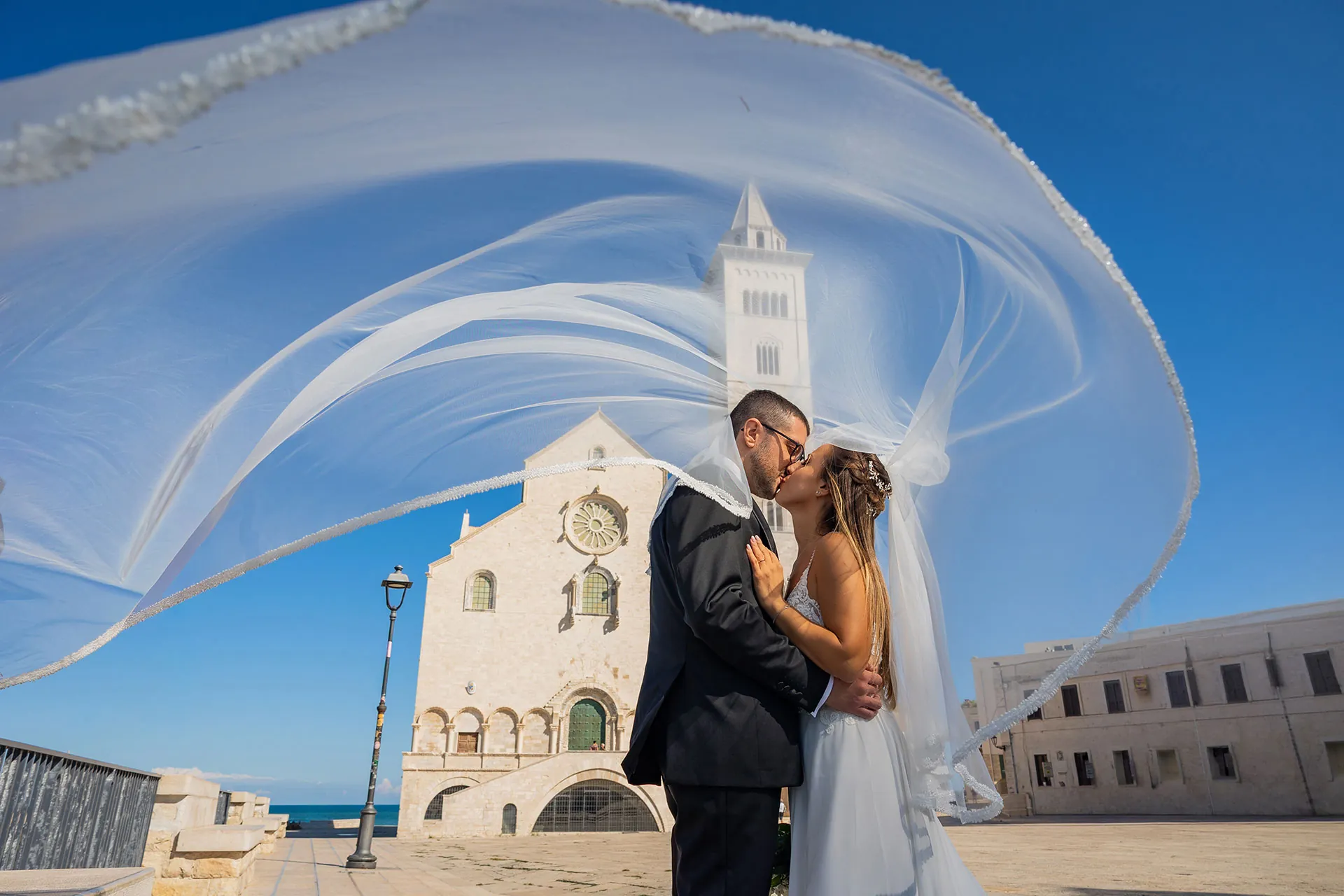
The wind off the harbour is the other constant. It rarely stops. We do not fight it. A veil lifting, a dress moving, hair going the wrong way at the right moment: those are the frames people still look at years later. What matters is knowing which direction it comes from and turning you into it, or out of it, on purpose.

Where can you actually stand?
Four positions we use at the cathedral, and what each one is for.
The forecourt over the water
The exit from the ceremony happens here: guests down both sides, the sea behind, the facade above. It needs room, so we work wide and try not to lose the rice in mid-air. In Italy guests throw rice, not paper confetti, and it photographs far better.
The Romanesque portal
The doorway frames you without anyone arranging anything. With the sun high we shoot into the shade of the entrance; later in the day the pale stone around it behaves like a reflector, and we use it as one.
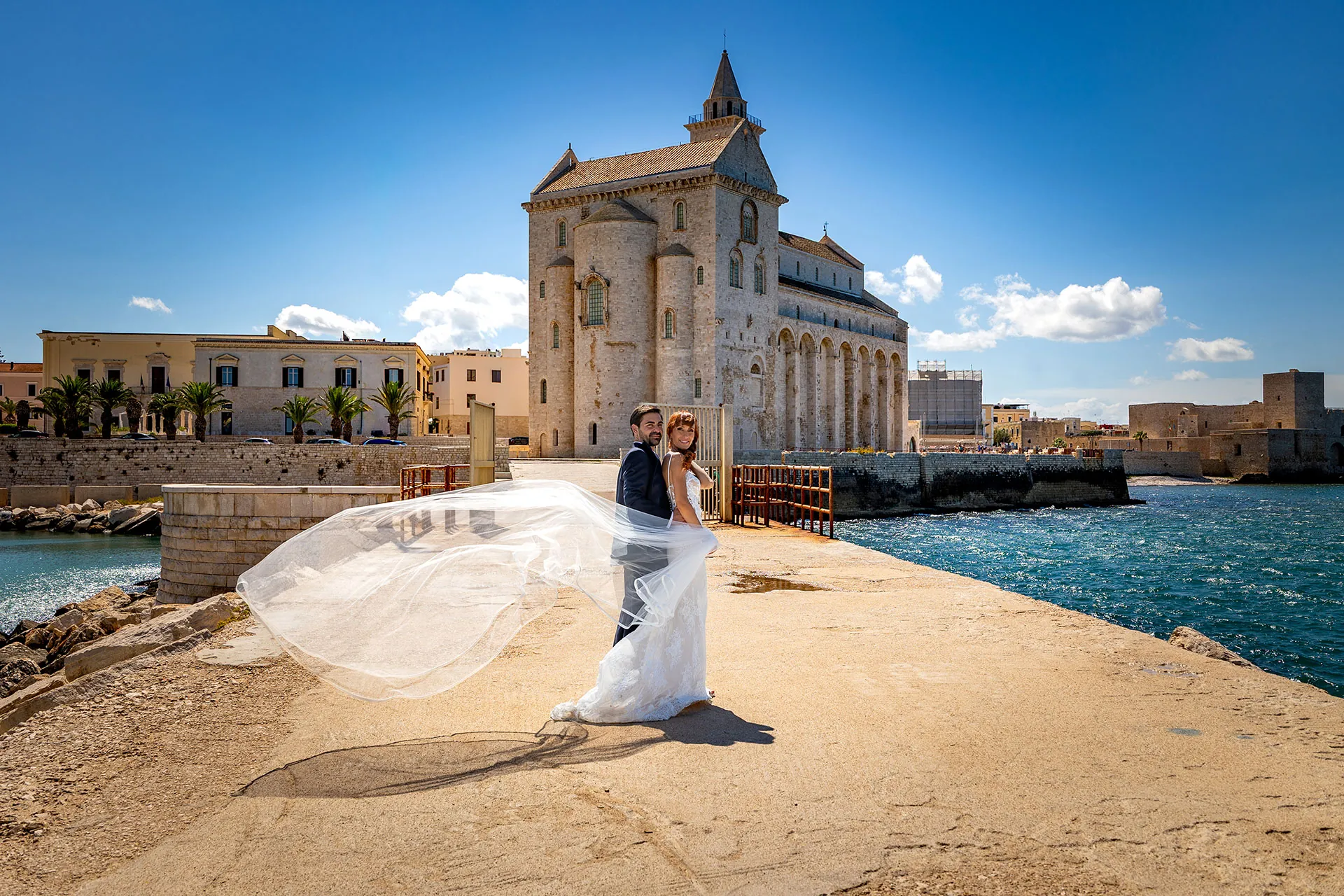
The quay
A short walk from the forecourt, the harbour gives you the whole cathedral at once, standing in the water. It is the wide frame that closes the ceremony, and it costs about five minutes of your day.
From above
Where the rules allow it, a drone holds the cathedral, the sea and the crowd on the forecourt in a single frame. From the ground those three things never sit together.
Photographs made at the cathedral
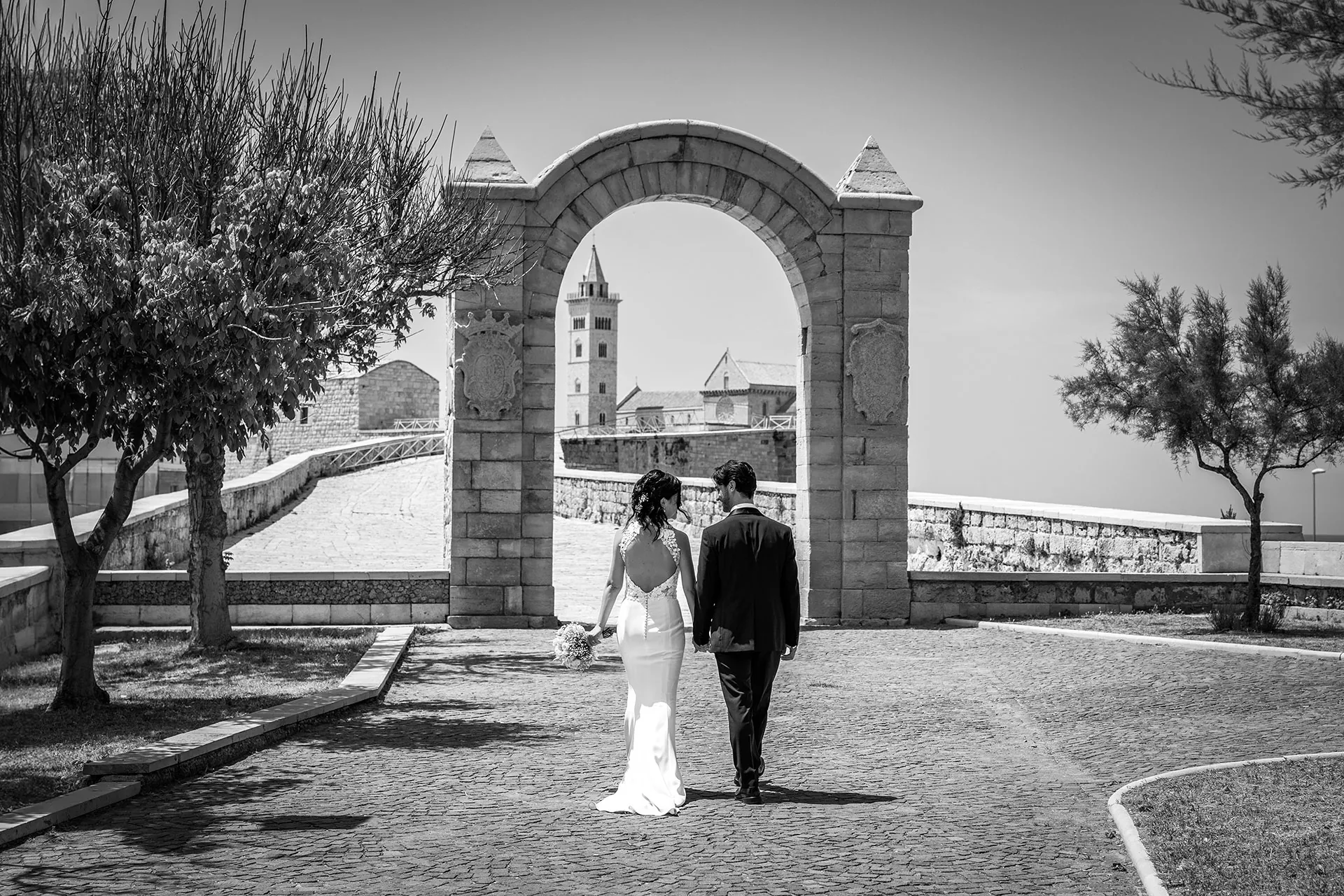
Ten frames from our archive, all taken here.
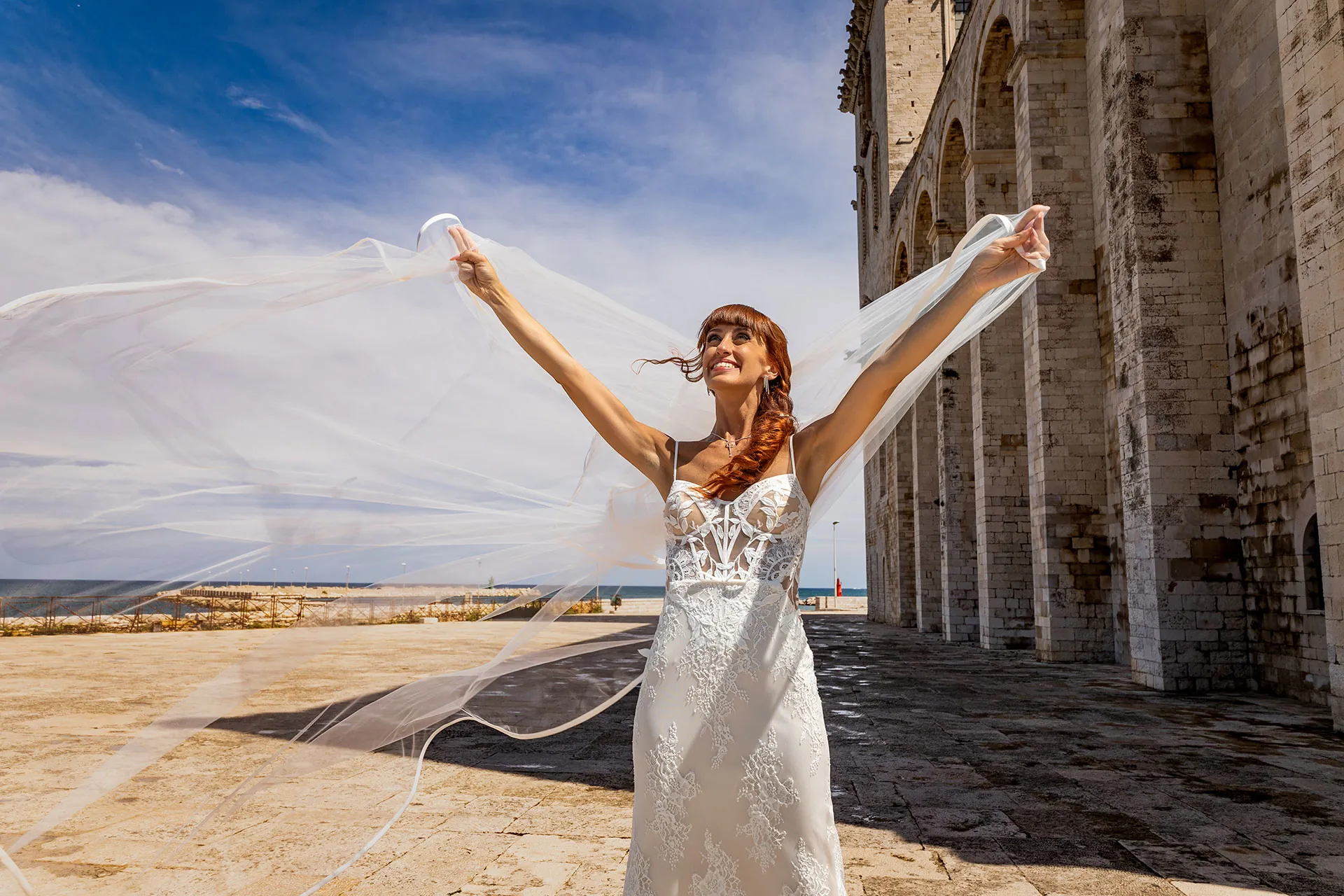
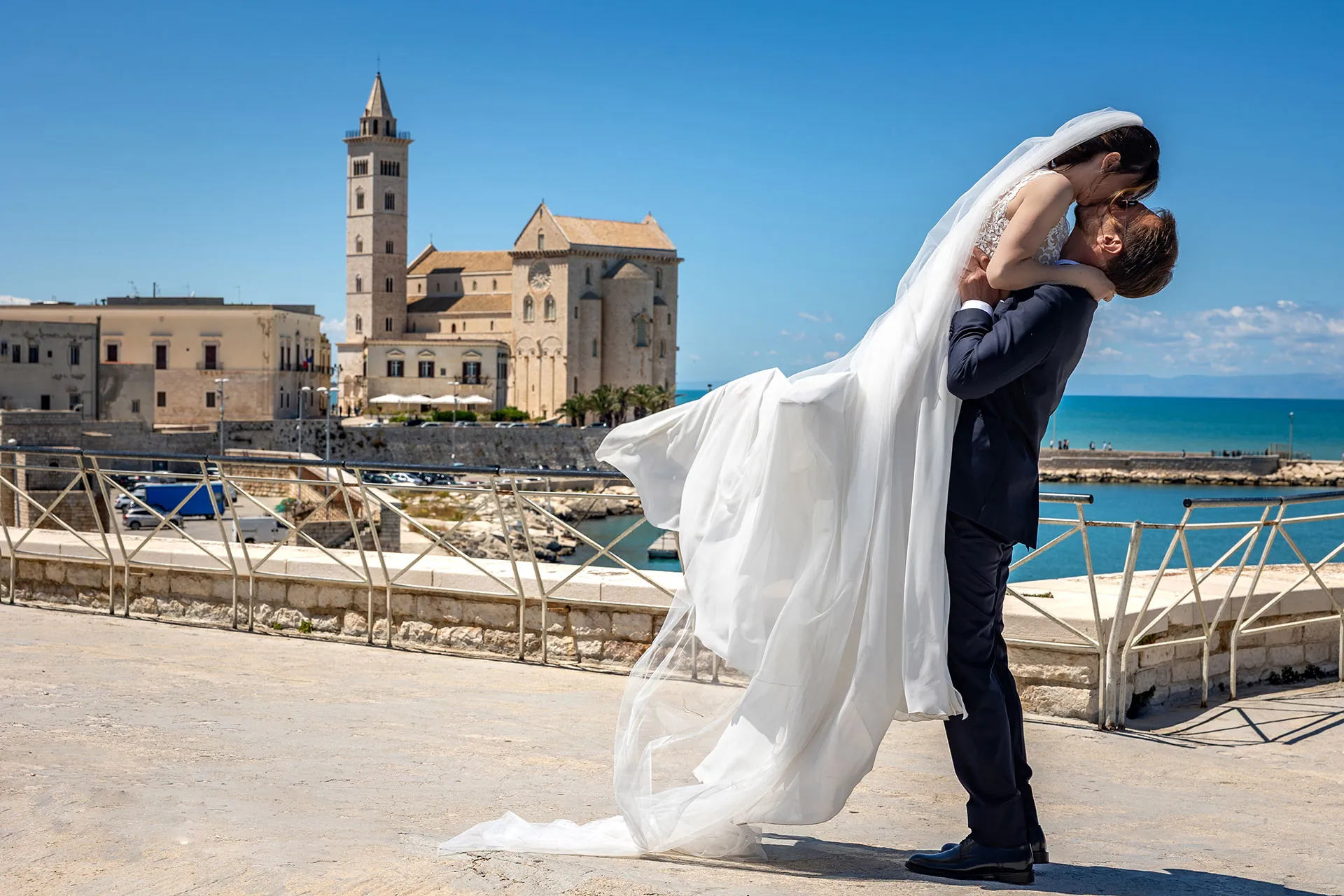
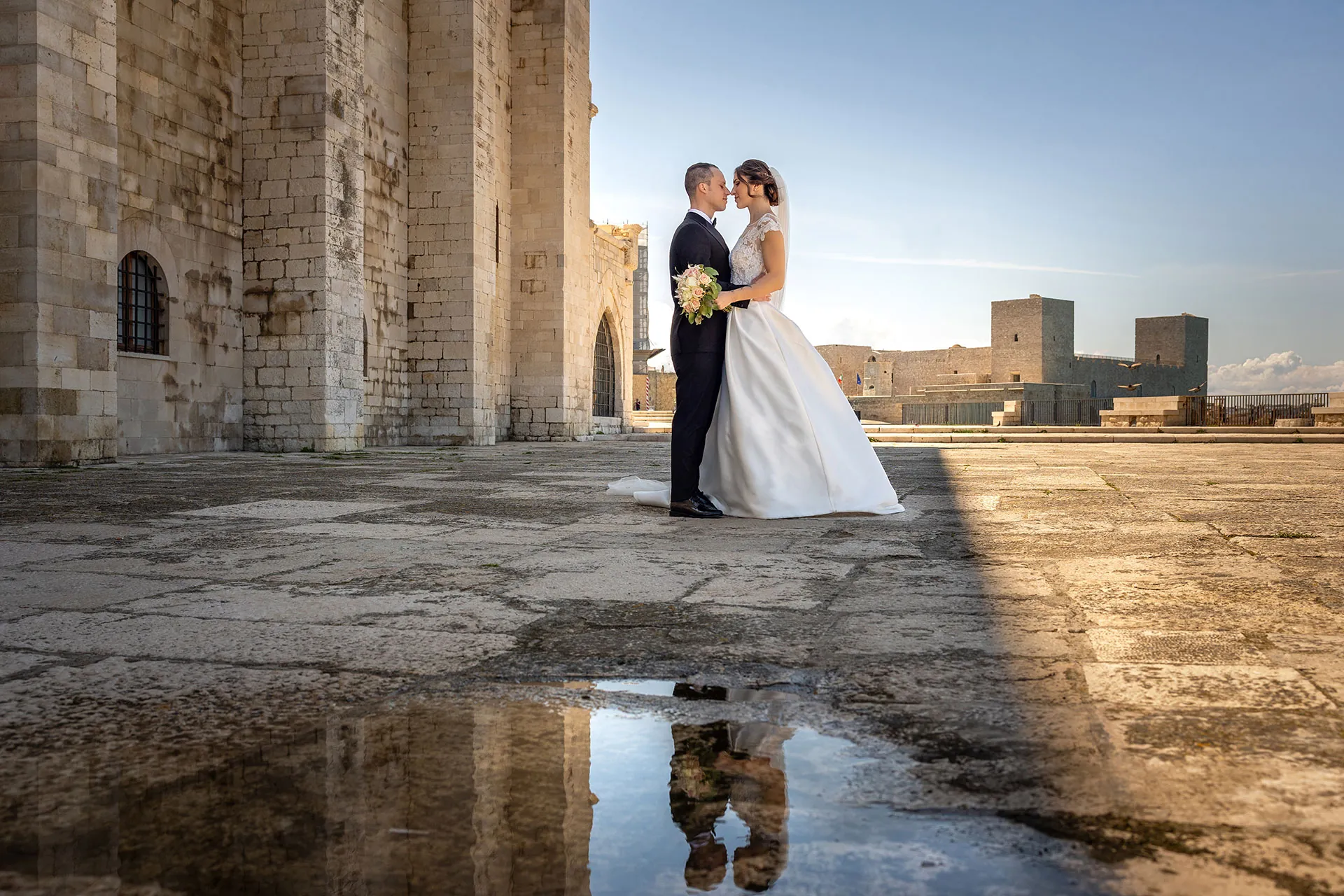
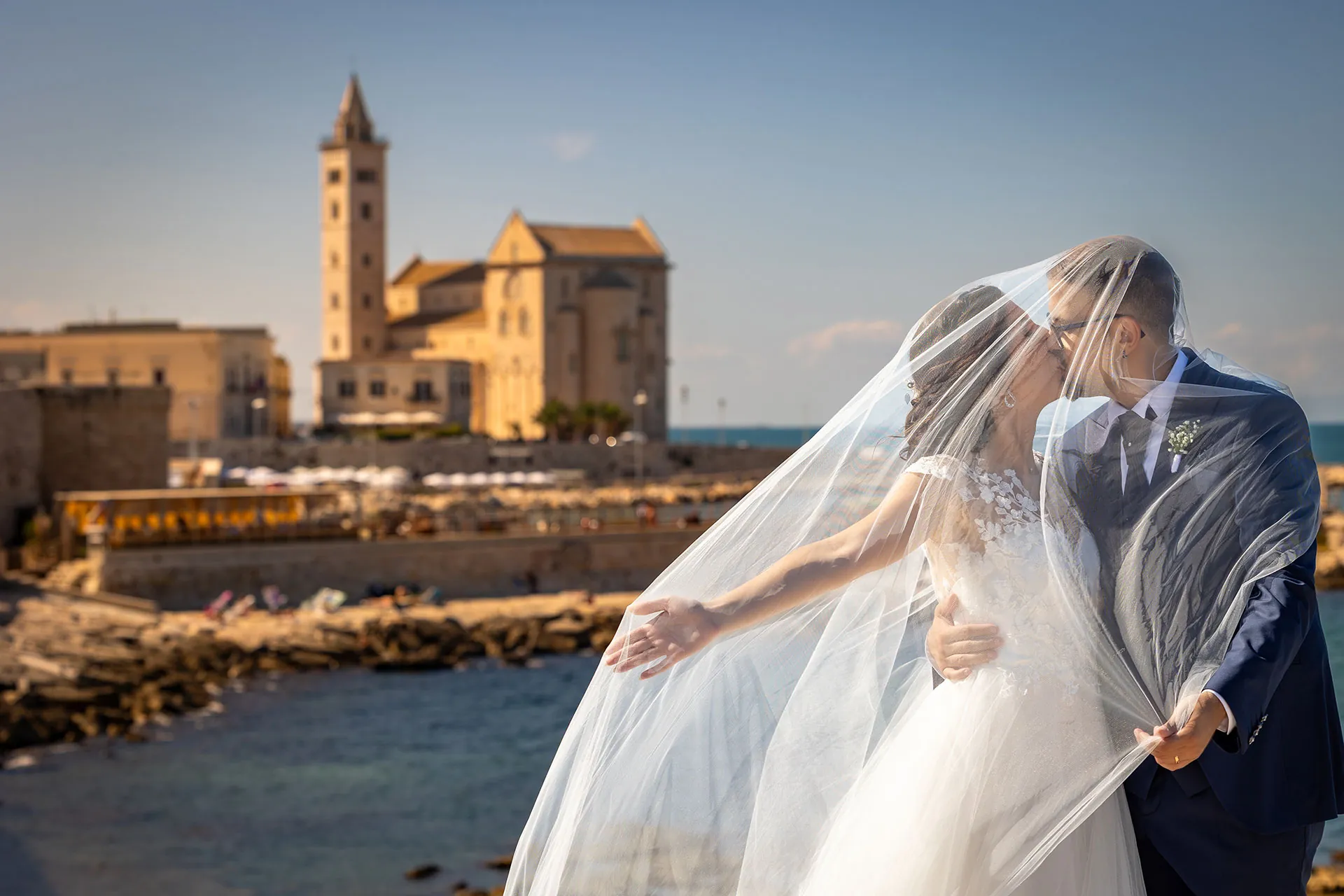

How do we work during the ceremony?
As reportage, from start to finish. No posing, no choreography, and nobody asked to repeat a moment for the camera. Inside we stay where we are useful and out of the way: the entrance, the rings, a mother's hands, whoever is crying in the third row. The cathedral looks after itself. Our job is to miss nothing of yours.
Two things surprise couples arriving from abroad. The first is that this is a working cathedral on a public square, so there will be visitors on the forecourt. That is normal, and in a photograph it reads as a town rather than a set. The second is how short the time outside is. The exit, the hugs, the rice, then portraits on the forecourt and down at the harbour: half an hour gets the essentials without holding your guests hostage.
After that the day usually moves inland, often to a masseria wedding among the olive trees, and we go with it. If your reception is on the sand instead, a beach wedding in Puglia runs to a stricter clock, and we have written that one down too. The cathedral is one of four kinds of place set out in our Puglia wedding venues guide.
Questions about marrying at Trani Cathedral
What time of day is best for the photographs?
The afternoon. The stone warms as the sun drops, and the forecourt stays bright until evening, so a ceremony in the second half of the day gives you the better light on the way out. The times of the services are set by the parish, not by us. Once we know your hour, we build the rest of the day around it with you.
Can we marry there if we are not Italian?
That is a question for the parish office and for your planner, not for a photographer. We would rather tell you we do not know than give you an answer that turns out to be wrong. What we can tell you is exactly what the place will look like at whatever hour you are given.
How do our guests get to Trani?
By car it is about forty minutes from Bari airport, north along the coast. Trani is on the main Adriatic railway line as well, so guests can come by train and walk from the station to the cathedral in about fifteen minutes. Parking near the harbour is tight on summer weekends, which is worth telling people in advance.
Are you getting married at Trani Cathedral?
We live here and we know it in every light. Send us your date and the hour of the ceremony.