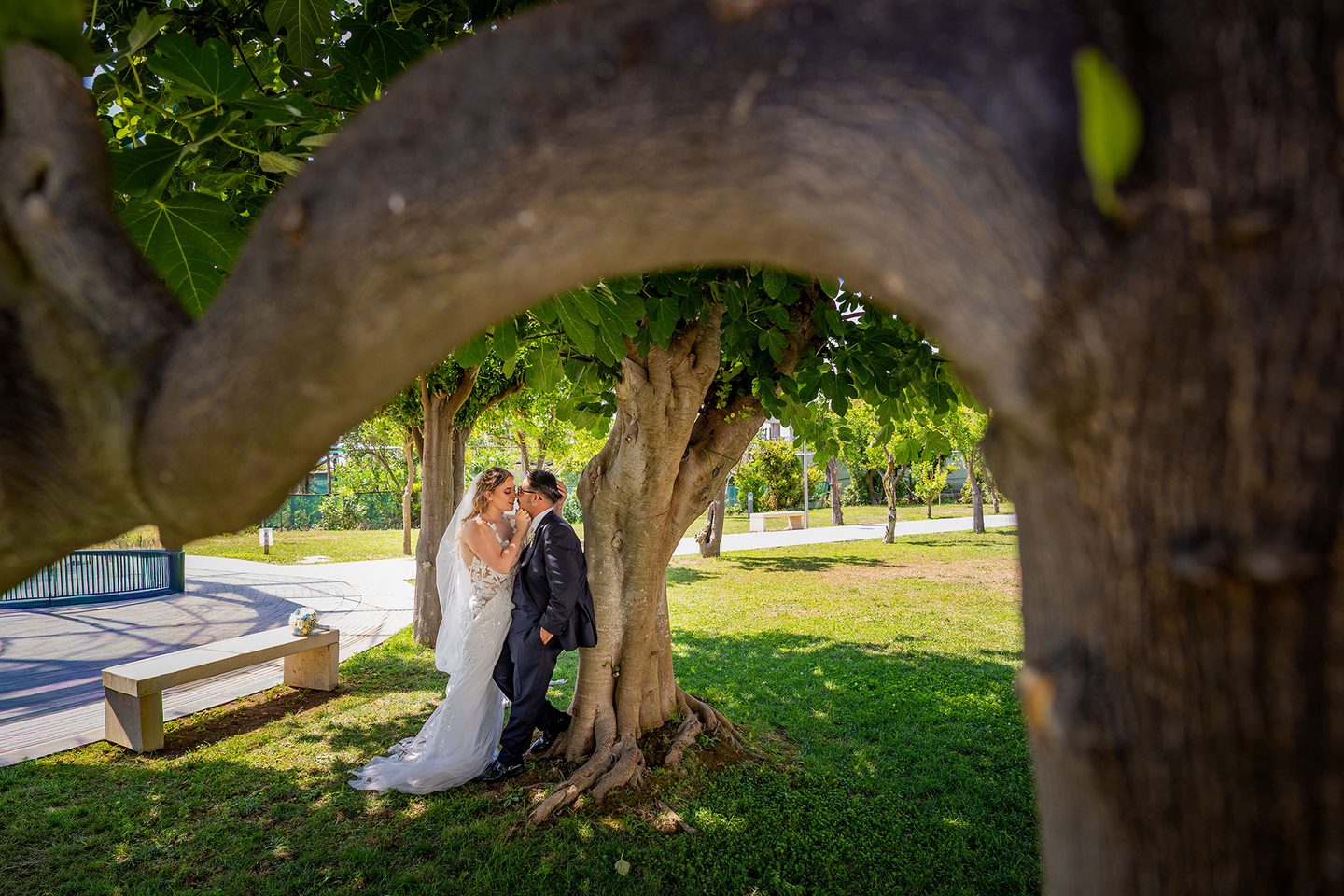
Masseria wedding photographer in Puglia: stone, olives and the light that turns
A masseria is a fortified farmhouse. Not a villa and not a hotel: a working estate, built in the centuries when the Puglian countryside was not a safe place to live.
What is a masseria, and what does a masseria wedding look like?
A masseria is a fortified farmhouse. Not a villa and not a hotel: a working estate, built in the centuries when the Puglian countryside was not a safe place to live. Thick limestone walls, small windows, one gate into a courtyard, sometimes a tower and a chapel. Everything the farm needed sat inside the wall: the animals, the oil press, the water, the families who worked the land.
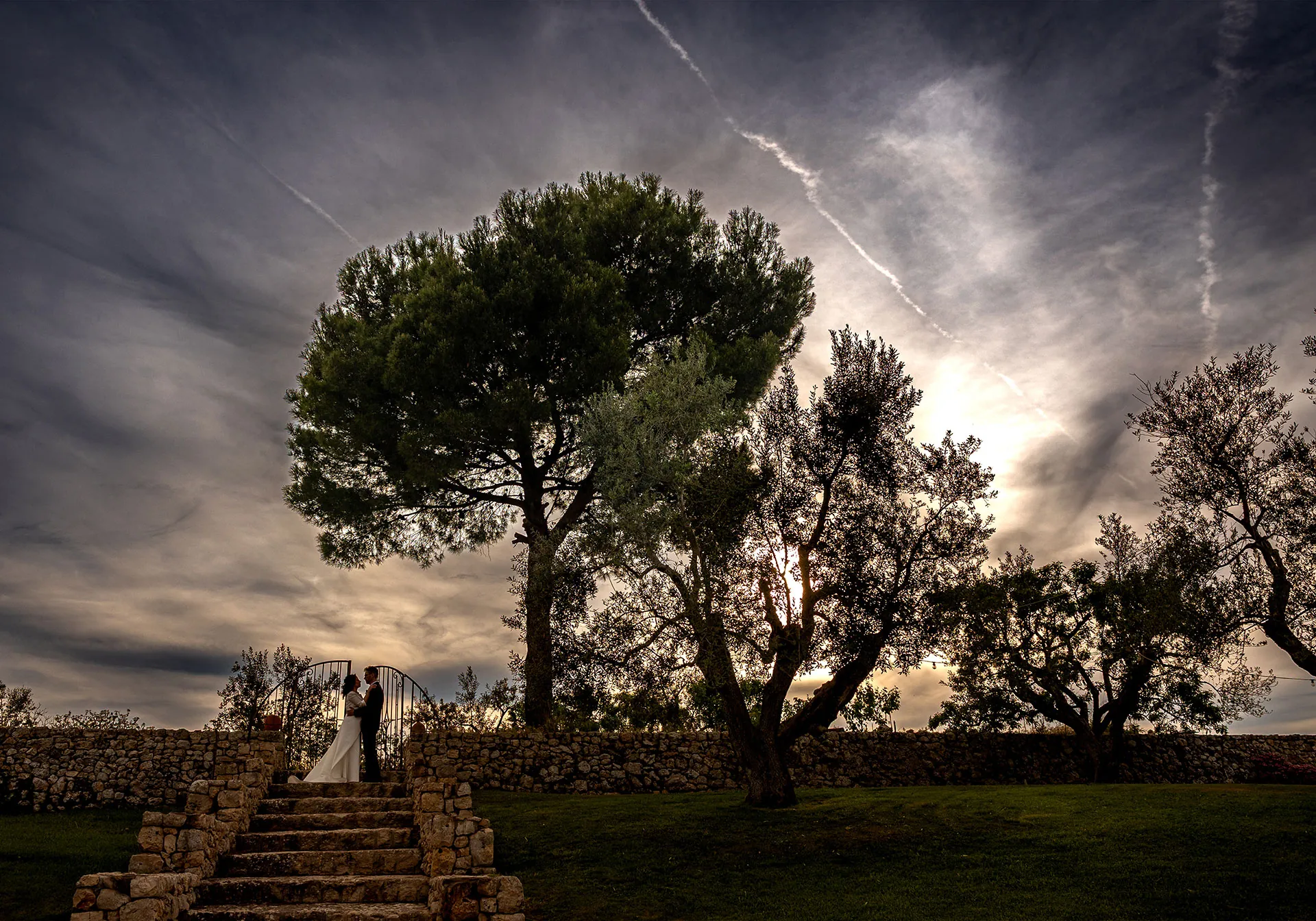
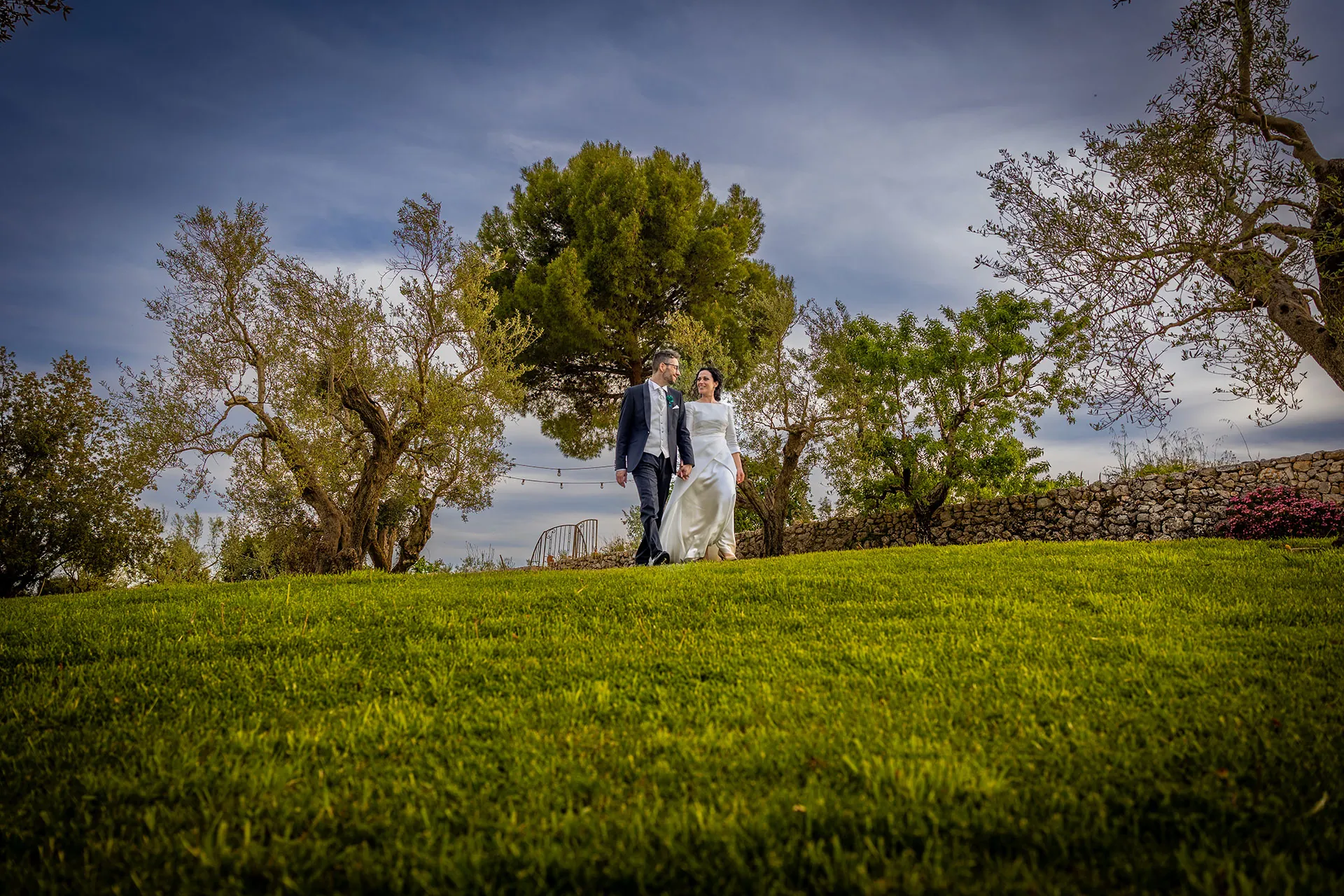
Around them there are olive groves, dry-stone walls dividing the fields, red earth, and very little else in the frame. Many masserie are now run as wedding venues. The courtyard takes the drinks, the old threshing floor becomes the dance floor, dinner is laid outdoors under strings of bulbs. If you have never seen one, that is the picture: pale stone, old trees, and a party that stays outside until very late.
Villas and masserie make up the largest group in our archive, 57 photographs, made across thirty years of wedding photography in Puglia. No other kind of venue repays the way we work as well: reportage, there all day, nothing posed.
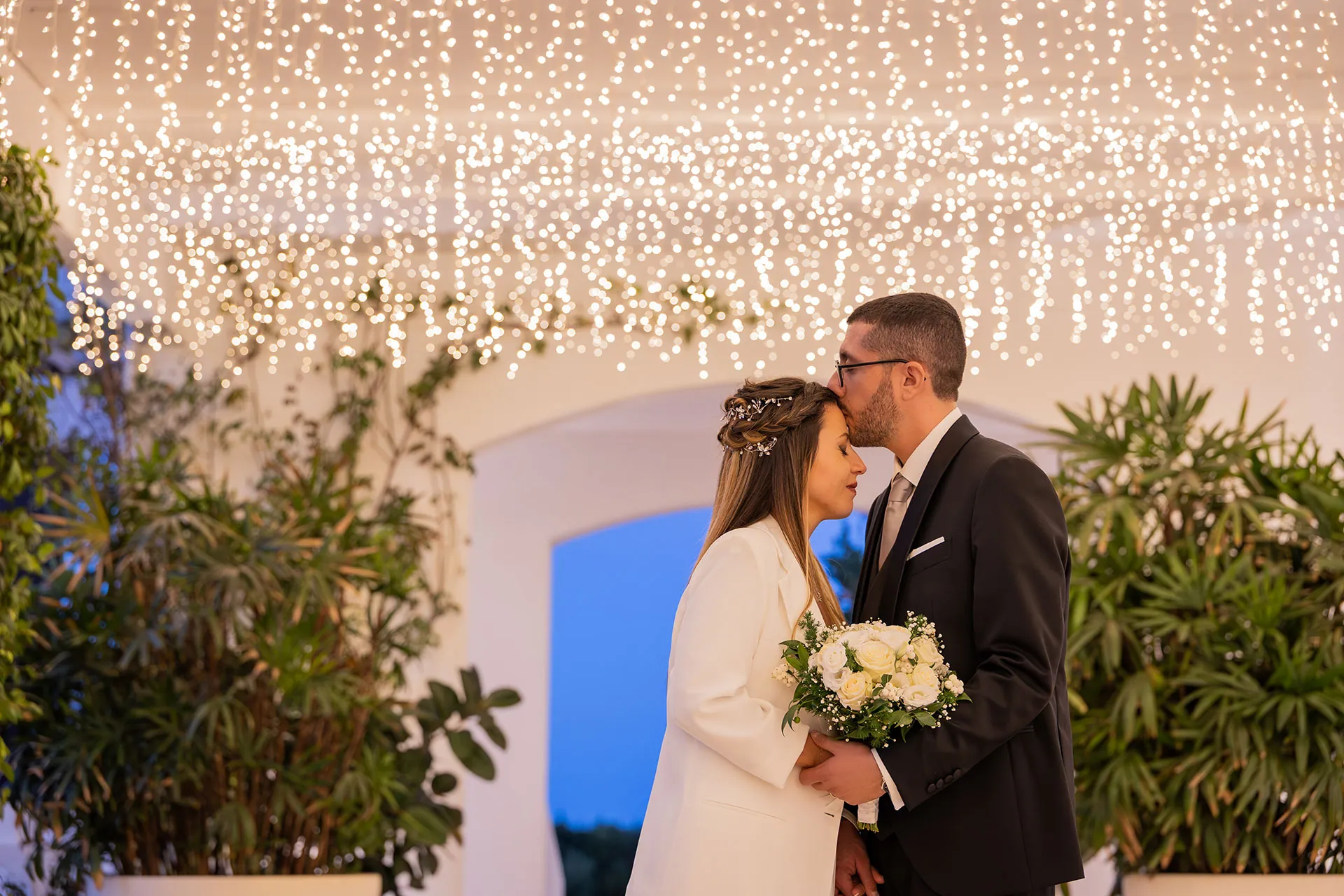
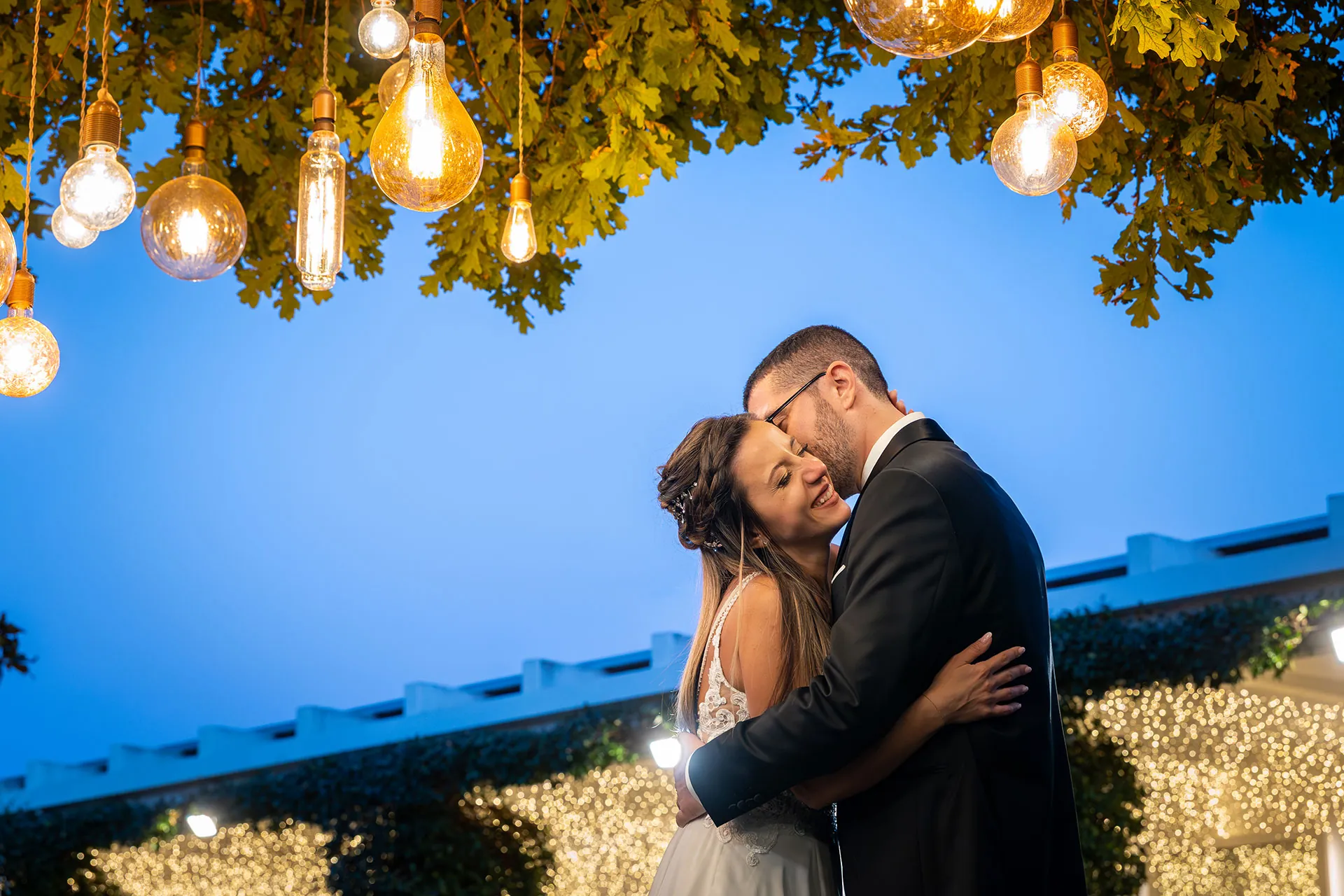
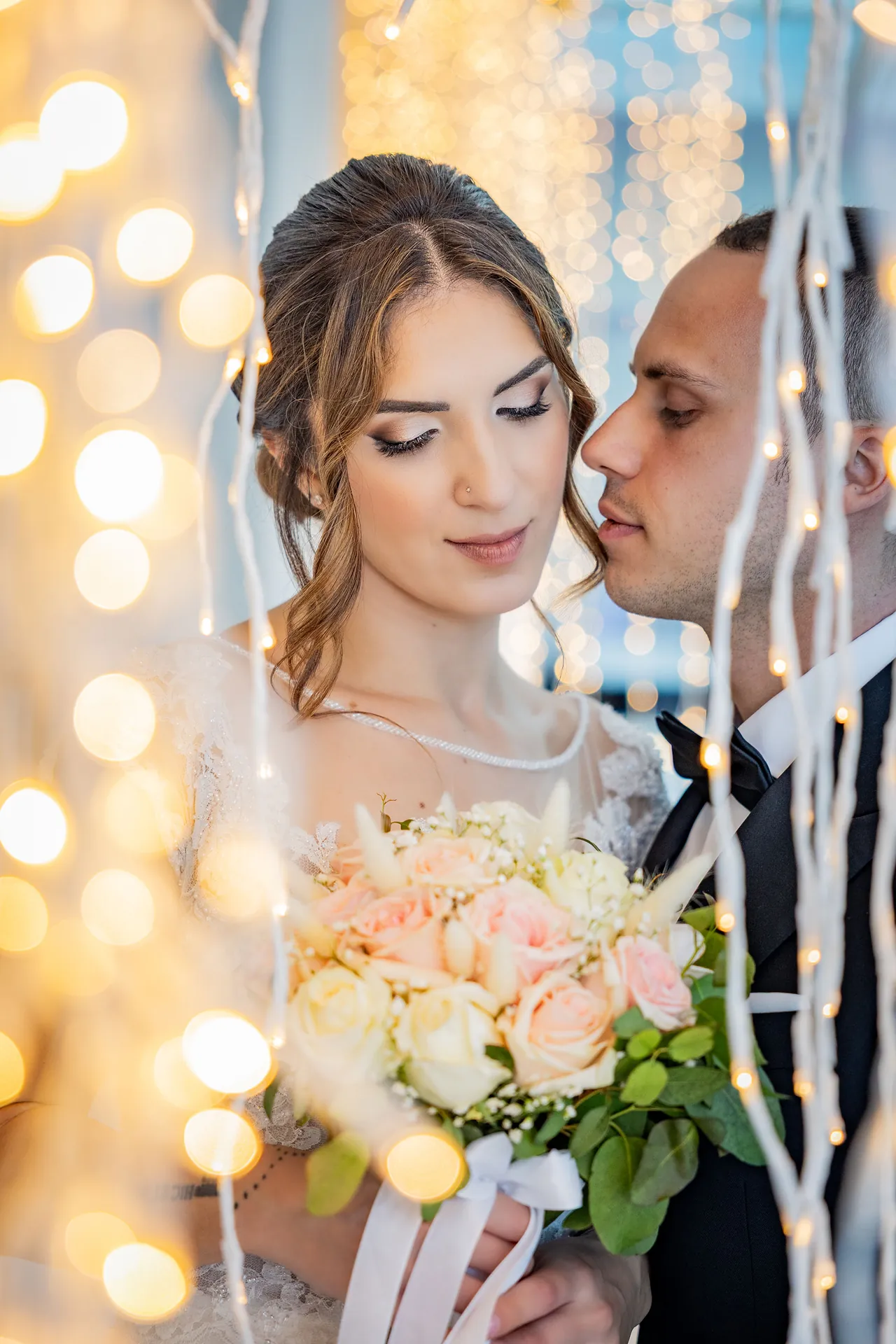

Three different lights in one day
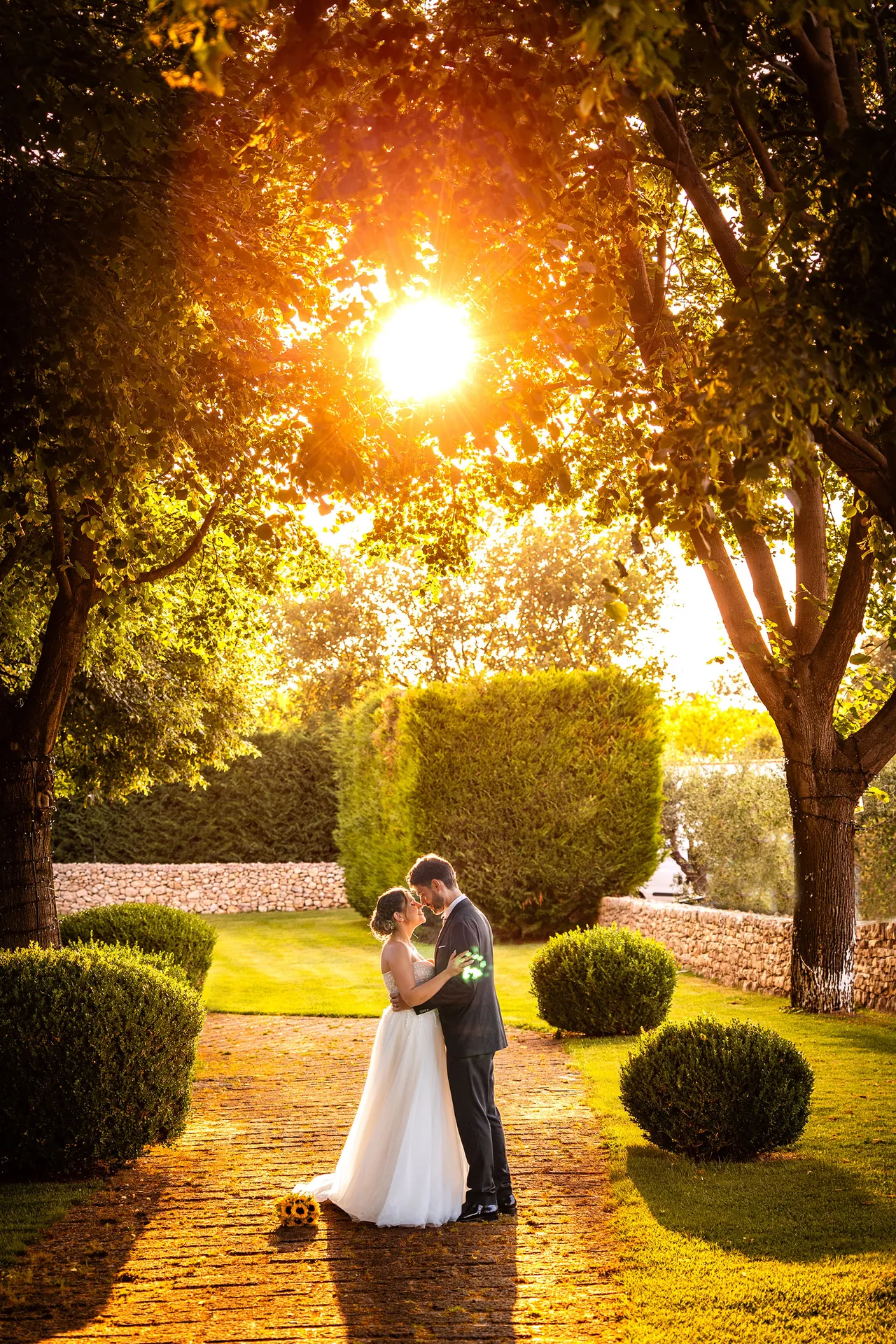
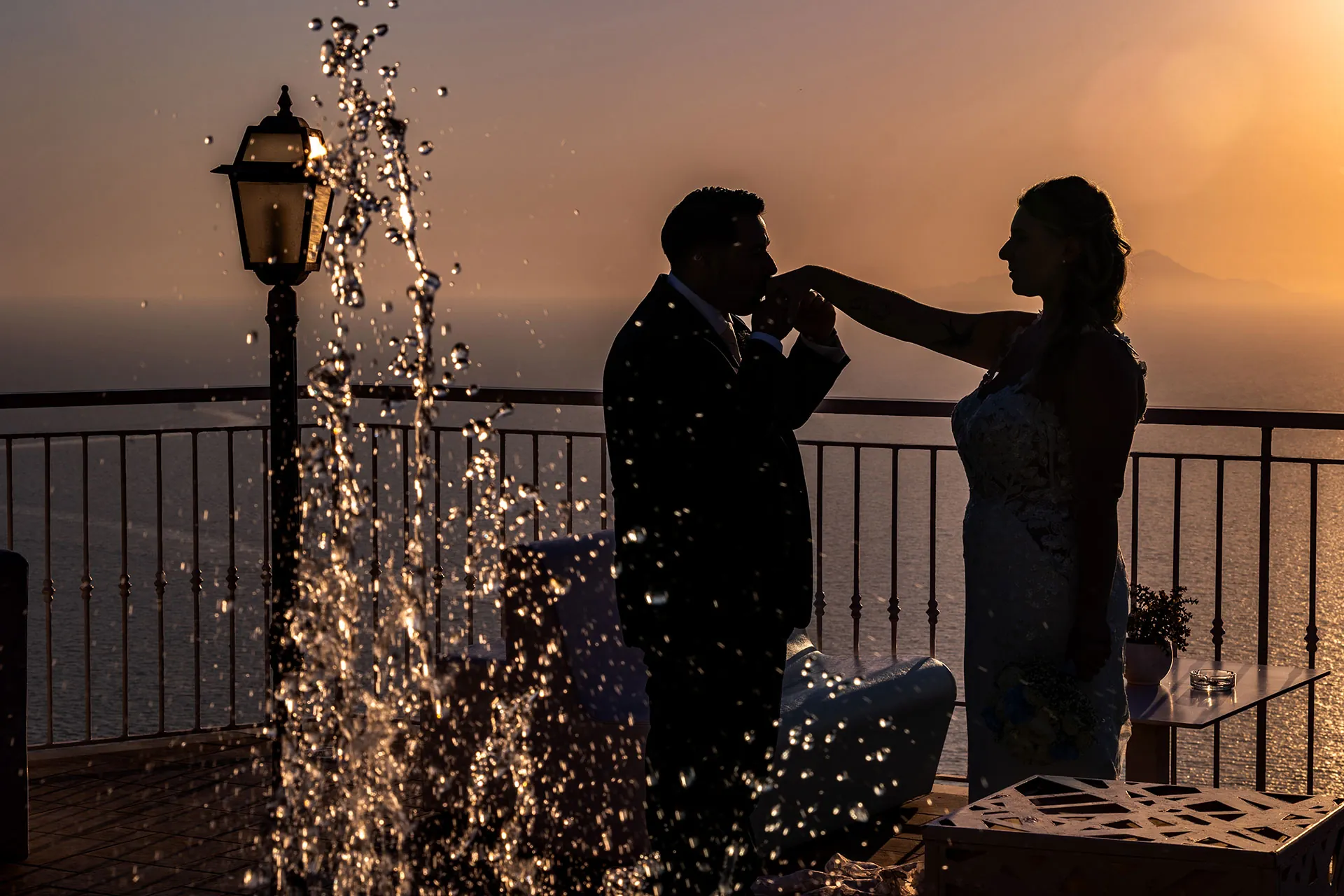
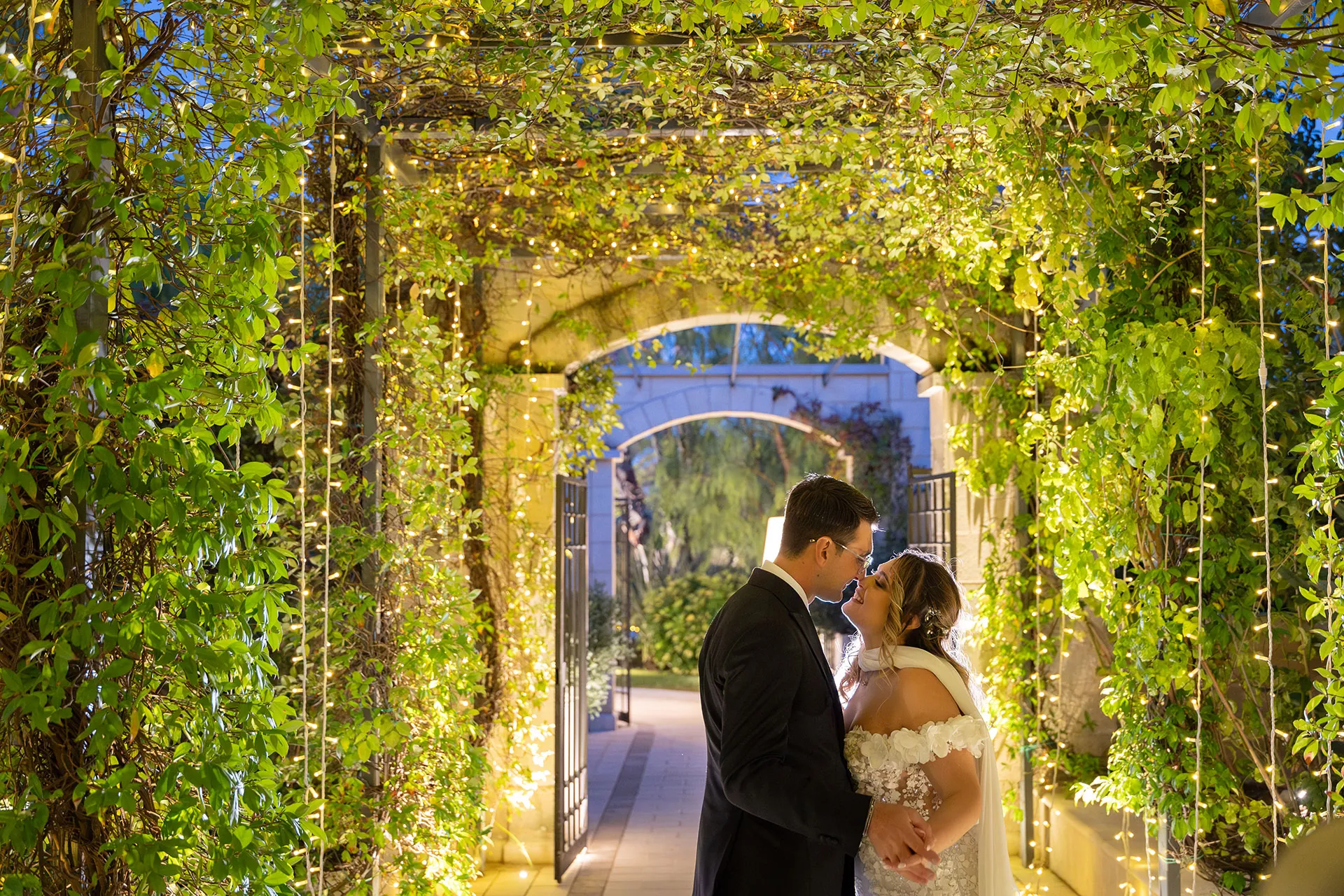
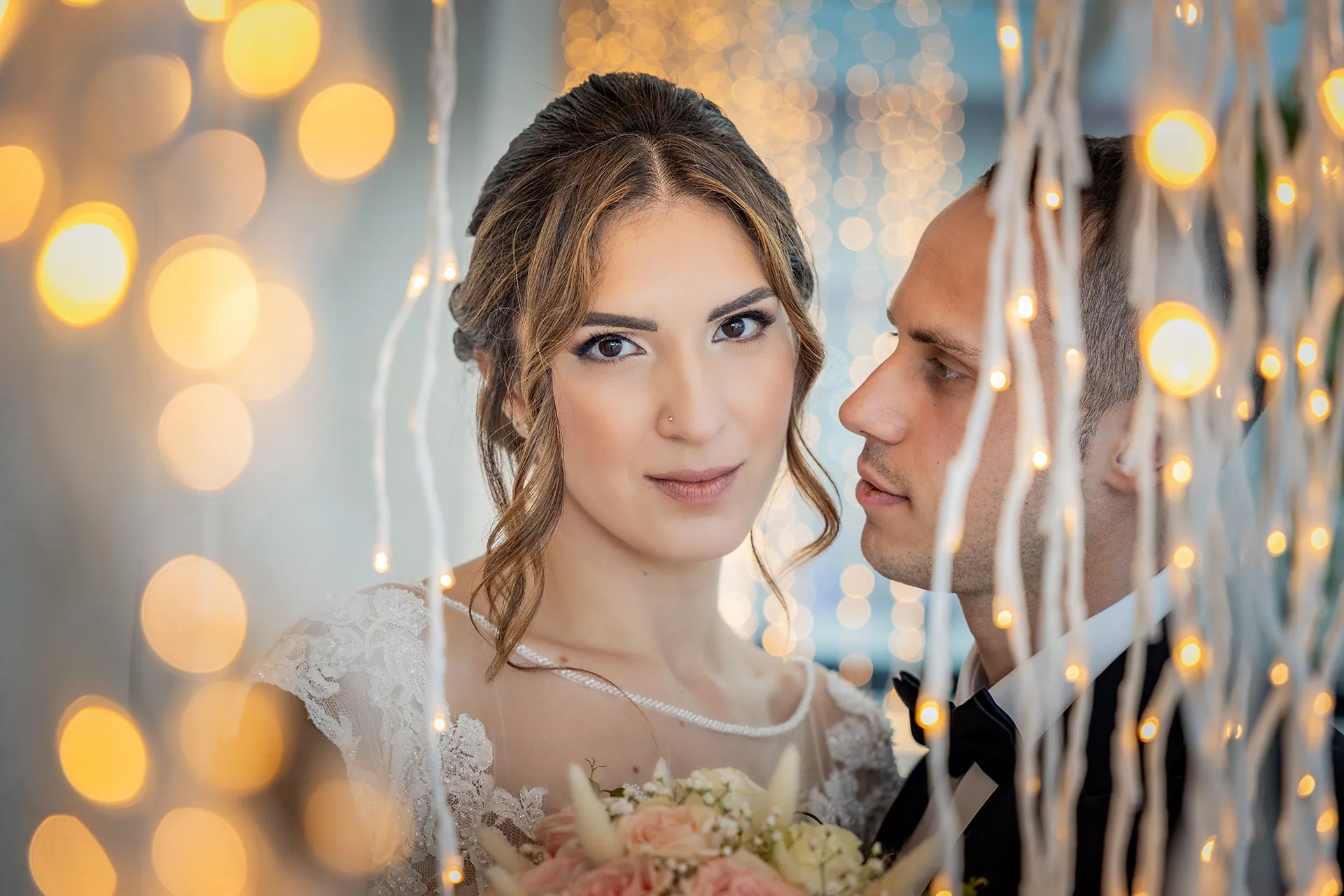
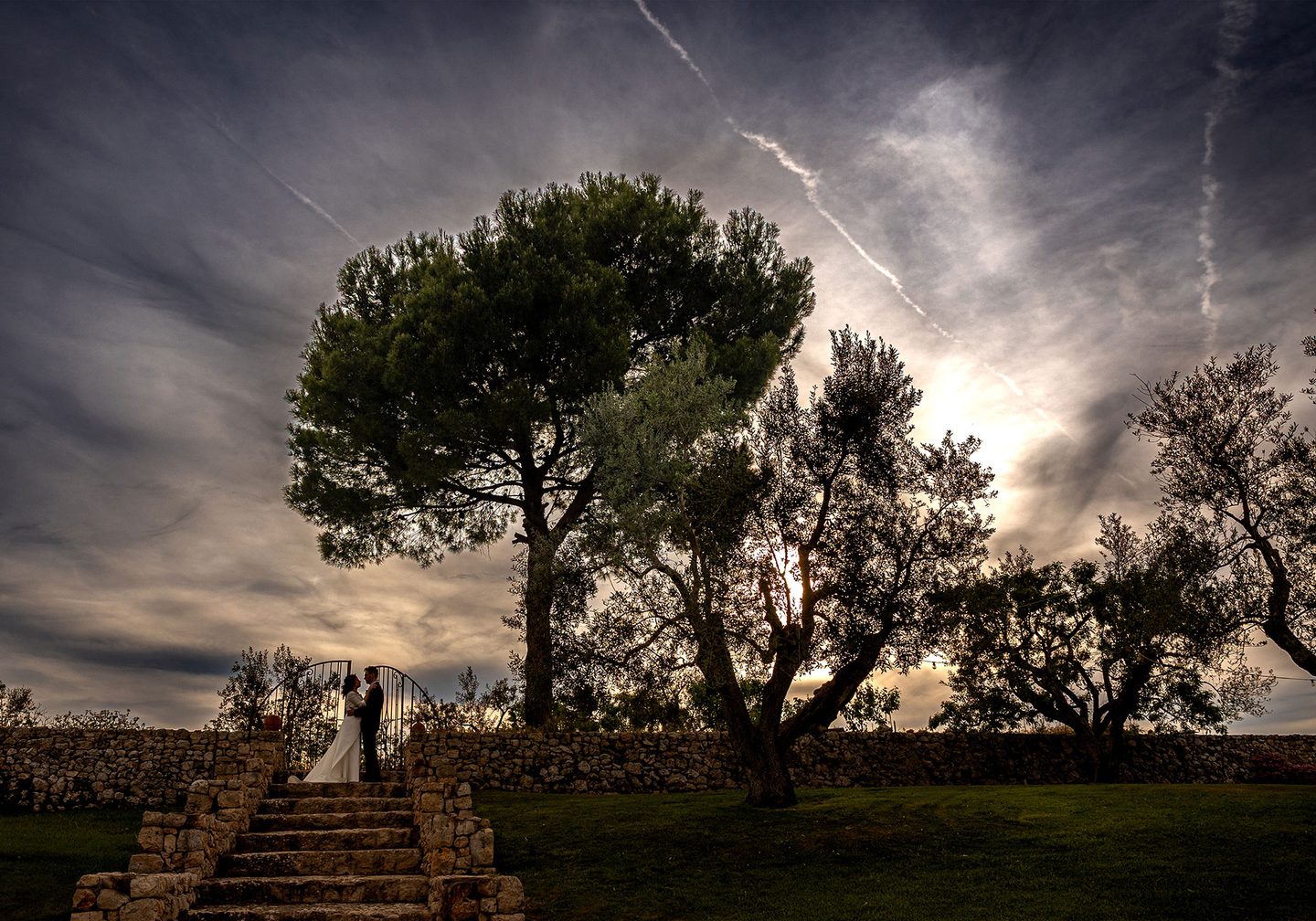
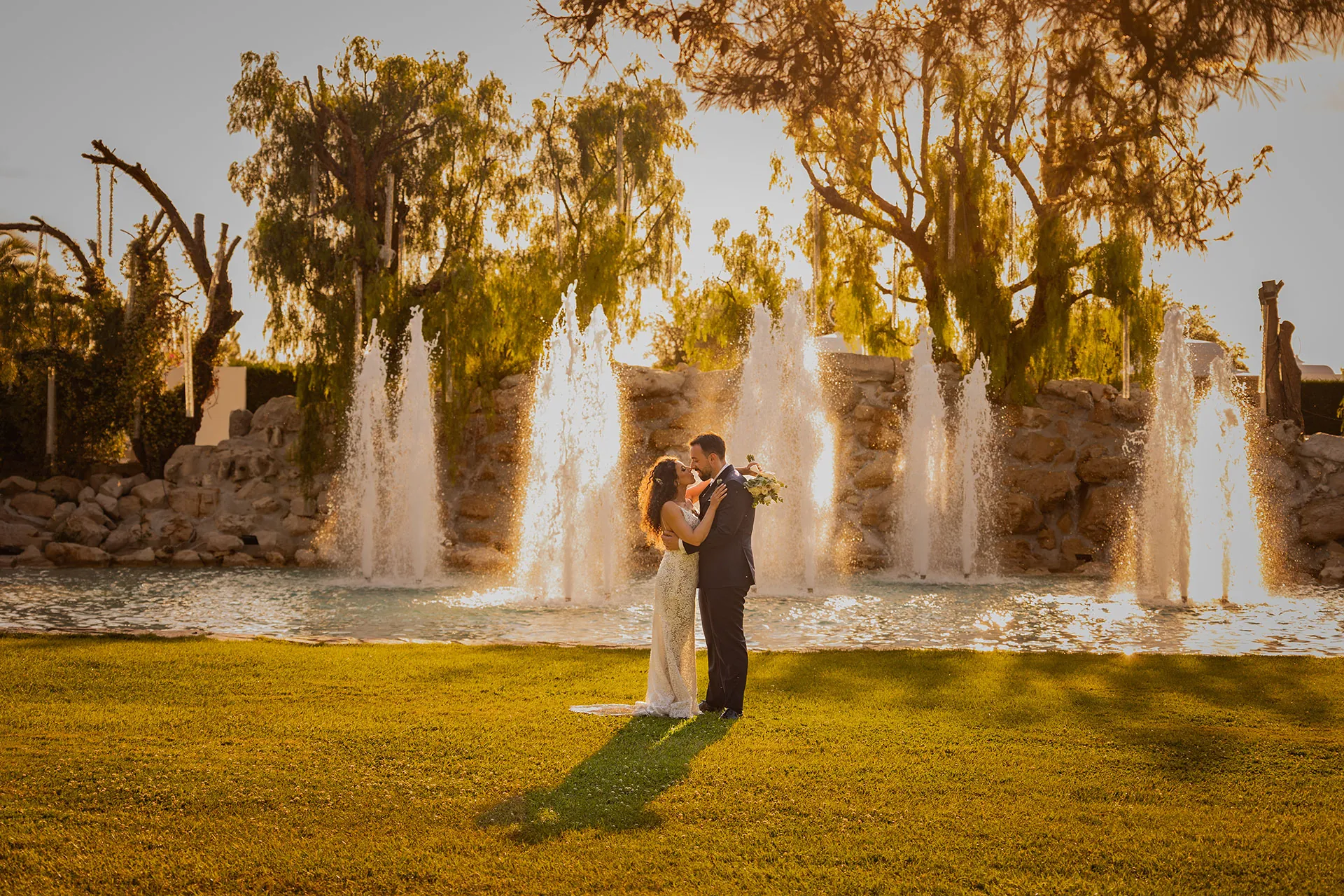
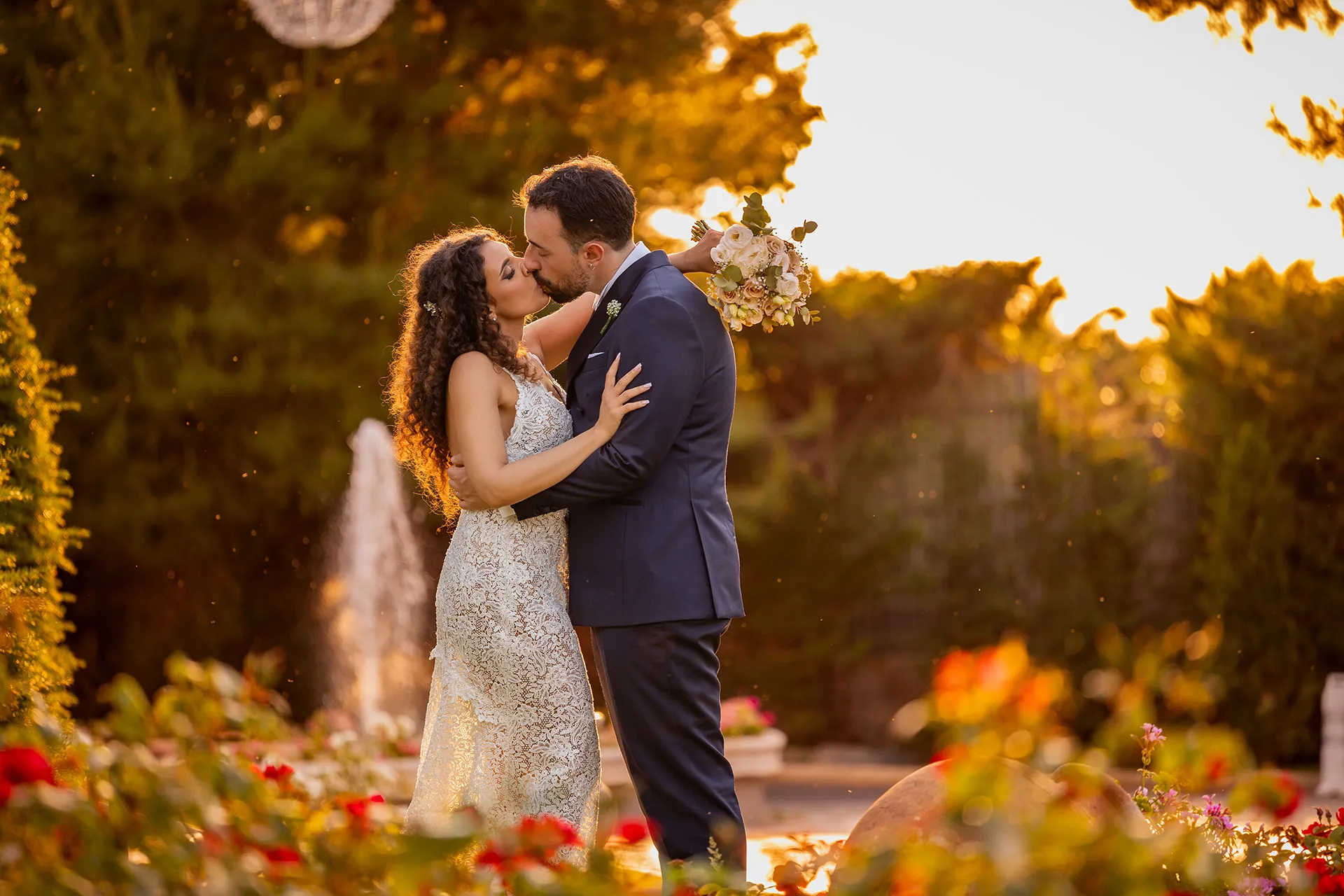
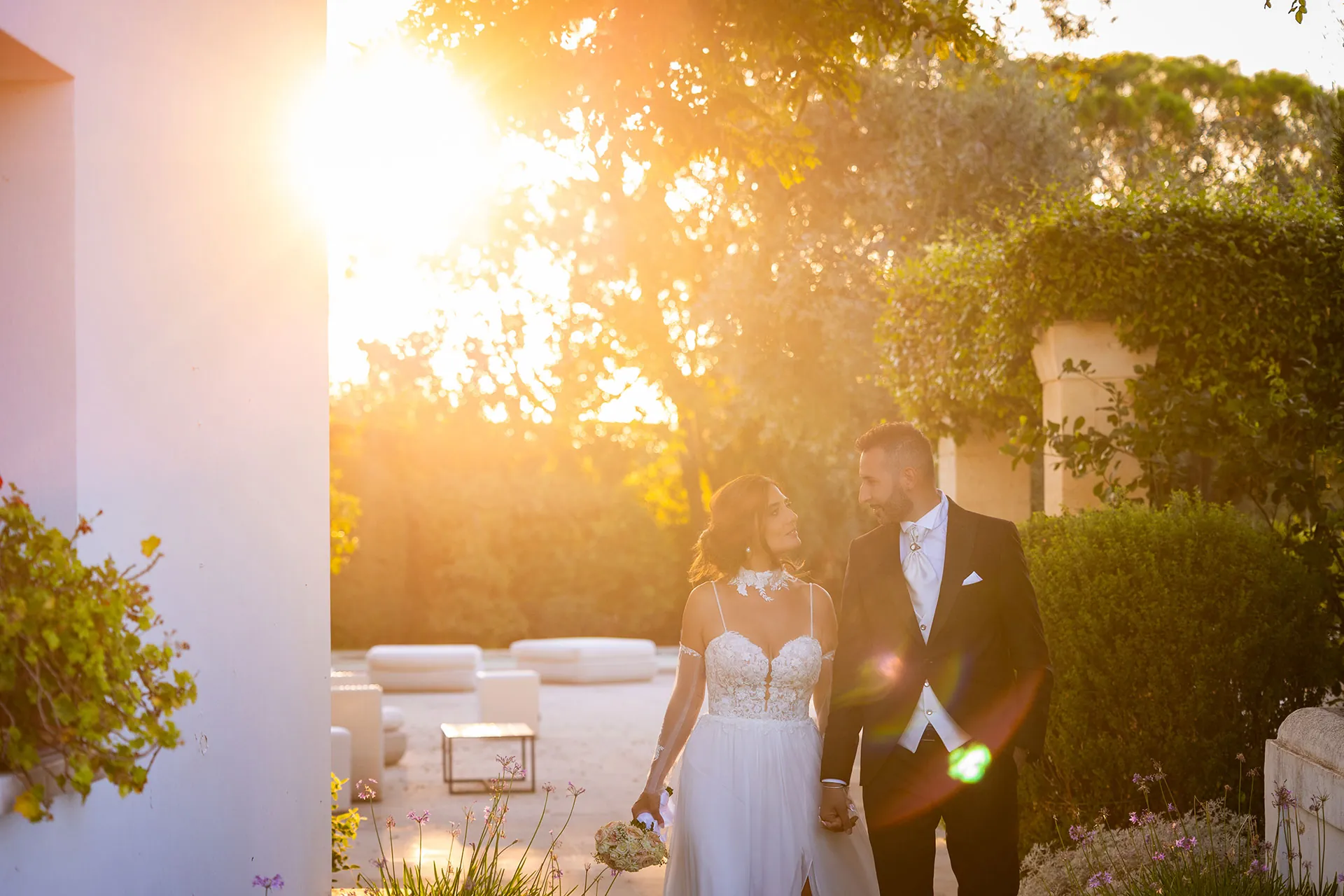
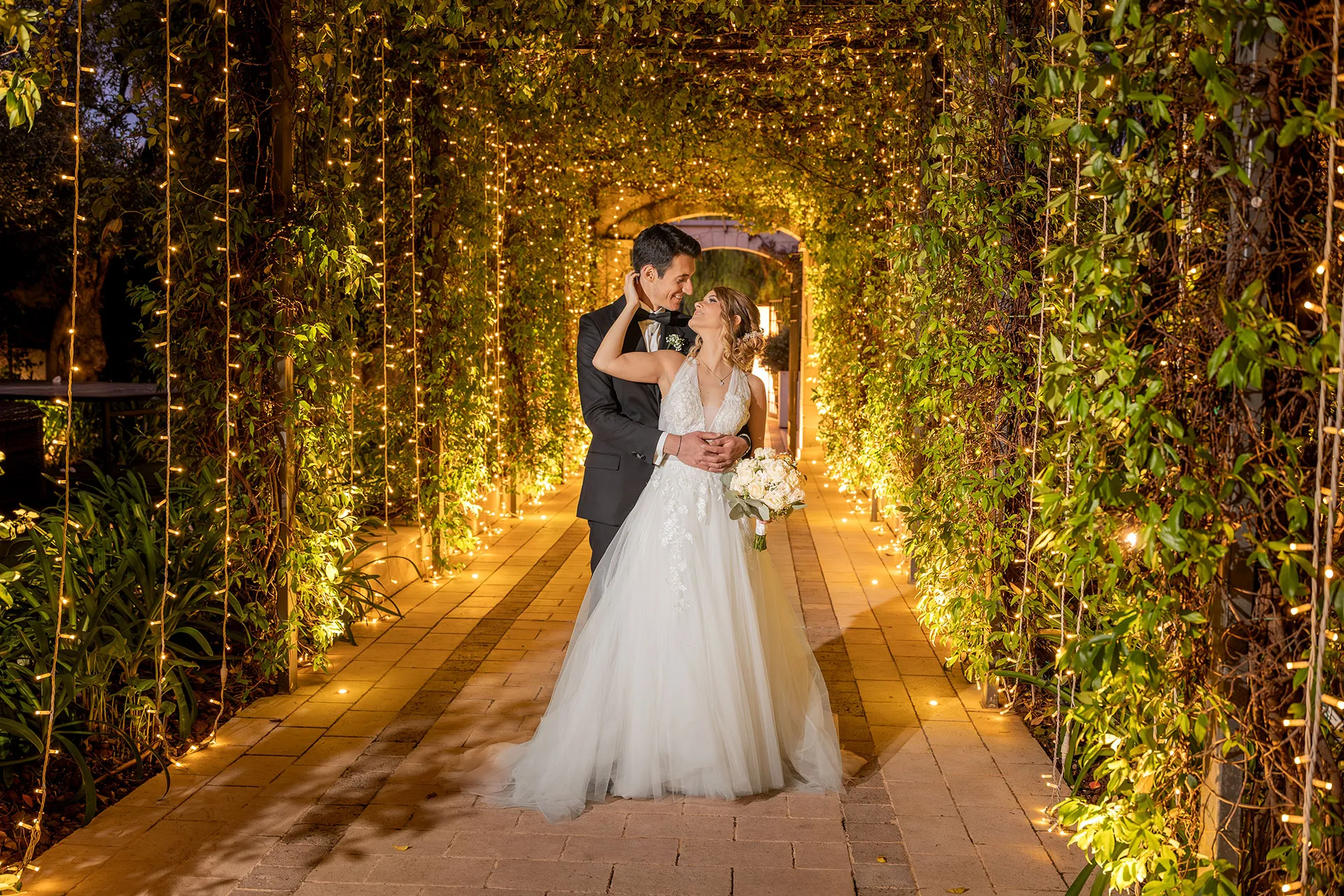
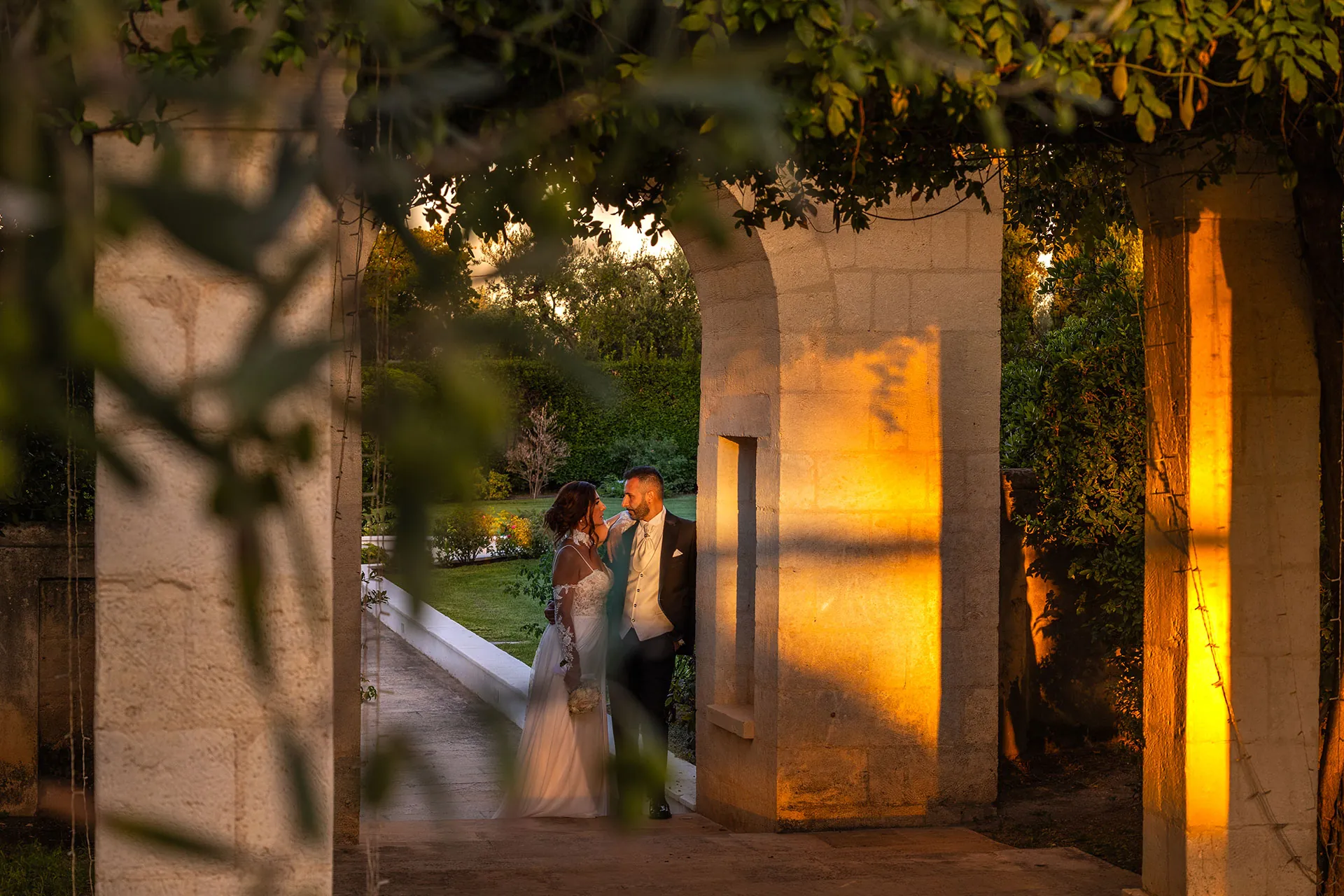
A masseria changes its face three times. In daylight the pale stone bounces the sun back and keeps skin tones clean even at noon. Towards evening the light comes in low and sideways through the olives, and the courtyard goes gold. After dark all that is left is the warm light of the party: candles, bulbs on a wire, the floor. Three atmospheres, three ways of shooting them.
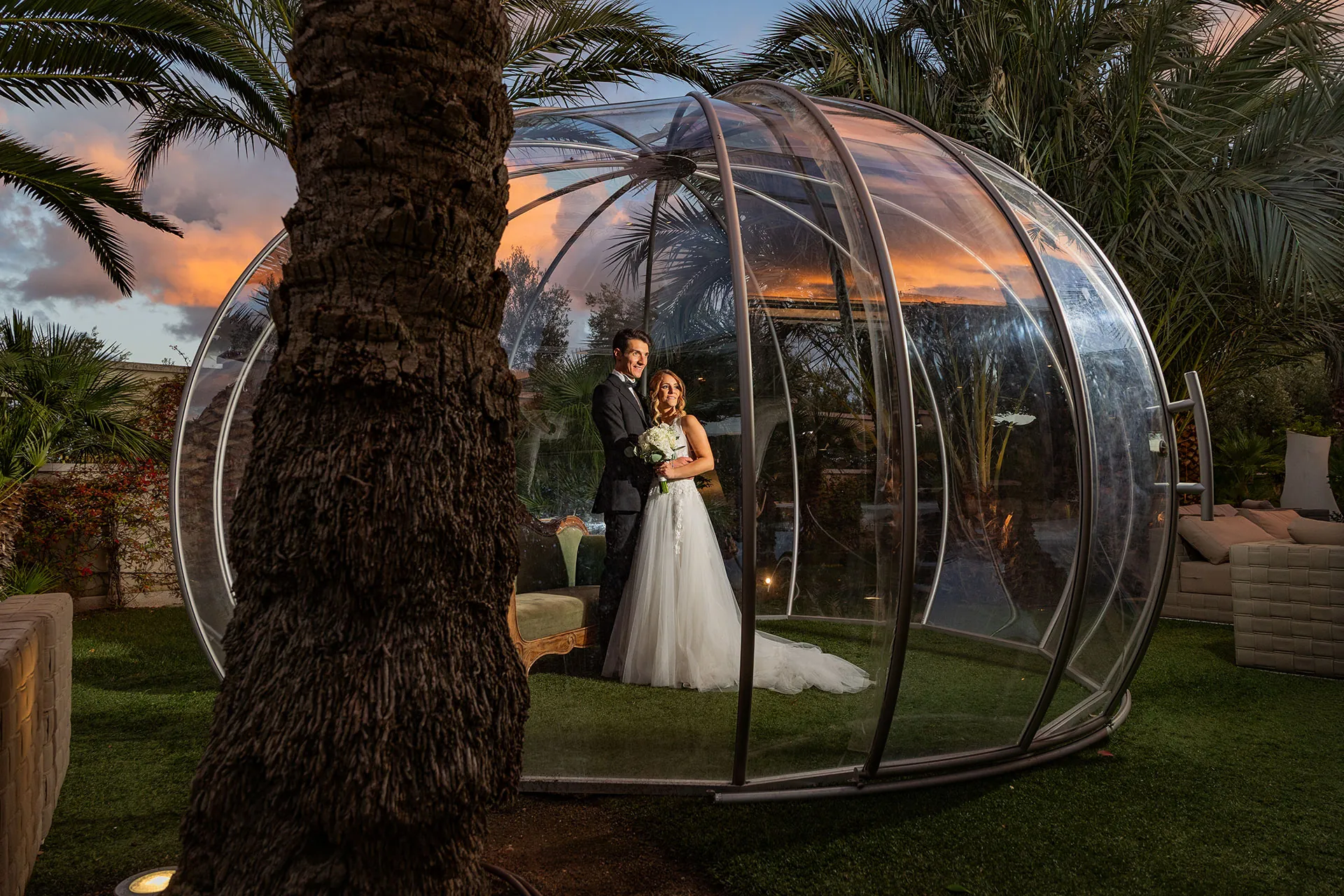
Knowing that rhythm is what lets us hand you a running order that uses it. The couple portraits among the olive trees at the right hour. The tables photographed before anyone sits down. The party covered from inside it rather than from the edge of it.
What we tell every couple before a masseria wedding
Five things worth settling while the plan is still on paper.
Ask which wall the sun sets behind
Every masseria has one side that catches the last light. Knowing which one, before the plan is fixed, lets you put the ceremony or the drinks where the light works for you instead of against you. It is one line in an email to the venue, and almost nobody sends it.
Protect half an hour
Between the ceremony and dinner, thirty minutes among the olive trees is enough for the couple portraits. Longer than that is tiring; shorter means rushing. For the rest of the day you will not notice we are there.
The outdoor dinner needs lighting
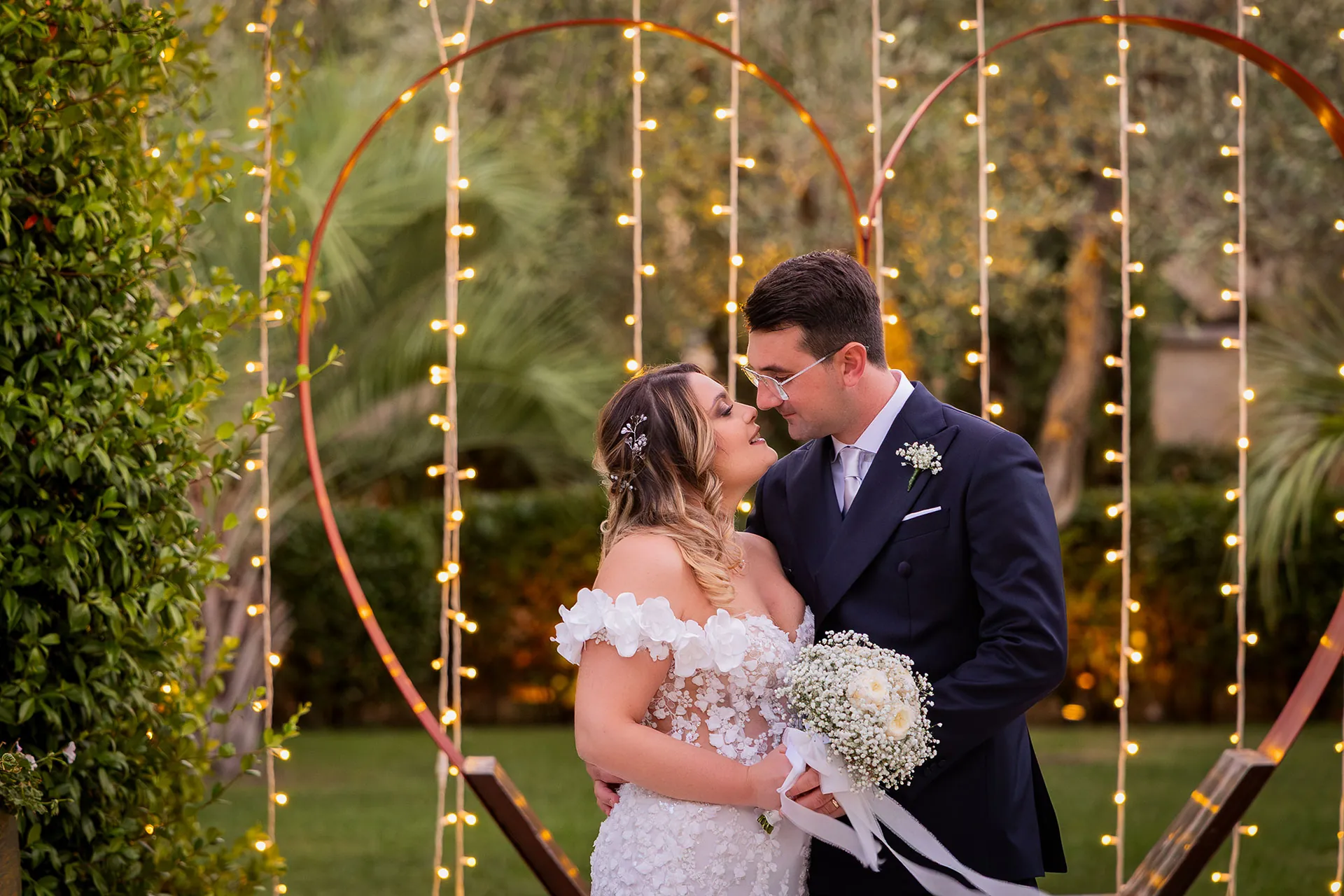
Strings of bulbs and candles are enough for the eye. They are not always enough for a camera. Agreed in advance, with you and with the venue, the evening looks in photographs the way it looked to you. Left to chance, it usually does not.
One place, no transfers
This is the practical argument for a masseria, and it counts double when your guests have flown in. Preparations in the rooms, the ceremony under the trees, drinks in the courtyard, dinner outside: all inside one wall. Nothing is lost in cars, and nobody has to find a second address in a country they do not know.
The drone, if the masseria allows it
From above you can read the courtyard, the rows of olives and the laid tables in a single frame. It is a picture that does not exist from the ground. We fly where the regulations and the venue permit it, and not otherwise.
Masseria and villa weddings
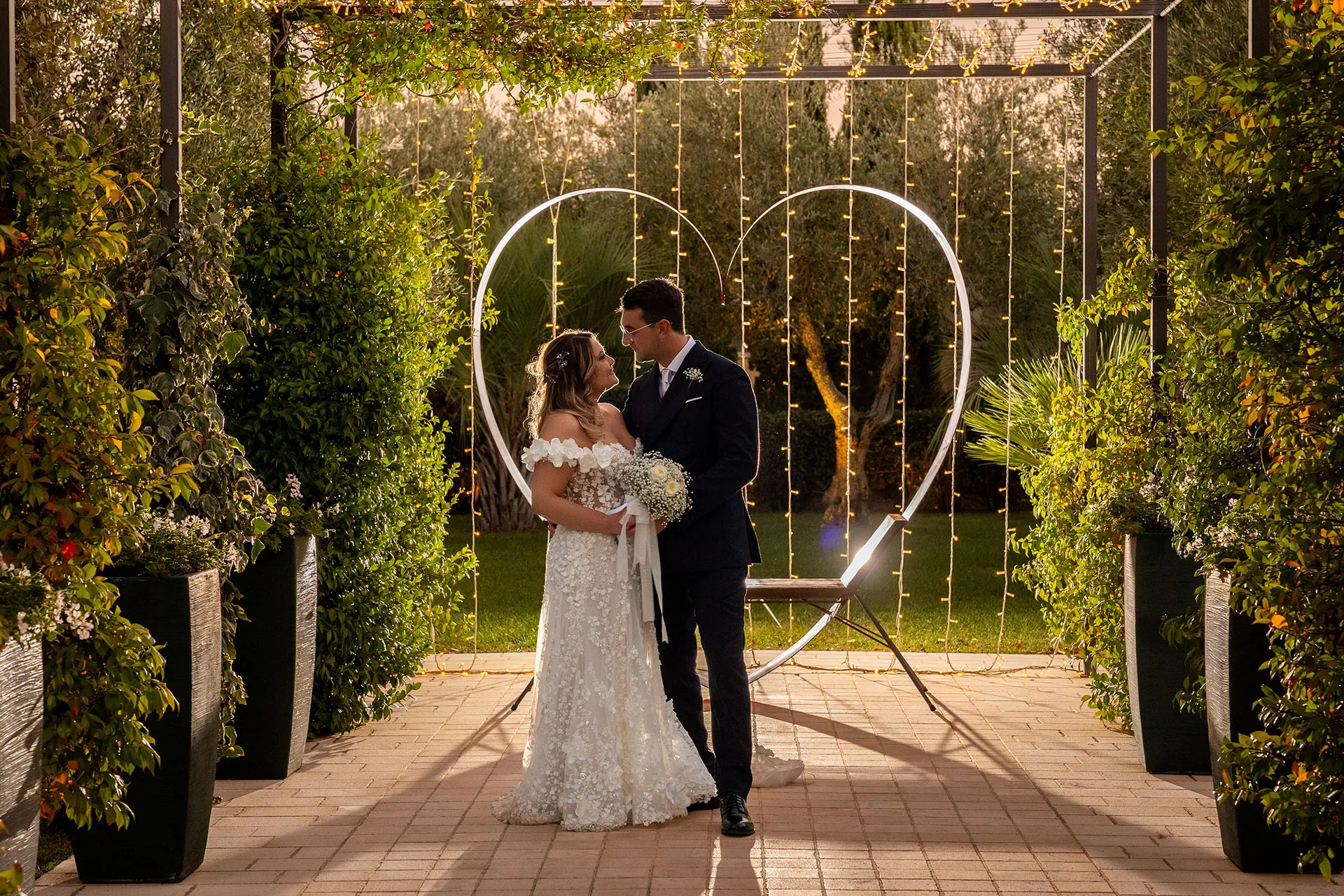
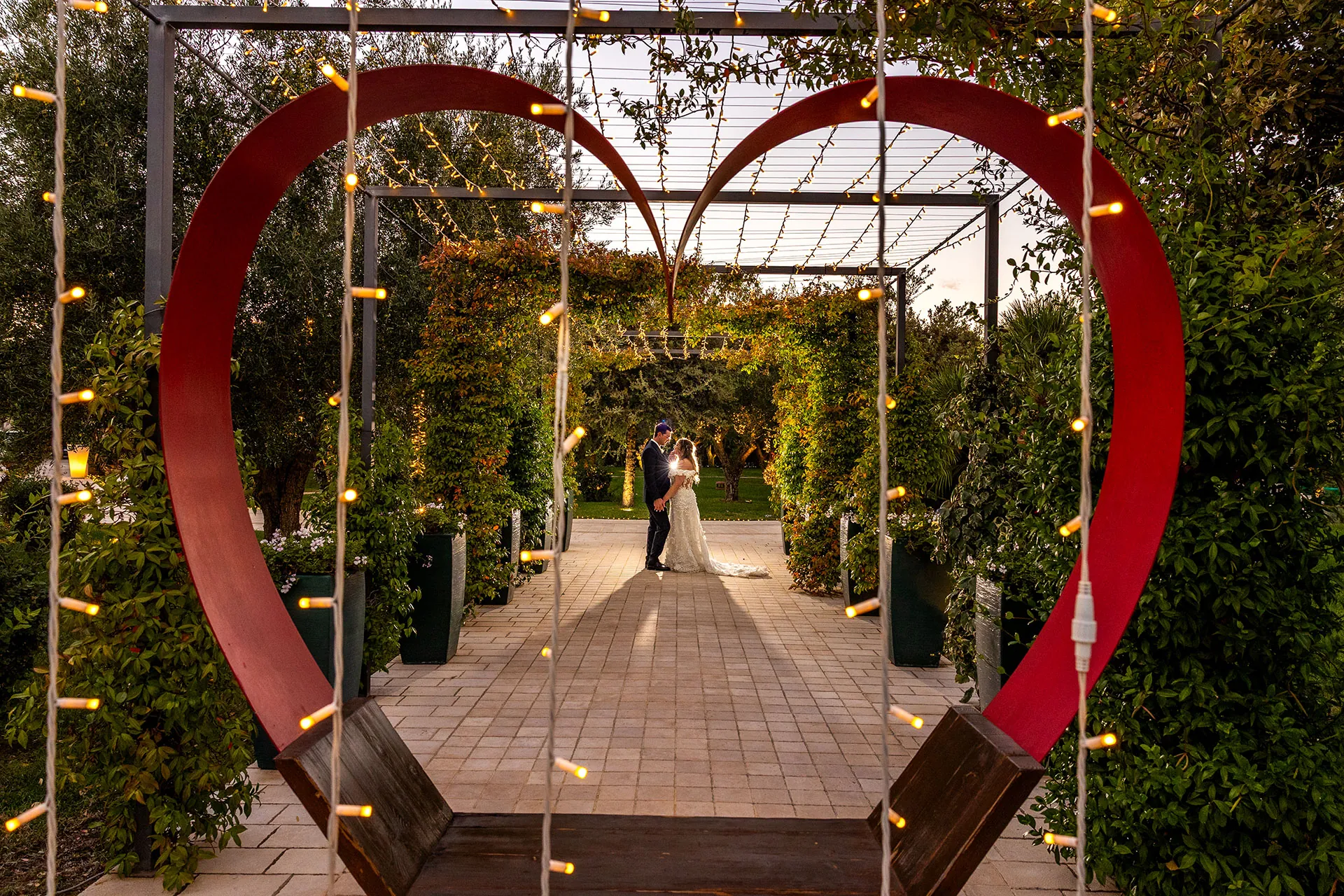
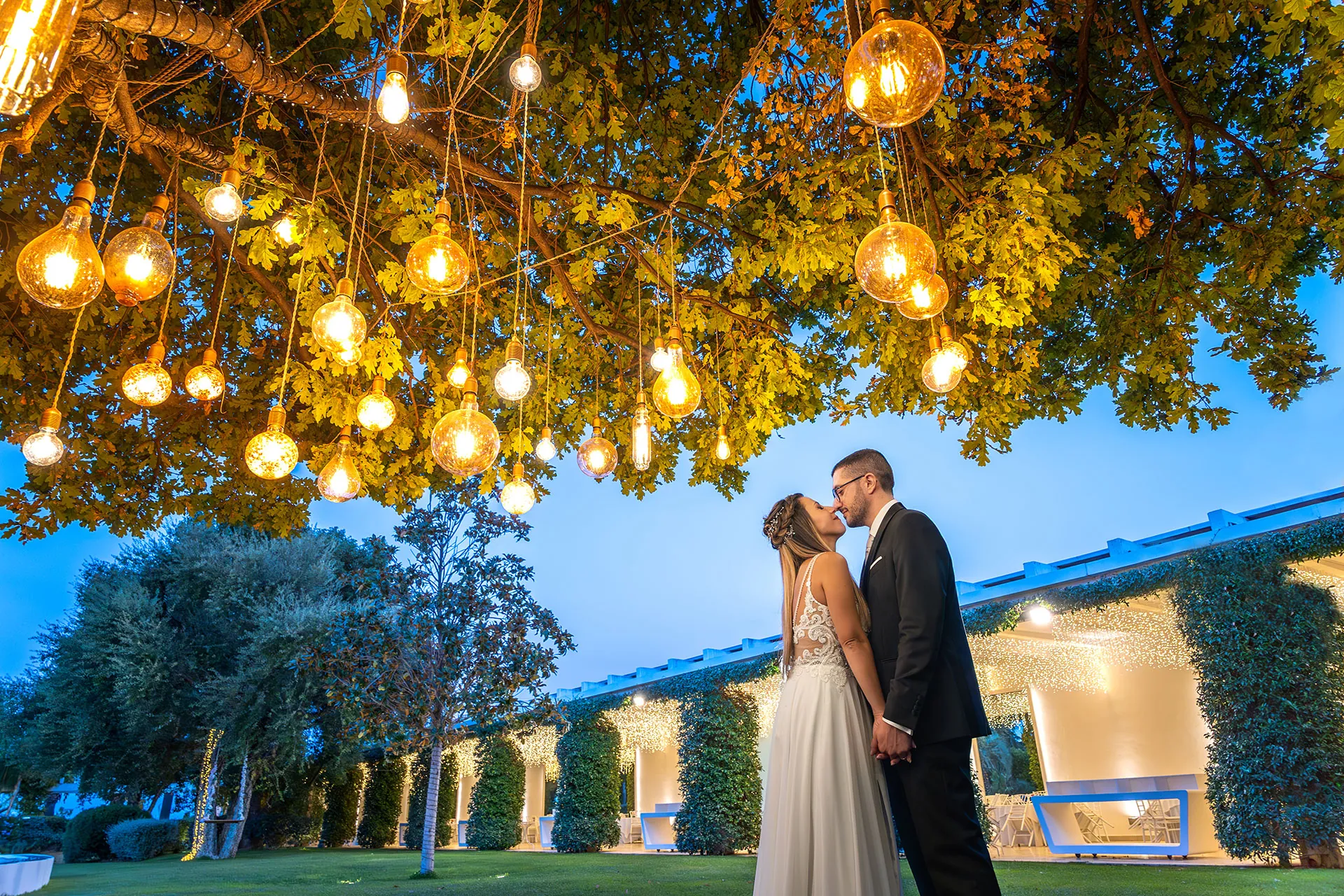
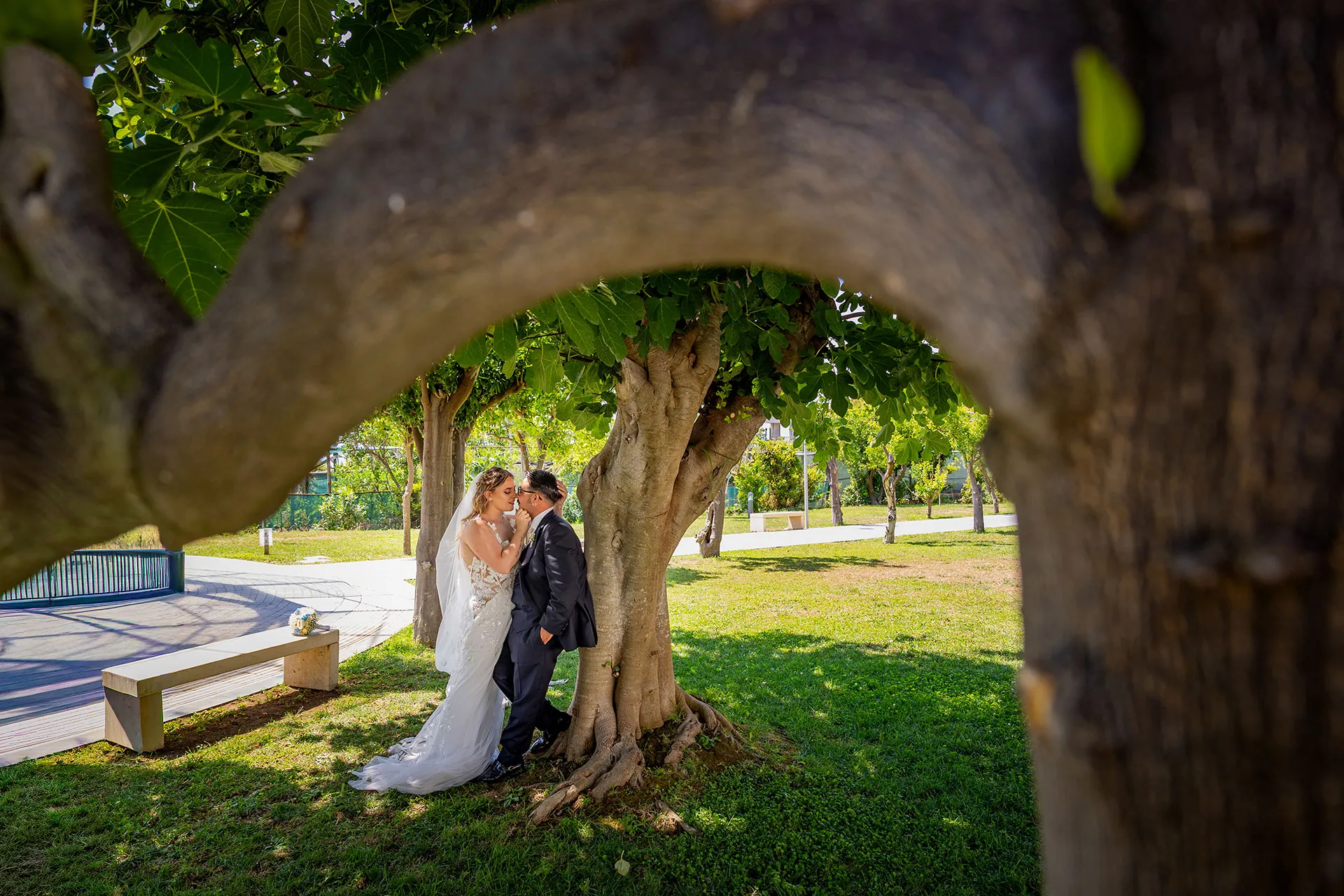
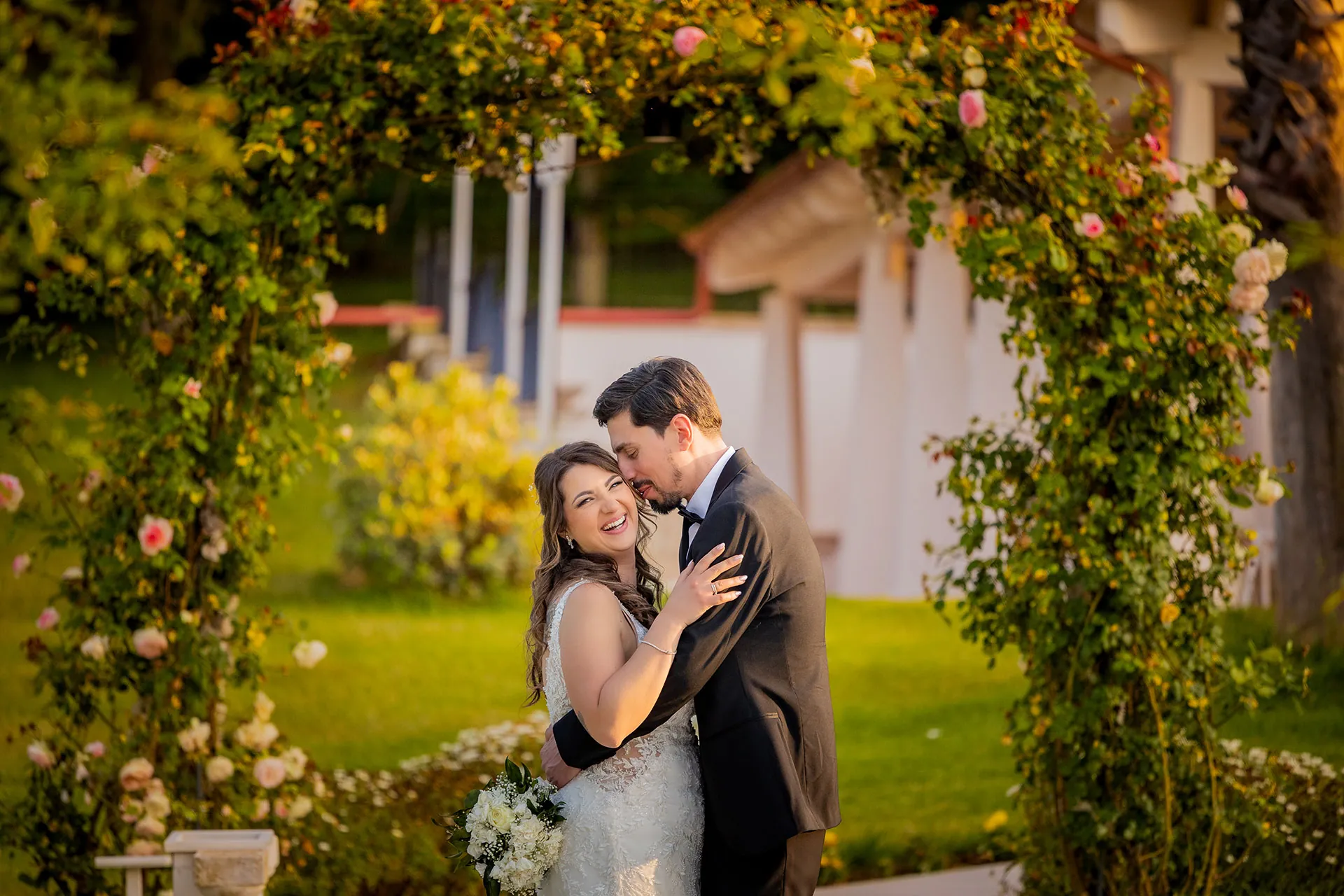
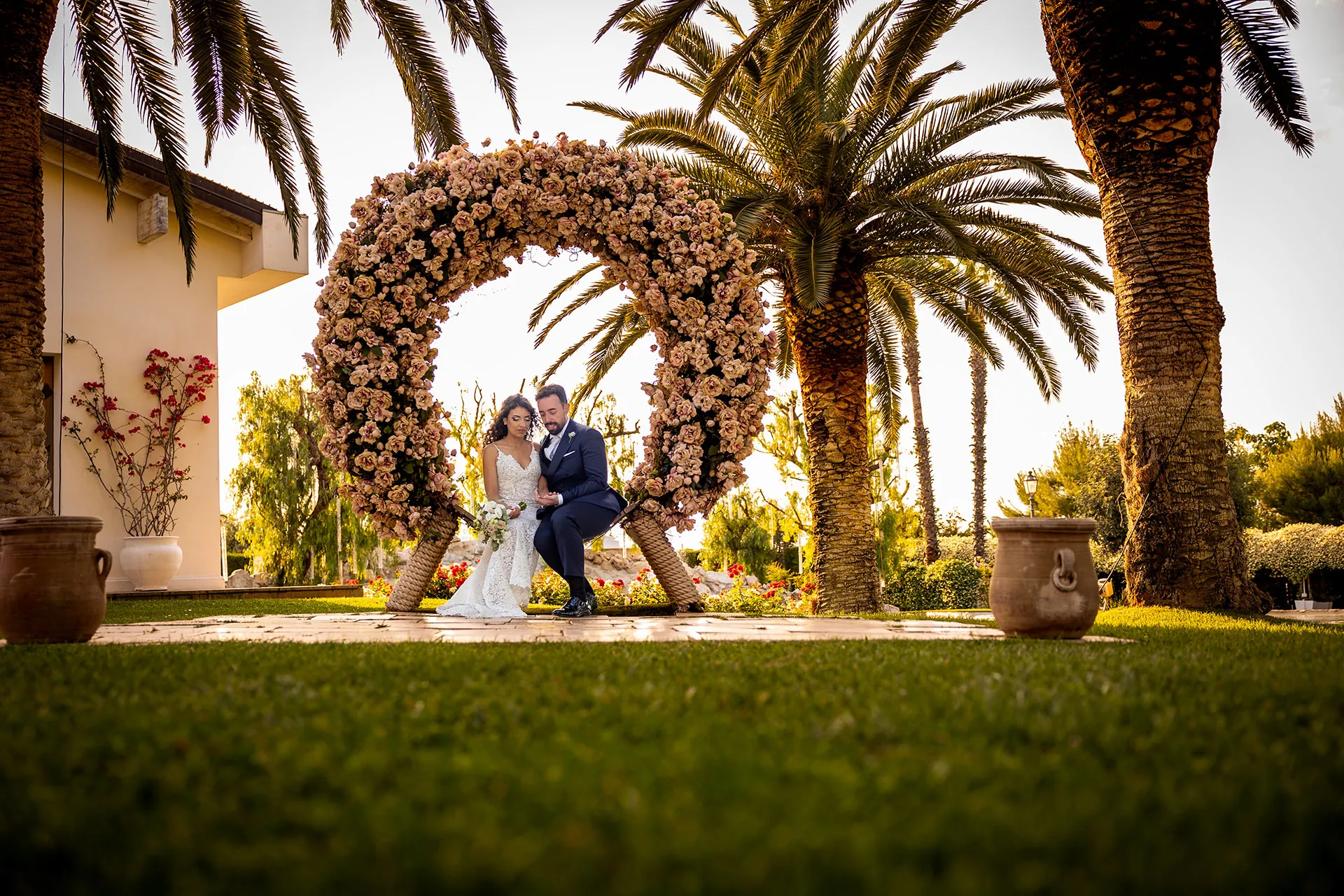
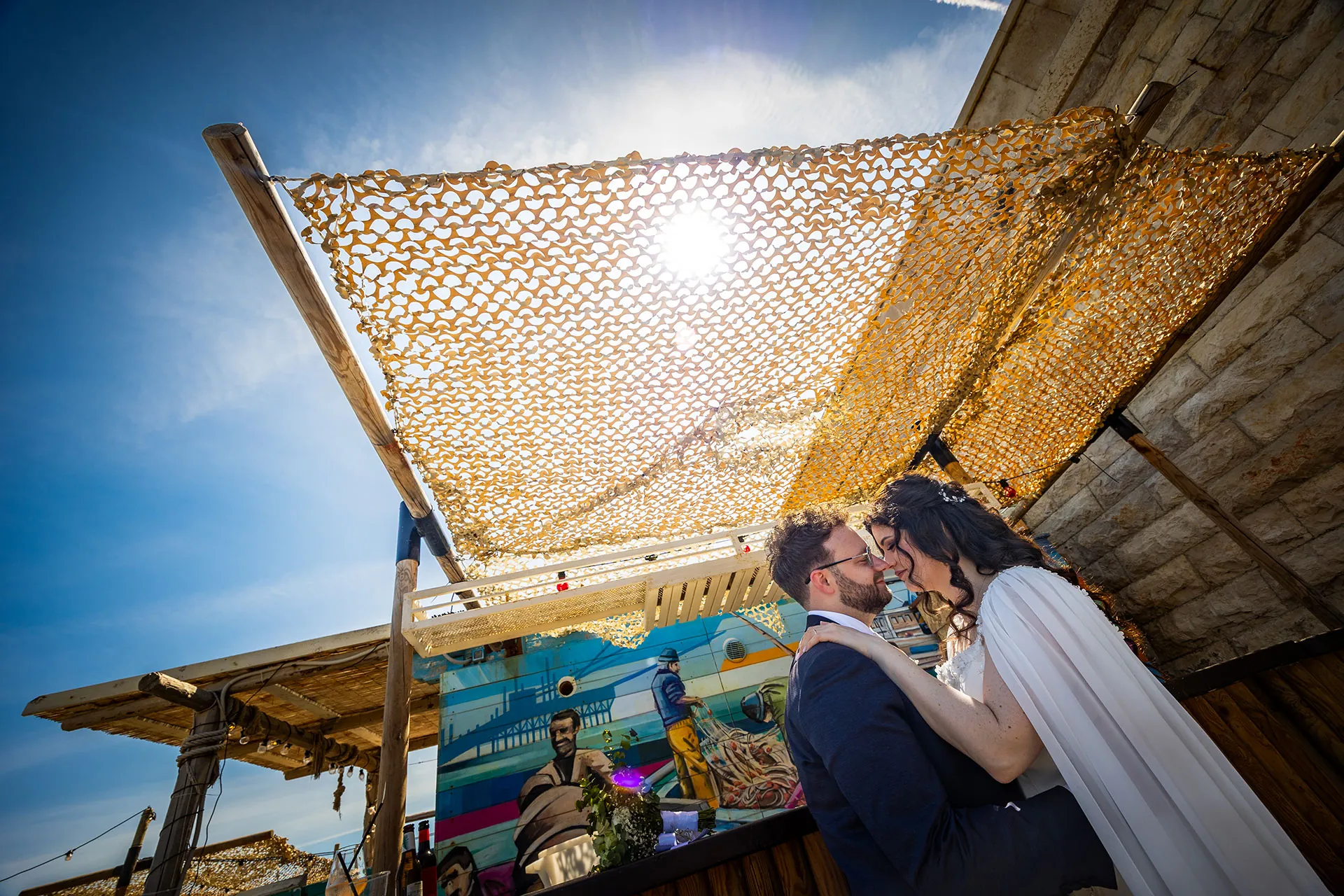
A selection from the 57 frames in the archive.


And if the day starts somewhere else?
Plenty of couples marry in town and drive out to the country afterwards. That works, as long as the driving time is honest and somebody has counted it with the traffic of a Saturday in August. A church on the water followed by dinner in the olive groves is one of the commonest shapes a wedding takes here, and a Trani Cathedral wedding is the version of it we know best.
If the sea is what you came for, a beach wedding in Puglia keeps you on the shoreline and runs to a tighter clock, because the golden hour will not wait for the speeches. The four kinds of place, and what each does to a photograph, are set out in our Puglia wedding venues guide.
Questions about masseria weddings
Do you stay for the whole day, or only for the ceremony?
The whole day. We arrive for the preparations and stay for the party, present at every part of it. A masseria suits that way of working better than anywhere else, because the day never leaves the property and nothing gets lost between one address and the next.
Do you film as well as photograph?
Yes. Our Smart Wedding format puts two operators on the day, shooting stills and film together, at a better price than booking them separately, and it is built for sharing on social straight away as well as for keeping. The team also works with a drone and action cameras where that is allowed.
Everything is outdoors. What happens if it rains?
We work anyway. Cloud is a large soft light with no hard shadows, and it is kinder to faces than a July sun. Most masserie have a covered room somewhere, a vaulted hall or an old barn, because they were built as working farms. In more than 5,000 weddings we have seen the weather turn plenty of times. We photograph the day you get, not the one you ordered.
Are you marrying in a masseria?
Tell us which one and what time the ceremony starts. We will build the day around the light that place gets.