Beach wedding in Puglia: the light, the wind, and what nobody warns you about
Everything you would normally control. The light is decided by the clock, not by the photographer.
Beach wedding in Puglia: what changes when the day is on sand?
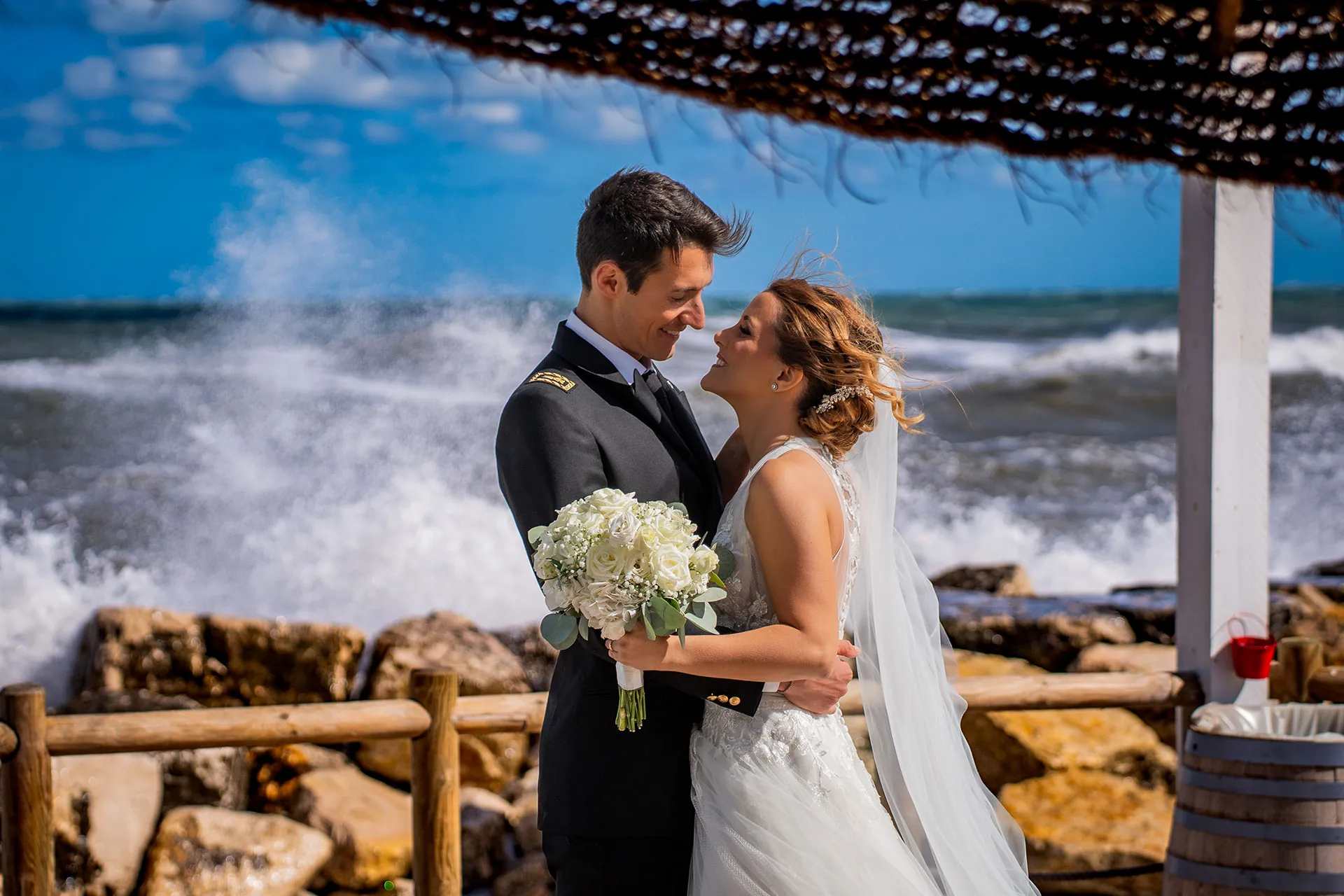
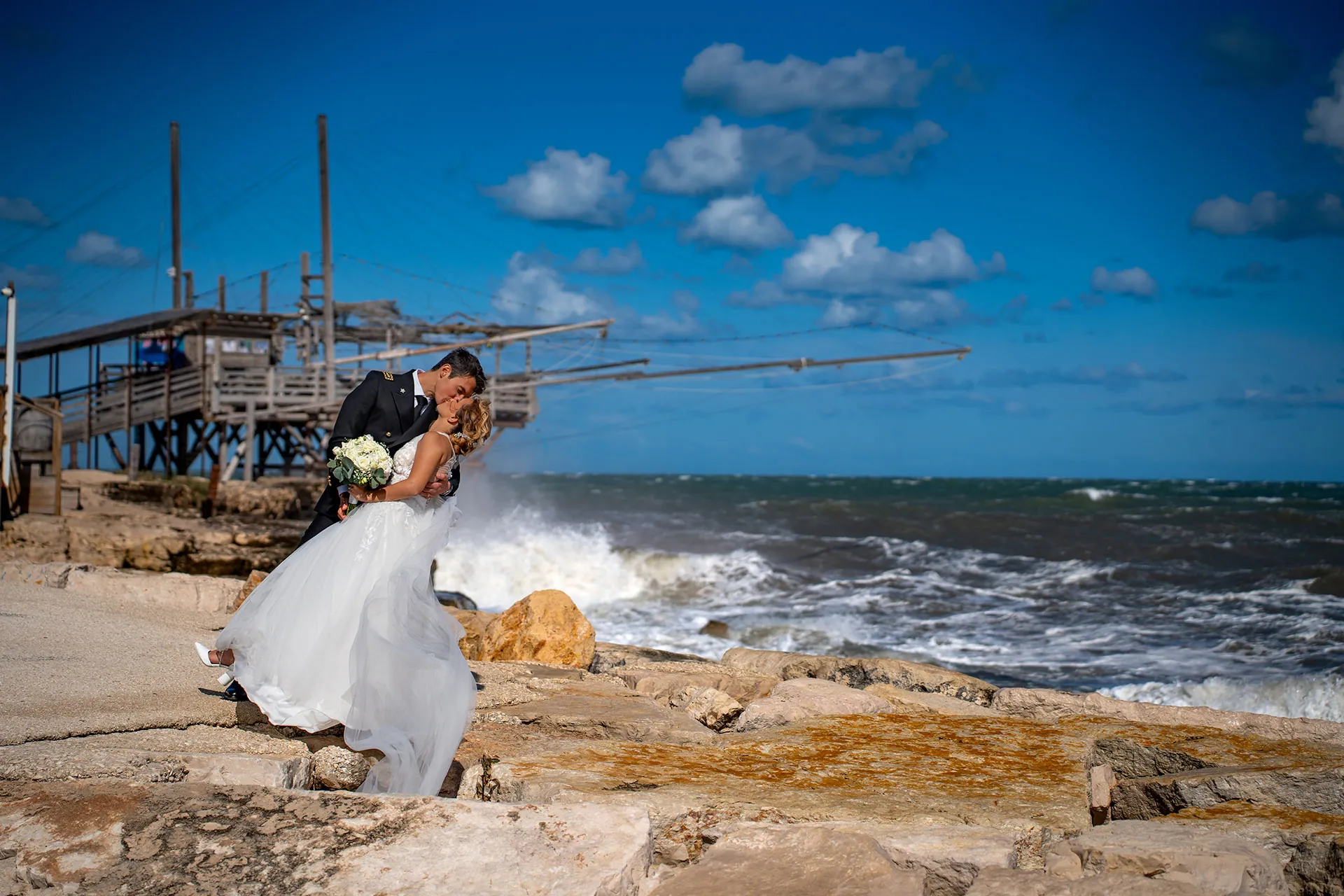
Everything you would normally control. The light is decided by the clock, not by the photographer. The wind does not switch off. The sand gets into shoes, into hems, and occasionally into camera bags. That is exactly why these photographs look different from the rest: nothing is arranged and nothing holds still.
There are 51 frames from the shoreline in our archive, made along the coast of Puglia. We work from Trani, a harbour town, so for a wedding photographer in Trani the sea is not an occasion. It is where we live, and it is where a good part of the year's work happens.
The aim is not to tame a beach. It is to know what one does at half past seven in July, and to be standing in the right place when it does it.

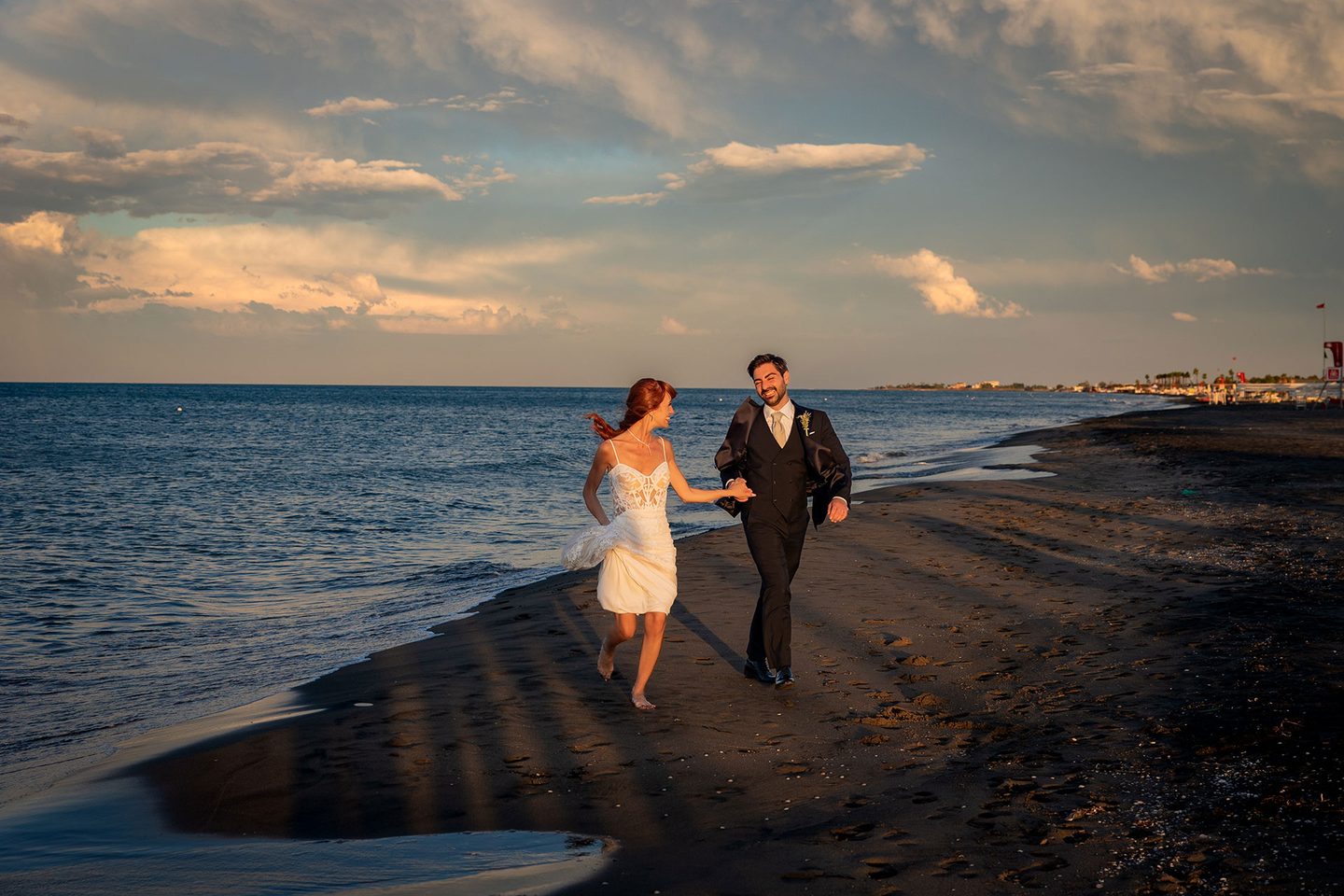
When is the golden hour, and where does the sun actually go?
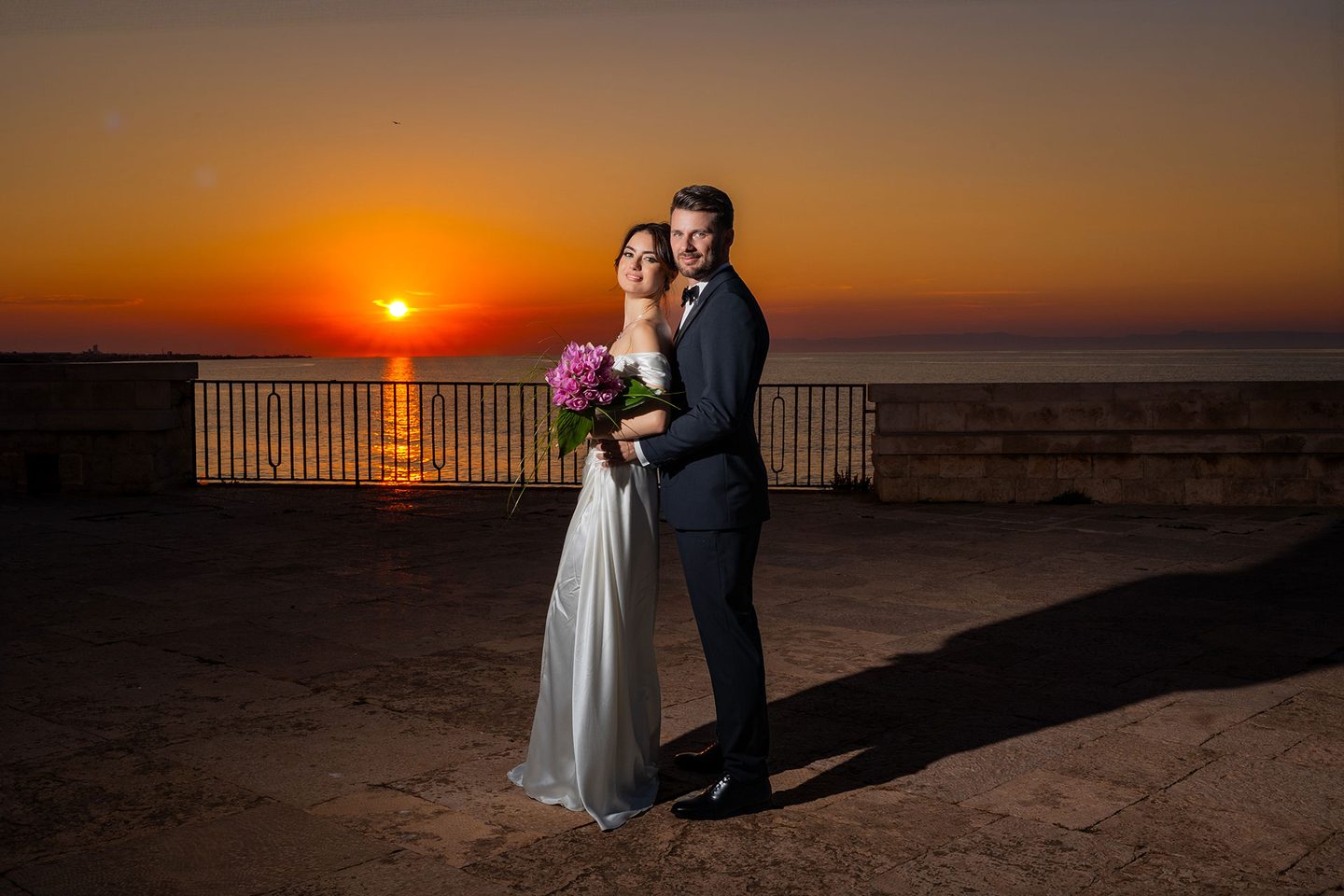
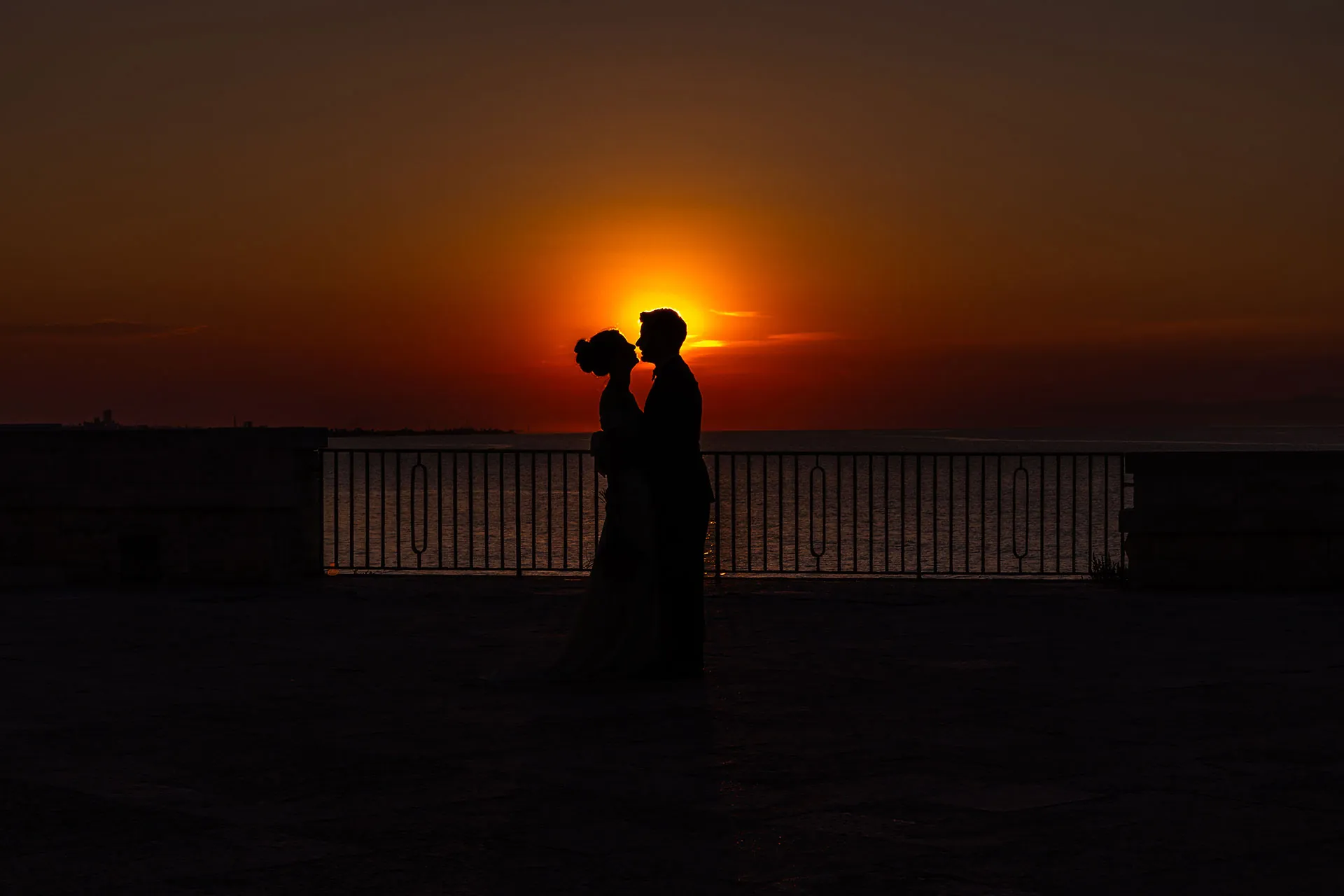
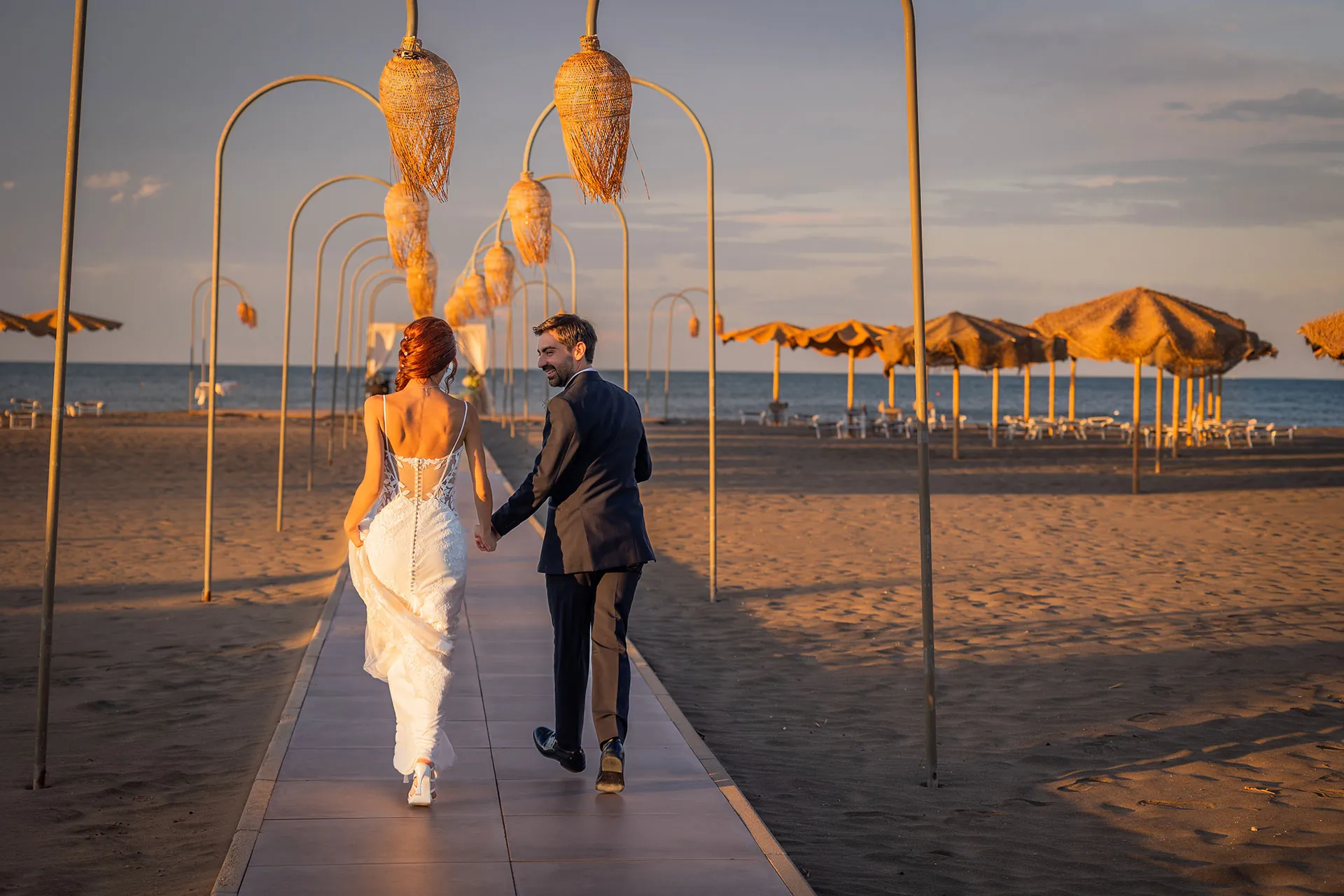
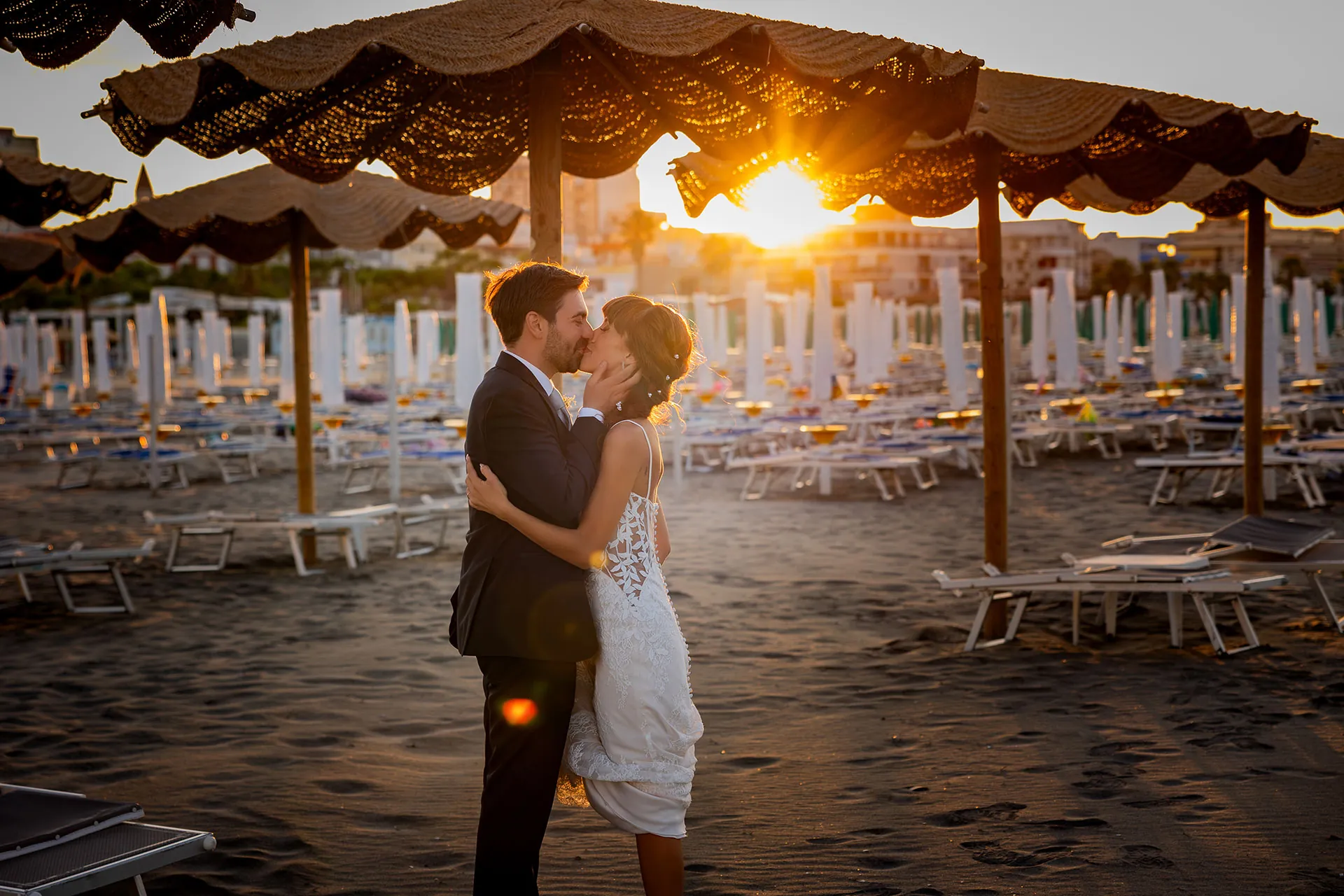
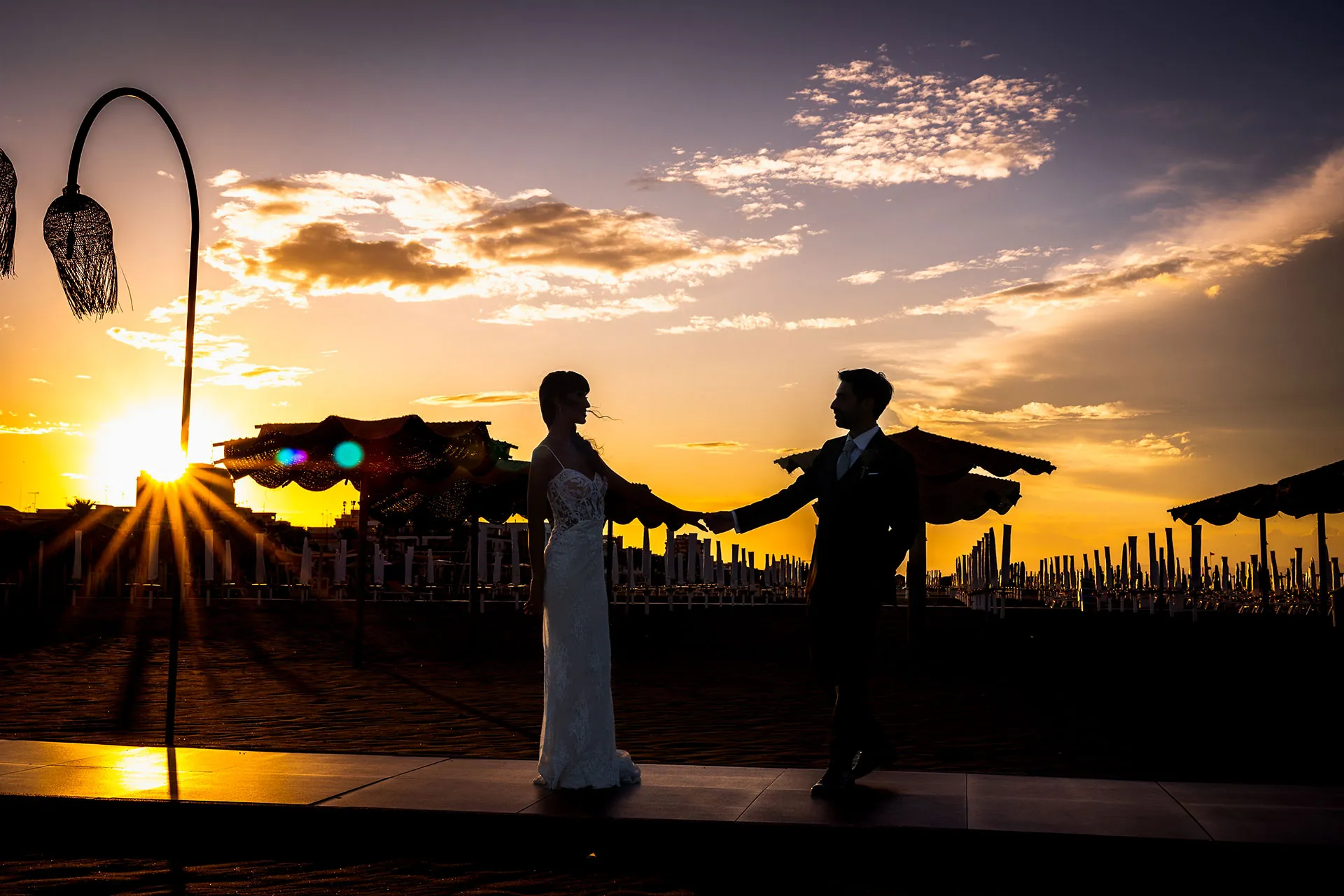
The last hour before sunset is the one that matters. Low light, long shadows, warm skin, wet sand behaving like a mirror. In Puglia in midsummer that hour comes late: the sun goes down at about half past eight in the middle of June, and by the end of September it has gone before seven. A ceremony in the afternoon leaves room to reach the portraits exactly when the light is at its best, which is why we plan backwards from the sunset time for your specific date rather than from a rule of thumb.
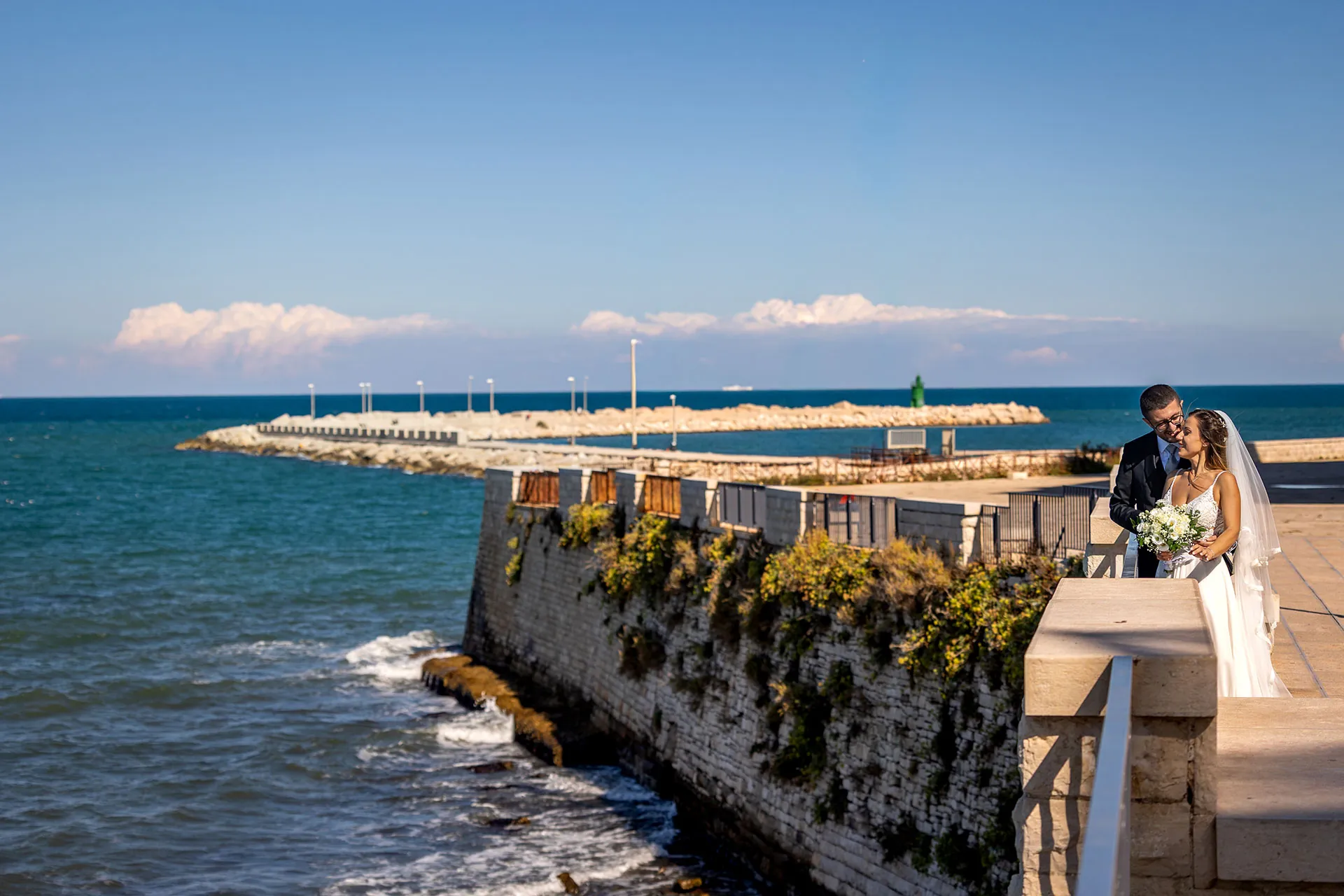
One thing worth knowing before you picture the day. Most of Puglia's coast faces east, onto the Adriatic, so the sun does not set over the water. It drops behind the land, behind you. The sea turns deep blue while your faces stay warm, which is a fine combination and not the one most people imagine. Sun sinking into the water belongs to the Ionian side of the region. If that is the image you have in your head, it decides which coast you marry on, and that is better settled now than discovered on the day.
The practical problems nobody mentions
What we say to every couple before a wedding on the sand.
The wind is always there
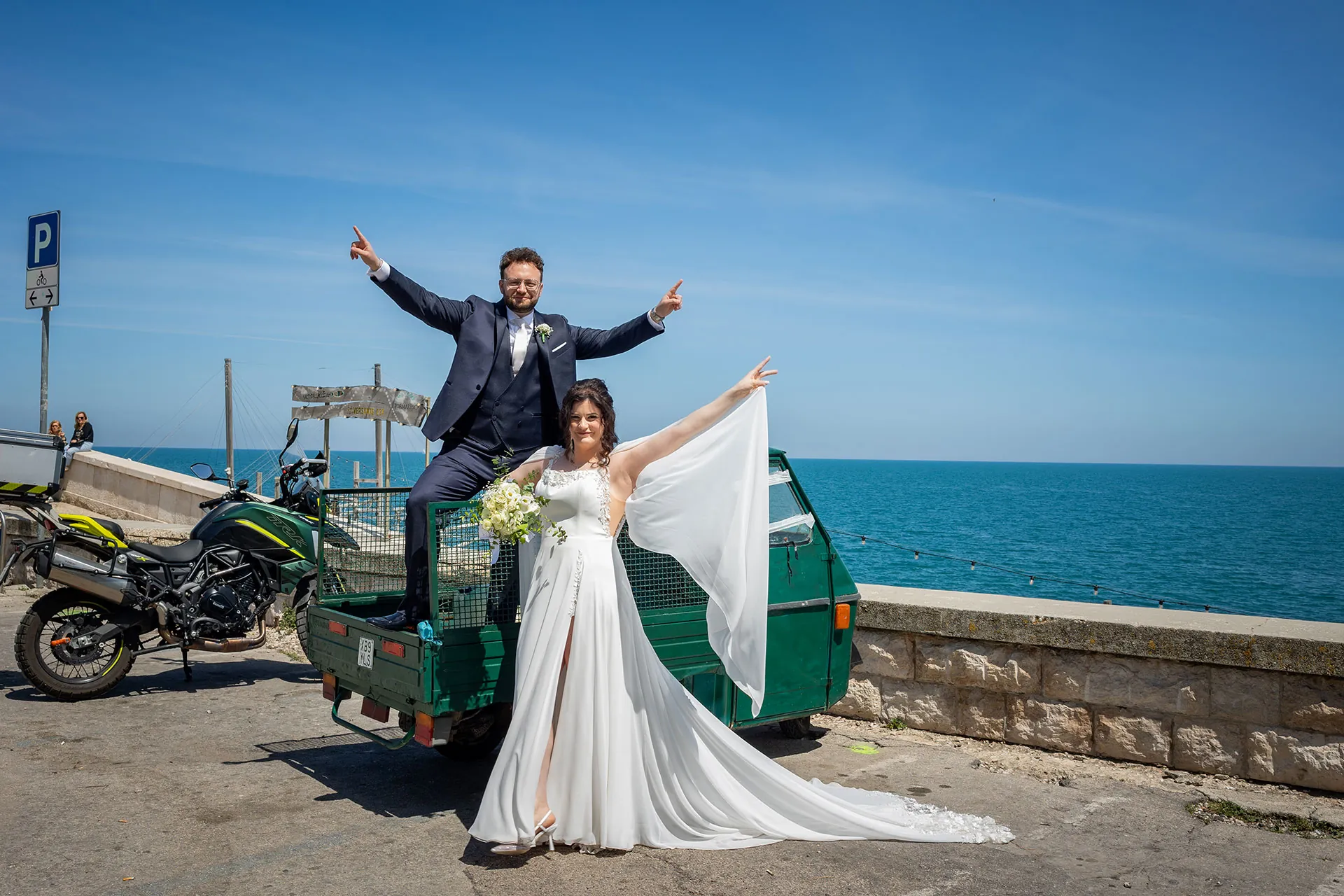
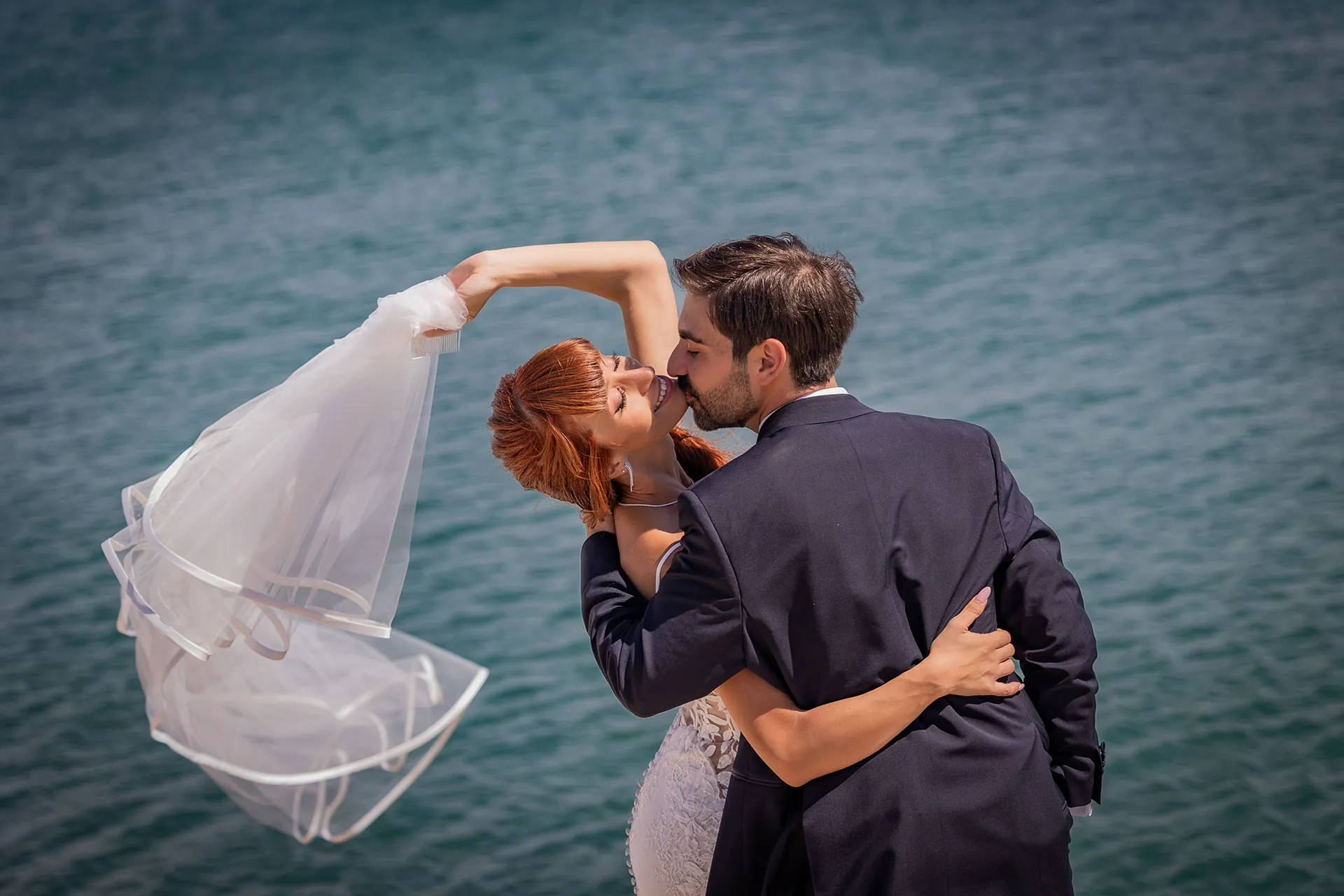
On this coast it nearly always blows, and in photographs it helps: it moves veils and hair and keeps a frame alive. Rigid hairstyles fight it and lose. Something built to move wins. Tell your hairdresser it is a beach, not a ballroom.
Heels sink
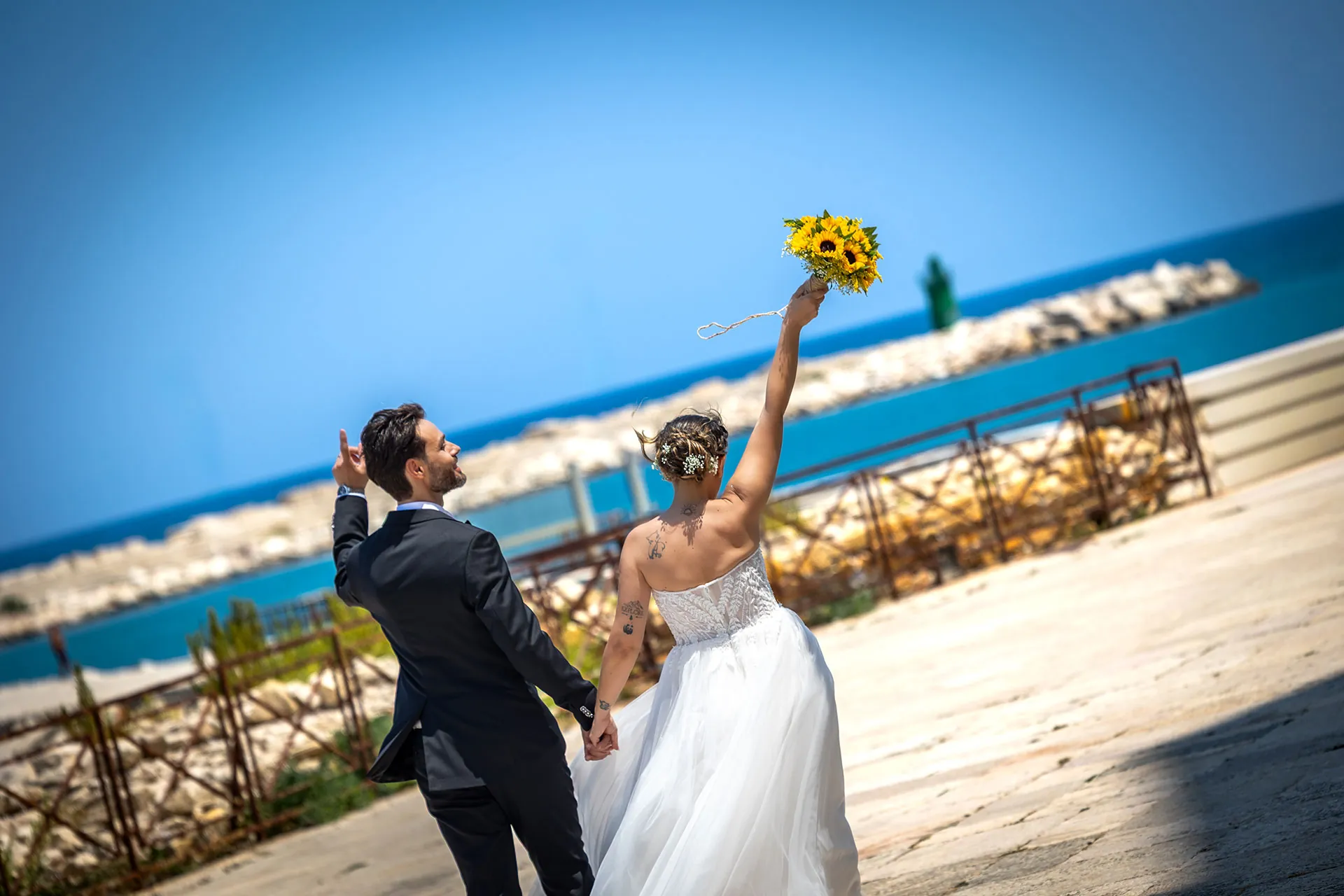
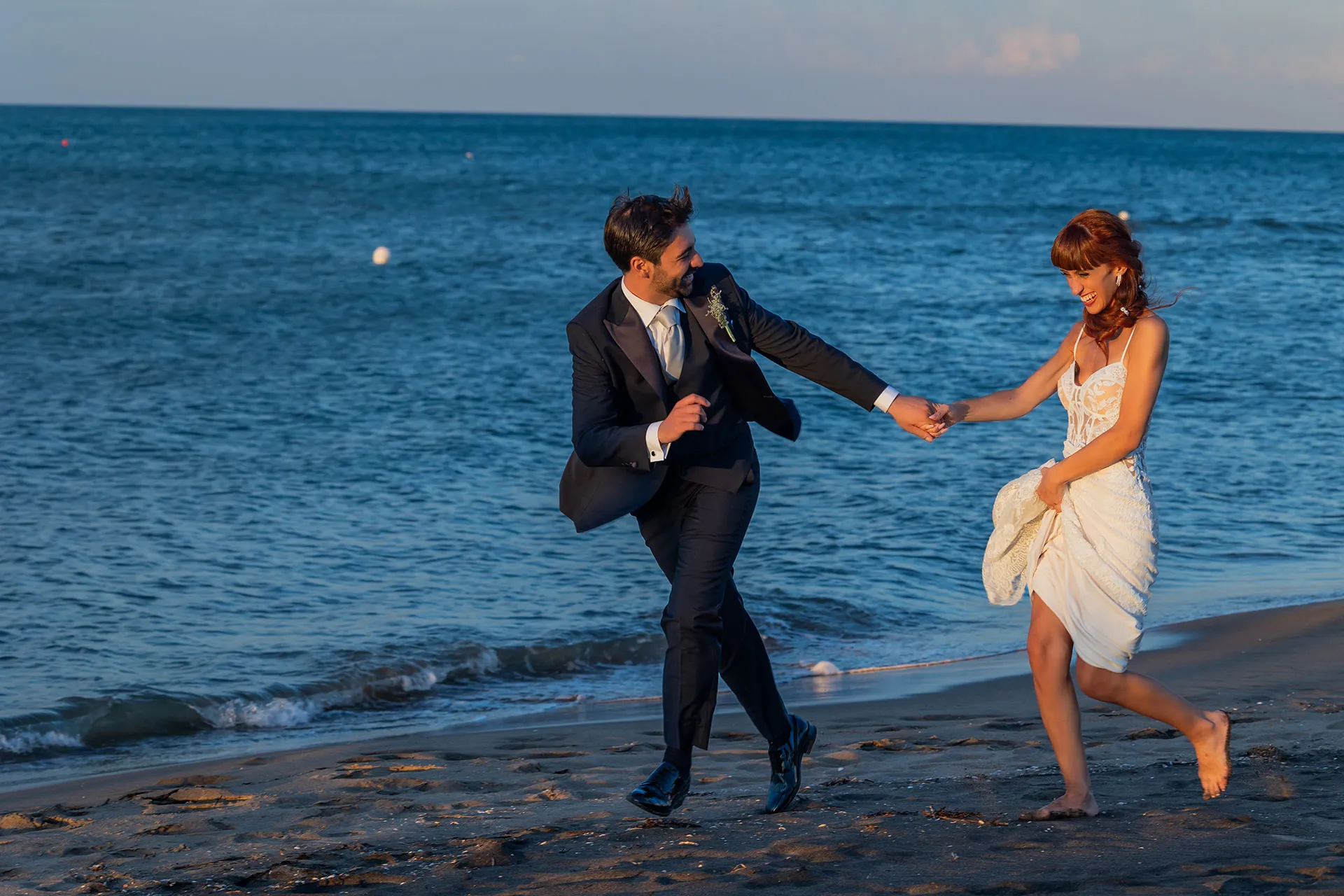
Shoes come off. The couples who enjoy the day walk barefoot and carry them, and the frame of the two of you on the wet sand with your shoes in one hand is among the most natural of the whole wedding.
Midday is the worst light of the day
High sun means hard shadows under the eyes and glare off the water and the sand. If the ceremony has to be early, we keep the couple portraits for the late afternoon and photograph the rest around the problem.
Nobody can hear the vows
Wind and surf eat voices. If the ceremony is being filmed, that is a microphone question, and it is better raised with the venue in advance than discovered in the edit.
There is no shade
Your guests will be standing in the sun in formal clothes. Water, some shade and a short ceremony are kinder than a long one at four in the afternoon in August.
Someone else is on the beach
Unless the whole stretch is private, there will be swimmers and umbrellas somewhere behind you. We frame around them. It also means asking the venue, or the local council, il comune, well in advance what is actually allowed where you want to stand.
Photographs and film, two operators
Smart Wedding is our hybrid format: two people working the day together, photographs and video at a better price than booking them separately, built for sharing on social straight away as well as for keeping. Drone and action cameras where the rules allow it.
Weddings by the sea
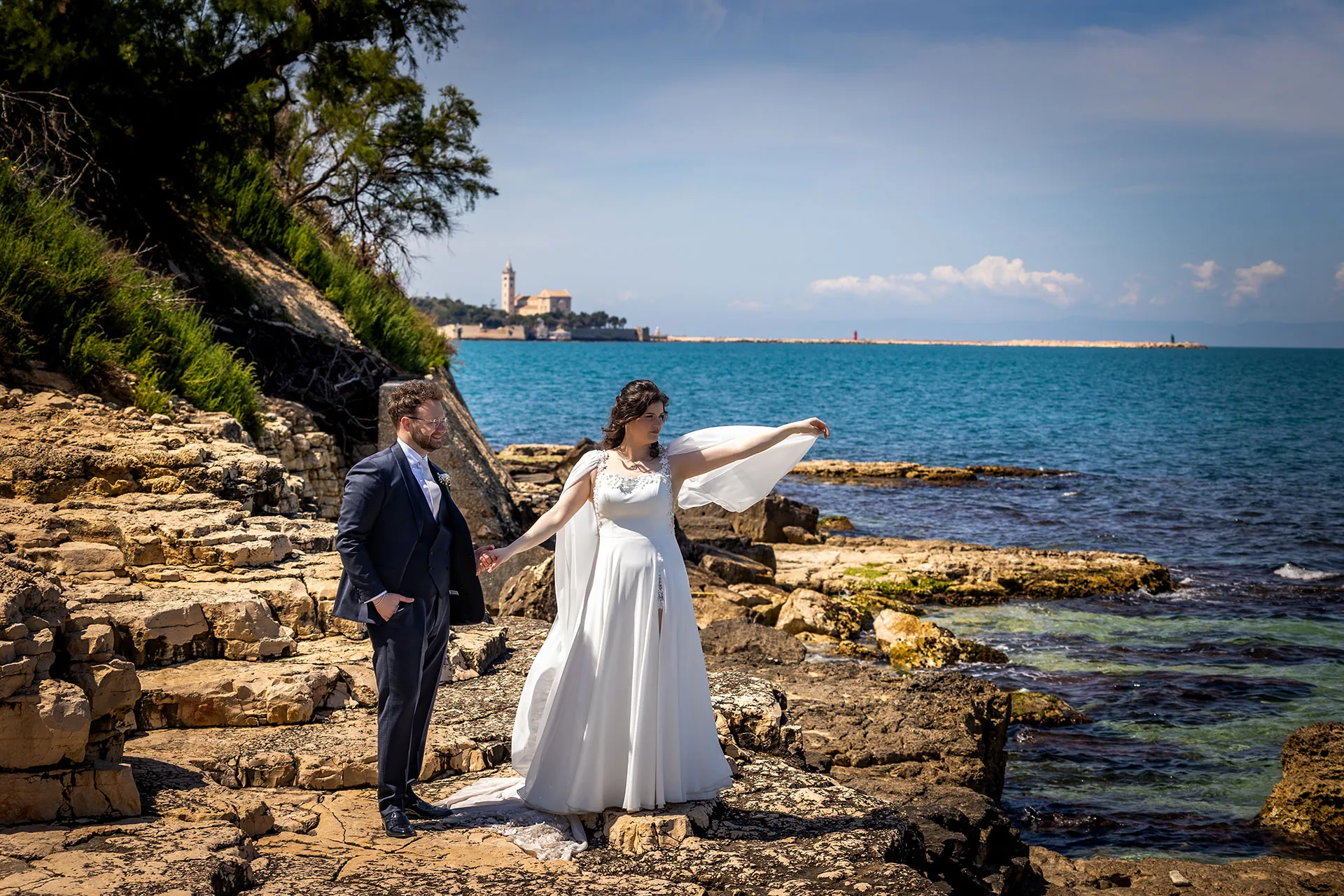
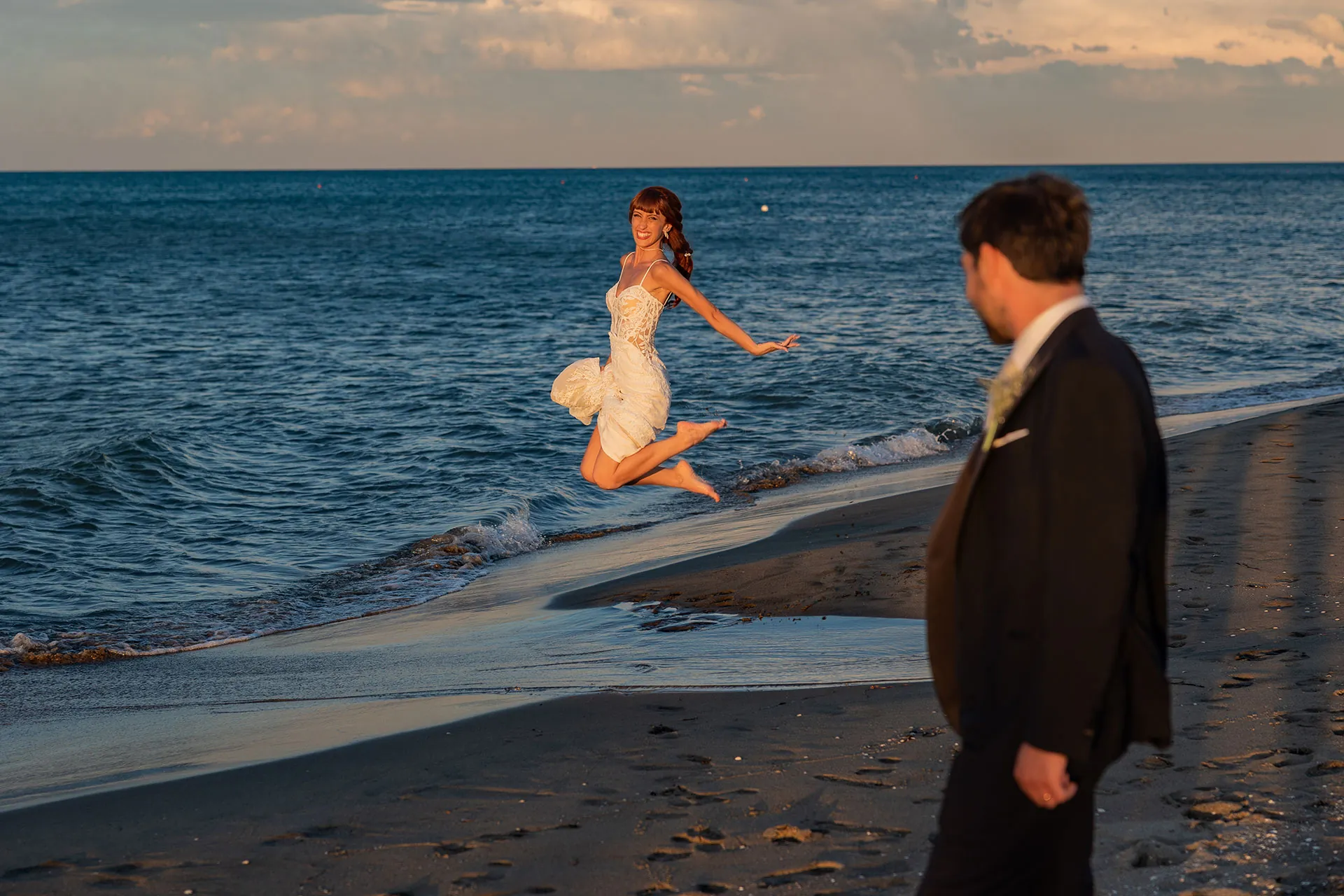
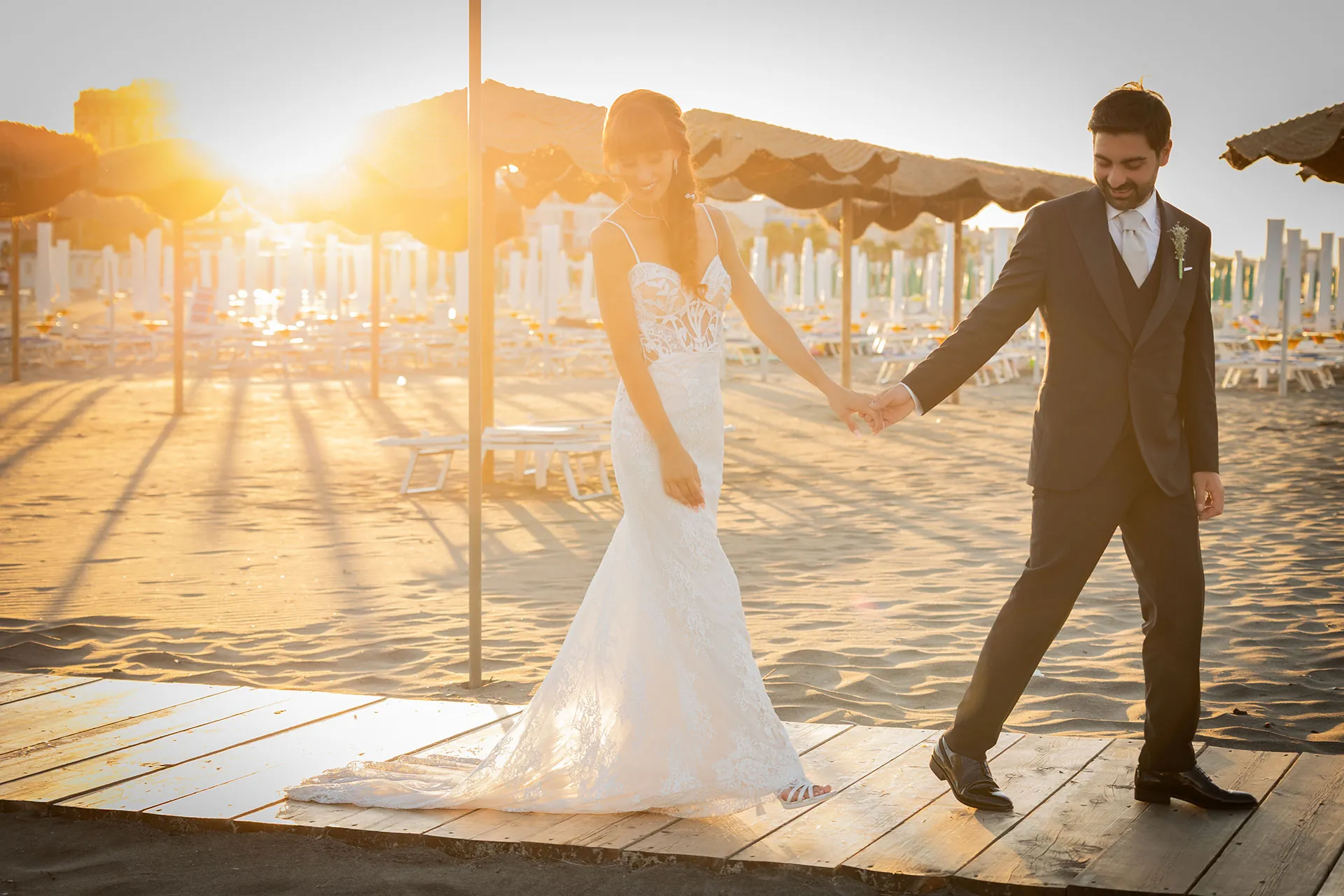
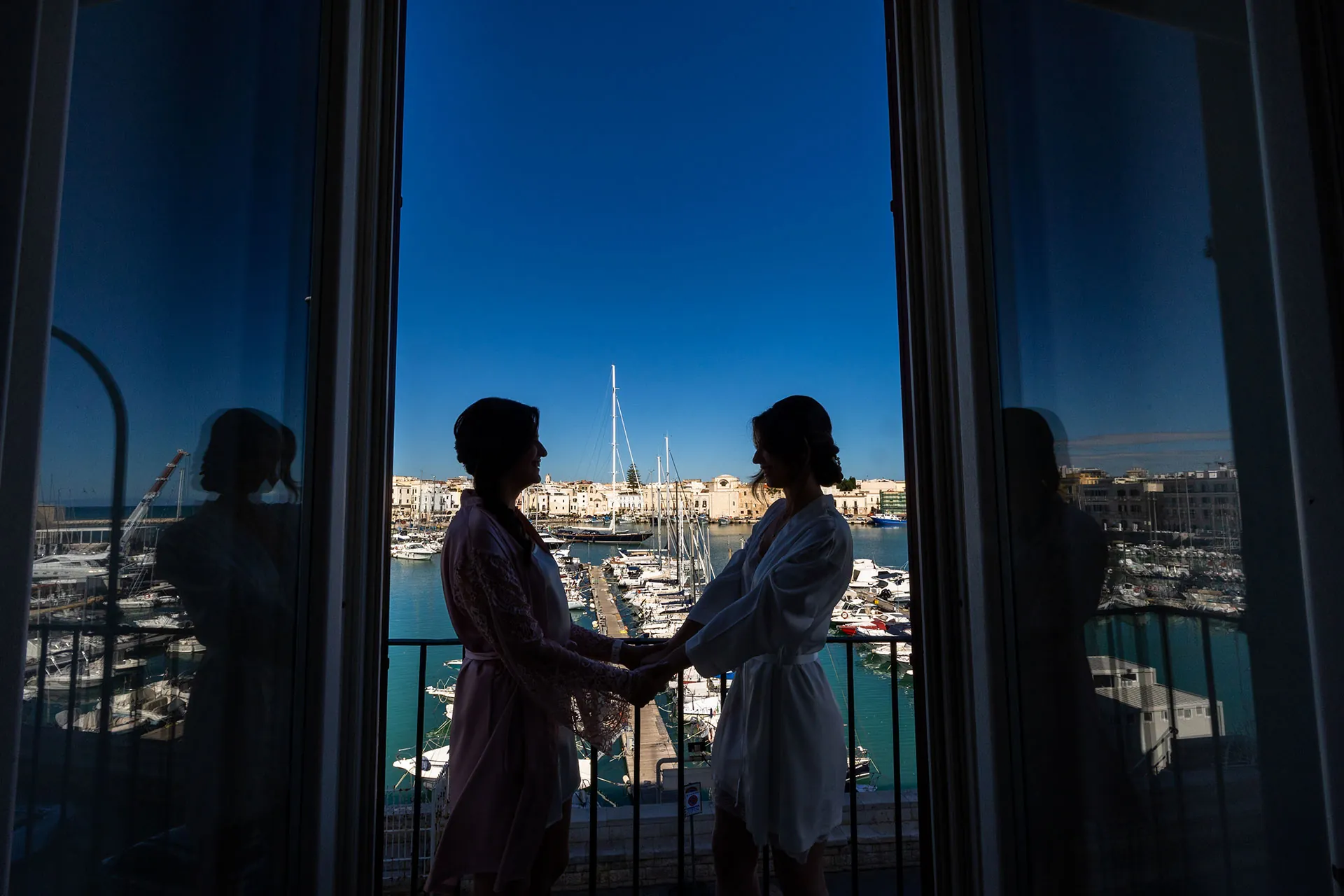
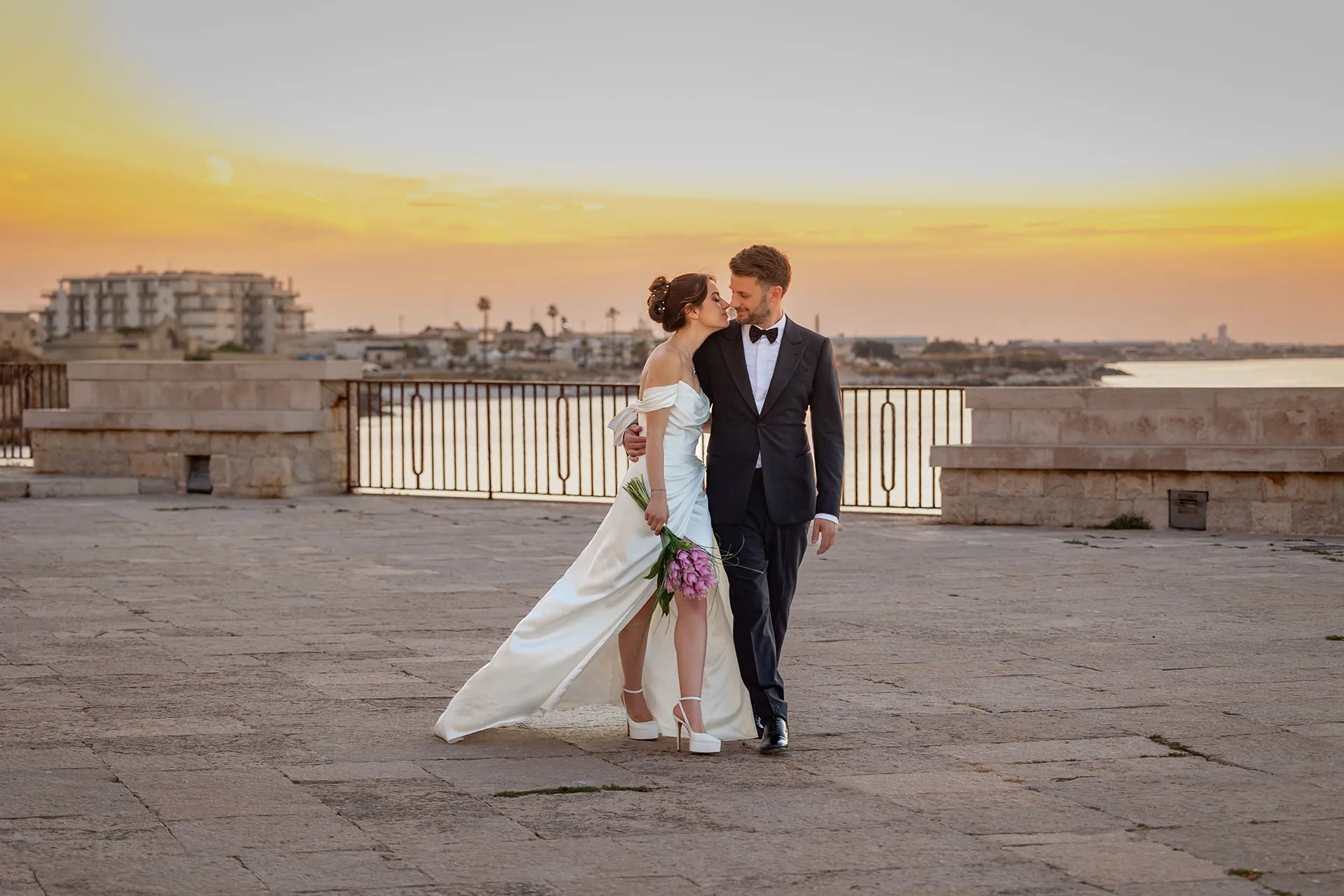
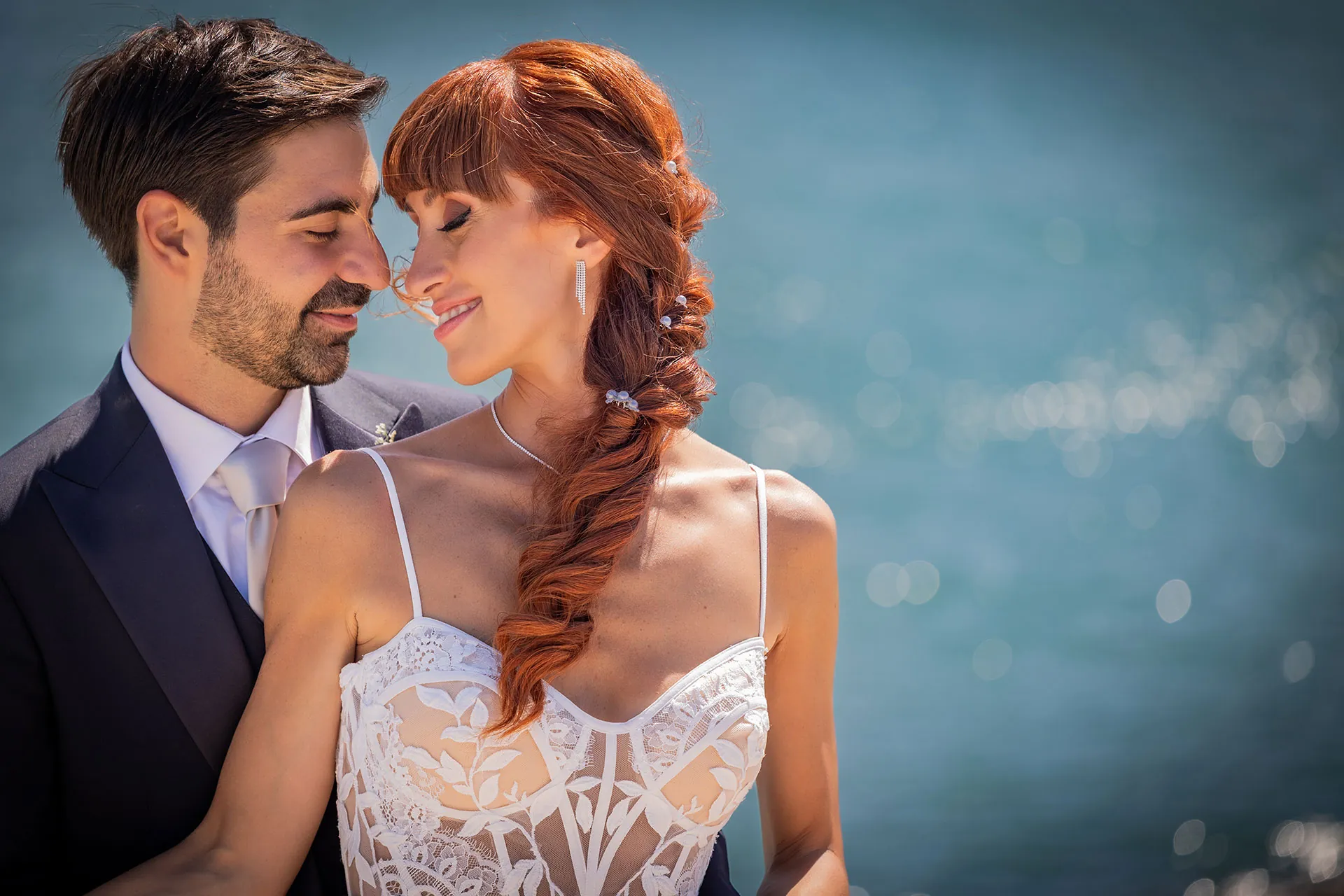
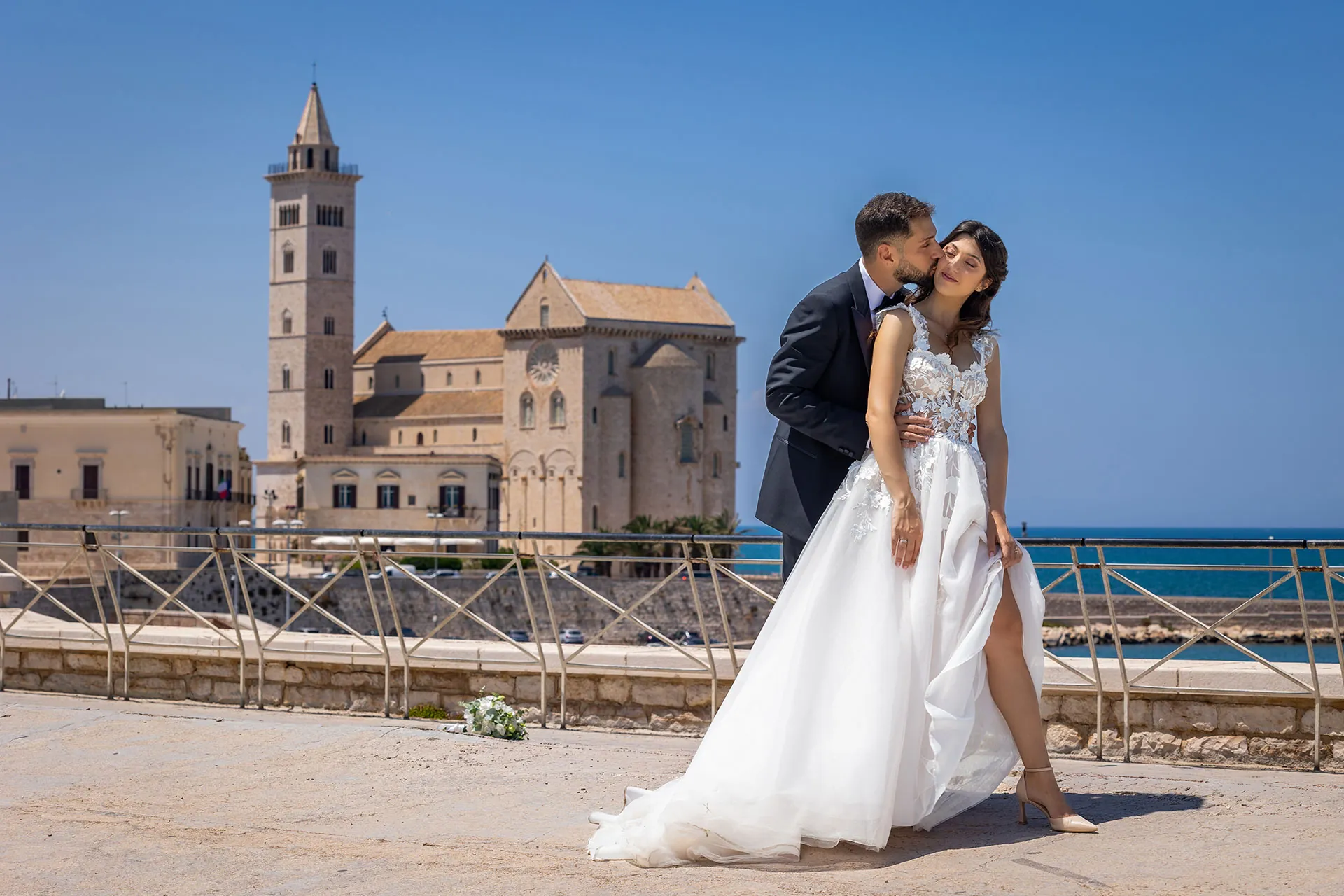
A selection from the 51 frames made on the shoreline.




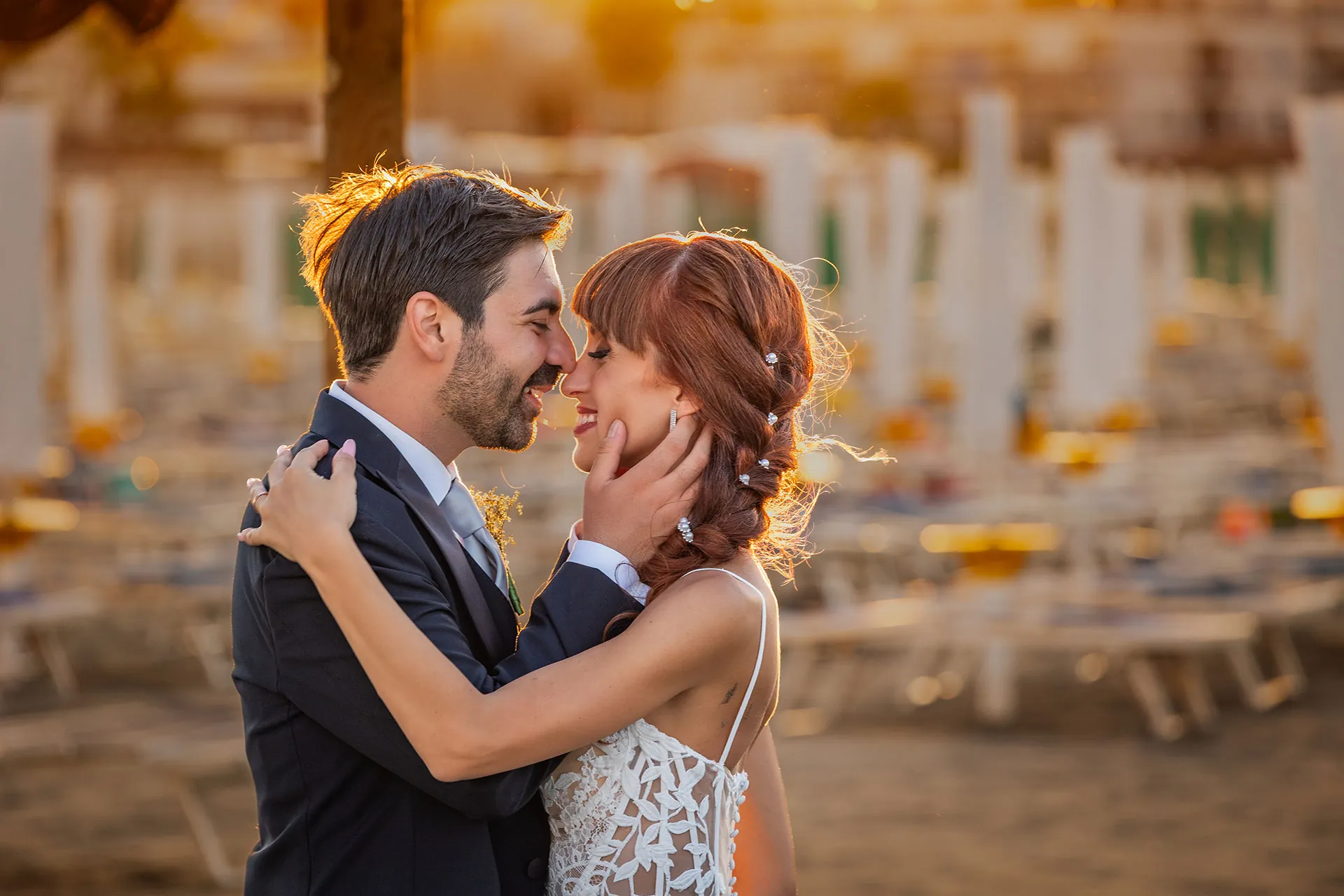
Where does the rest of the day go?
A beach rarely holds a whole wedding. Most days here begin somewhere with walls, often a church in town: a Trani Cathedral wedding puts a Romanesque facade and a working harbour into the same morning. Most days end somewhere with a kitchen, and that is usually a masseria wedding inland among the olives, where the party can stay outdoors until it is properly dark.
Our job is to make those pieces read as one day rather than three shoots. That is a matter of timing, and of counting the drive honestly. The whole map, and what each kind of place does to a photograph, is in our Puglia wedding venues guide.
Questions about beach weddings in Puglia
When is the best time of year?
May to September is the workable window. June and September are the two we suggest most often: softer light and beaches that are not full. June gives you the longer day, September the warmer sea. July and August are hot and busy, though the sun still sets late enough to leave you a long afternoon and a golden hour after the worst of the heat. We look up the sunset for your date before we suggest an hour.
What if the weather turns?
We work anyway. An overcast sky is one large soft light with no hard shadows, and photographs made under a dramatic sky often outlast the ones made in flat sunshine. In more than 5,000 weddings we have seen the weather turn plenty of times. You work with the light you are given.
How late can we hold the ceremony?
Later than most people expect in summer. If you want the vows in daylight and the portraits in the last hour of it, a ceremony in the second half of the afternoon works well in June, July and August. By late September the light goes early, so everything moves forward by an hour or more, and the running order has to move with it.
Getting married on the sand?
Send us the date and the stretch of coast. We will tell you what the light does there at that hour, and what the wind usually does as well.